A clunk when you select a gear or a vibration under acceleration can leave you wondering whether the driveshaft is about to fail. Signs of a failing U-joint deserve prompt attention, but several components can produce similar symptoms. Note when the noise or shaking occurs, then have the driveline inspected to find the cause.
A mechanic can connect the symptoms of a worn universal joint with an examination of the joint, shaft and surrounding parts. That is more useful than replacing a part solely because a sound resembles someone else’s description.
What the joint does
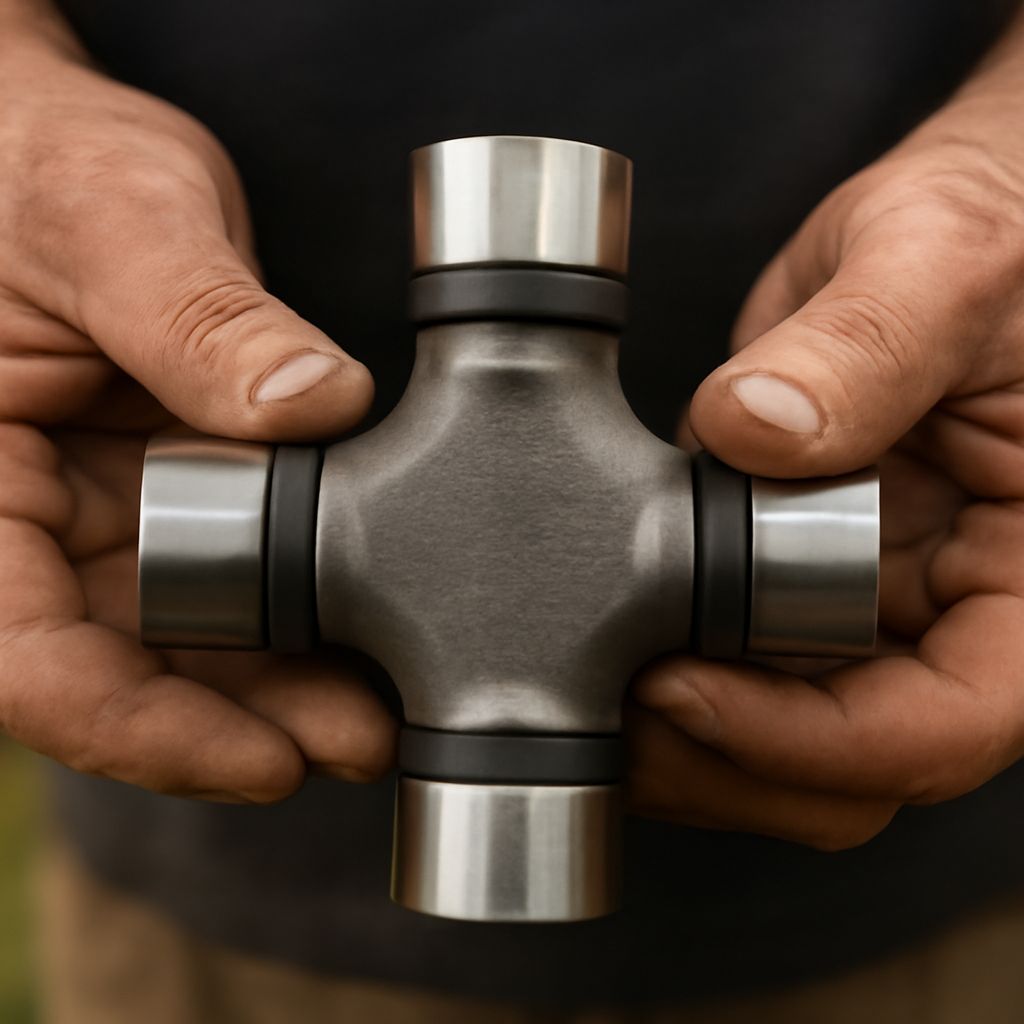
In many rear-wheel-drive and four-wheel-drive vehicles, a driveshaft carries torque between components that can move relative to one another. A universal joint, often called a U-joint, lets the shaft transmit rotation through an angle. Picture a hinged connection that has to turn continuously while the suspension moves; its bearings need to move smoothly and remain secure under load.
The layout varies. Some vehicles have more than one driveshaft or a center support bearing; others use constant-velocity joints in locations where a universal joint might be expected. The technician needs the vehicle’s actual drivetrain layout before deciding where to inspect. A front-wheel-drive car’s axle-joint complaint should not automatically be treated as a rear driveshaft problem.
Wear, damaged seals, inadequate lubrication or excessive operating angles can affect a joint. Some designs are serviceable with grease and others are sealed. Use the maintenance schedule and parts specified for the vehicle rather than assuming every joint needs the same service.
U joint symptoms and when they happen
One of the symptoms of a bad u joint is a clunk as torque changes direction, such as when shifting from drive to reverse or taking up the load after coasting. MOOG also describes vibration and speed-related squeaking as possible signs. A single clunk can have other sources, including driveline mounting or differential issues, so its timing is a clue for the inspection rather than a verdict.
A dry or binding joint may squeak as the shaft turns. The sound can change with road speed and may be easier to hear at low speed. Brake components, wheel bearings and other rotating parts can make noises too. Tell the shop whether the sound occurs only while moving, whether it changes during turns and whether it persists when you lift off the accelerator.
Bad u joint symptoms can also include a vibration felt through the floor or seat. Note the speed range, whether the vibration appears under acceleration or coasting, and whether it changes with engine speed while the vehicle is stationary. A damaged or unbalanced driveshaft, tires, wheels, bearings and other components can cause shaking. Those details help separate a road-speed-related problem from one related primarily to engine speed.
A new, severe or rapidly worsening vibration, repeated heavy clunks, or a sudden loss of drive calls for immediate attention. Pull over safely and shut the vehicle off when appropriate. Arrange a tow rather than continuing to drive with a severe or worsening symptom; a failing driveline can damage other parts or fail while moving.
Visible clues and their limits
Rust-colored dust around a bearing cap, damaged seals or grease around the joint can give a technician a reason to look closer. Loose or missing hardware and damage to the shaft or yoke also matter. These signs of a worn U-joint need interpretation: a joint can wear internally without displaying an obvious external mark, while a stain near a joint can have another source.
Spicer’s inspection guide lists checks for looseness at the joint and yokes, movement in the slip spline, and shaft damage or missing balance weights. Those checks cover more than the joint itself because the entire rotating assembly can contribute to a vibration.
Do not go under a running vehicle or touch a rotating shaft. Inspection underneath requires proper support and procedures suited to the vehicle. A visual look from outside cannot establish that the joint is safe to drive on, especially when the symptom is getting worse.
How a technician separates the causes
If you want to understand how to tell if a u joint is bad, ask the shop to reproduce the complaint where safe, identify the driveline layout and inspect the suspect components. Depending on the design and service procedure, the technician checks for looseness, binding or rough movement in the joint and examines the yokes and shaft. Some faults may be clearer with the shaft removed; the required inspection depends on access and how the assembly is loaded.
To determine whether the universal joint has failed, the technician may also investigate tires and wheels, mounts, bearings, shaft condition and operating angles when the evidence points there. A lift kit or other suspension change can alter driveline geometry. Spicer explains that operating angles and shaft speed influence vibration; the applicable specifications and measurement conditions depend on the vehicle.
Ask what was found at the joint itself: looseness, stiffness, a damaged bearing or another observable defect. If the shop suspects a joint but cannot yet isolate the cause, ask what further inspection is needed. That distinction helps you understand the estimate and avoid treating every symptom of a bad universal joint as proof of a single failed part.
Choose the repair after inspection
The repair depends on the vehicle and the condition of the assembly. A serviceable joint may be replaced separately when the shaft and yokes are sound and the manufacturer supports that repair. Damage to the shaft, yoke or another integrated component may call for specialist rebuilding or replacement of a larger assembly. Ask whether the estimate covers the joint alone, a rebuilt shaft or a complete replacement.
Also ask whether the shop will address the reason for the wear. Incorrect angles, damaged mounts, lubrication issues or shaft damage can place stress on a new joint. A technician can explain whether balancing, alignment checks or related repairs are indicated for the specific driveline and how the repair will be verified.
When you notice signs that a universal joint is failing, record the conditions and arrange an inspection promptly. If the clunk or vibration becomes severe or suddenly worsens, stop somewhere safe and arrange a tow to the shop.