The right cleaner depends on what it will touch and where you will use it. A spray-on brake cleaner can be convenient for one exposed rotor, while a gallon of brake parts cleaner may make sense for repeated work with suitable dispensing equipment. Both choices begin with the product label and the vehicle manufacturer’s service instructions.
A strong solvent is only useful where it belongs. Before buying, identify the parts to clean, nearby rubber and plastic, the amount of residue, and the ventilation available. Then match those conditions to a specific product—not merely to the words on the front of the container.
What the cleaner does
If you are asking what is brake cleaner, think of it as a solvent-based product formulated to remove contaminants such as oil, grease, brake fluid, and brake dust from specified brake components. CRC lists those uses for its non-flammable Brakleen formula. The liquid carries contamination away and evaporates; the exact drying characteristics depend on the formulation.
Cleaning a metal rotor is different from treating a leaking hydraulic system. If fluid keeps appearing, find and repair the leak. A contaminated friction part may also require replacement under the vehicle manufacturer’s instructions; washing it is not a substitute for diagnosing the cause. Check those instructions before applying any chemical to pads, shoes, sensors, or other components.
Match the formula to the materials
Read the application and compatibility information for the exact product. A cleaner approved for brake components may still damage materials close to them. CRC describes its Brakleen Platinum as unsafe for plastic and says it may swell rubber. Its non-flammable Brakleen is also listed as not plastic-safe. Similar names on a shelf therefore do not answer the material question.
Locate boots, seals, hoses, wiring insulation, painted surfaces, and wheel finishes before spraying. Shield or avoid anything the label does not permit the solvent to contact. CRC’s application guidance specifically says to protect rubber, plastic, rims, and painted surfaces from product and overspray. If the instructions for the vehicle or component specify a different cleaning method, follow them.
Chlorinated and non-chlorinated labels describe chemistry, not a blanket compatibility rating. They do not tell you, on their own, whether a particular seal or finish can tolerate a product. Check the actual label and product data sheet; if compatibility remains unclear, ask the product or component manufacturer before applying it.
Brake cleaner gallon or aerosol: which fits?
A can of brake cleaner spray puts a controlled supply and its dispenser in one package. It suits occasional work, such as cleaning an accessible metal surface during a brake job, when the label permits that use. Aim carefully, use a catch pan, and allow the part to dry as directed. The small container is easier to handle around one wheel, though overspray still needs attention.
A brake cleaner in a gallon container can suit repeated jobs where you already have compatible equipment and a suitable place to store and dispense the liquid. Compare the price per usable amount, but include the cost of the dispenser, waste handling, and storage. A larger container does not make a formula safer for seals or paint.
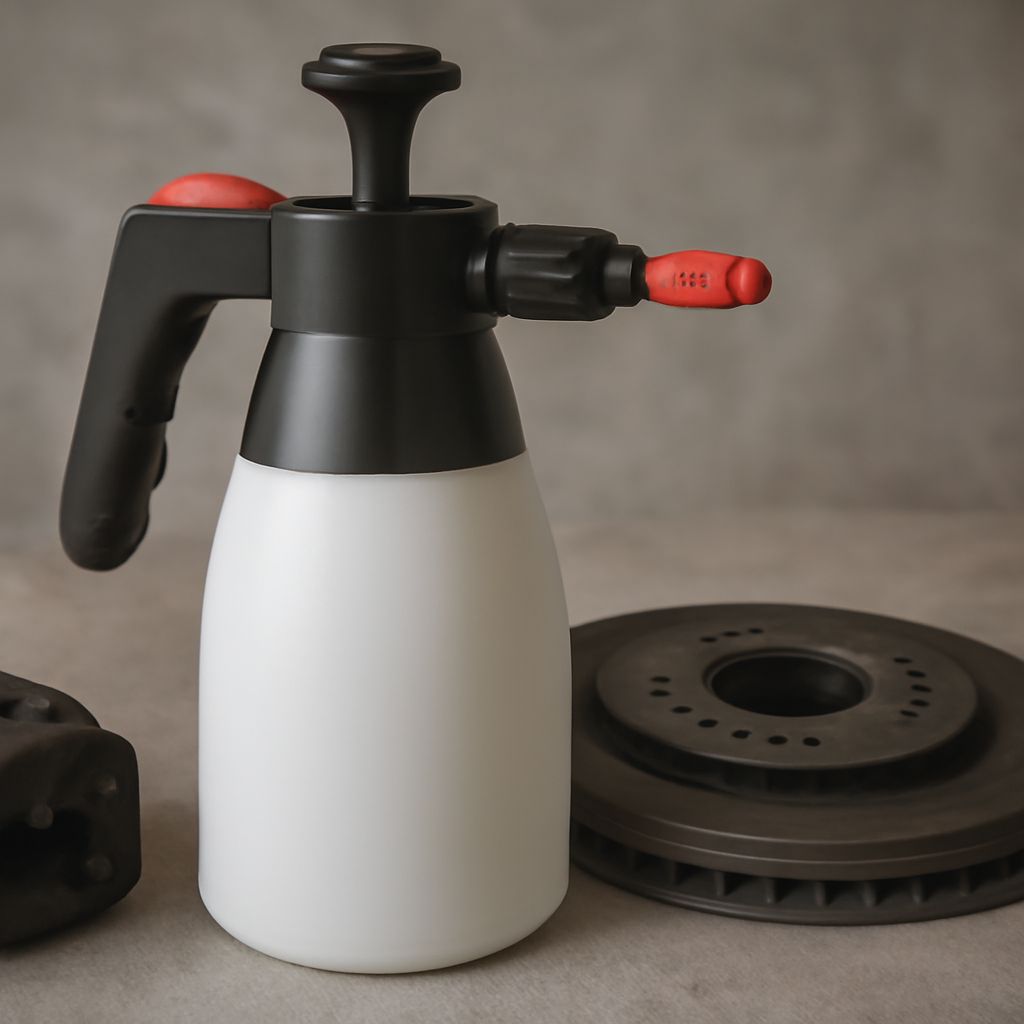
Before buying bulk brake cleaner, read the label for approved dispensing methods. Use a dispenser designed for that specific chemical and follow its maker’s instructions. Do not put solvent in a food or drink container, improvise a pressurized vessel, or assume that an empty aerosol can can be refilled. Keep the original label available so anyone using the liquid can identify its hazards and directions.
For a home garage doing one repair, an aerosol brake cleaner often avoids buying and storing far more solvent than the job needs. A shop cleaning parts regularly may find gallon-size brake cleaner more practical, provided the product and equipment are compatible. Estimate actual use before comparing the sticker prices; unused solvent also needs a proper home.
Set up for safe use
Start with a cool work area and the instructions for the exact container. CRC classifies its non-chlorinated 50-state formula as extremely flammable, while the non-flammable product cited above has a different hazard profile. Keep flammable products away from flames, sparks, hot surfaces, and other ignition sources. Do not spray any cleaner onto a hot brake assembly. Non-flammable does not mean harmless to breathe or safe for every surface.
Work where the label’s ventilation requirements can be met, and keep vapors out of your breathing zone. Read the safety data sheet (SDS) for the product’s protective equipment and exposure precautions; ordinary ventilation or a dust mask should not be assumed adequate for every solvent. Wear the specified eye protection and chemical-resistant gloves. If the available space cannot meet the instructions, move the work or have a properly equipped shop do it.
Brake dust deserves its own plan. Avoid blowing it around with compressed air or brushing it dry. Follow the vehicle service procedure and local requirements for collecting residue. A catch pan and absorbent material can help contain runoff, but the used liquid and contaminated materials still need appropriate disposal. Check local household hazardous-waste guidance; do not pour solvent into a drain or onto the ground.
Make the final choice
Compare the exact label and SDS with the vehicle’s service instructions: confirm the intended brake parts, protect nearby materials, and provide the ventilation and fire precautions the formula requires. Choose a brake cleaning spray for a limited, accessible job when its label fits; choose a larger container when repeated work, compatible dispensing equipment, and proper storage justify it. The best format is the one that lets the right formula reach the right part safely.