Choose a wrench for an oil filter that grips the part already on your engine and has room to turn. A compact filter wrench can make a cramped oil change much easier, but its shape and grip matter as much as its size.
Identify the part you need to turn
Look at the installed filter with a flashlight. A spin-on filter is a disposable metal canister that threads onto the engine. A cartridge system holds a replaceable element inside a reusable housing; you remove its cap or housing to reach the element. FRAM explains the two designs and the different parts replaced during service.
That distinction directs your tool choice. A band or strap may grip the side of an accessible spin-on canister. A cartridge cap may have flutes, a hex, or another drive feature intended for a matching socket. Grabbing a reusable plastic housing with a chain or toothed jaw can damage it and turn a routine service into a parts hunt.
Check the service information for your engine and look at the installed part, especially if someone else serviced the car last time. A replacement spin-on filter from another brand can have a different outer shape even when it fits the engine. Match the tool to the filter or housing you will actually remove, then check the new part before relying on the same tool for installation.
Small oil filter wrench: measure the grip and the space
A small oil filter wrench is useful only if it fits both the gripping surface and the available space. For a fluted end cap, use calipers to measure across opposite flats where the cup will seat, and count the flutes around the end. Record both numbers. Measure the tool’s internal across-flats dimension in the same way if you can inspect it; product listings may describe dimensions differently, so check their measuring convention.
For example, Lisle lists a 64 mm, 14-flute cup and an 86.5 mm, 16-flute cup in one set. Motivx specifies 64.3 mm and 14 flutes for a particular tool. Similar numbers are a reason to check the maker’s application and the actual fit, not to force a cup onto a cap. A cup should seat fully and engage the flutes without rocking excessively or slipping when you apply modest pressure.
For a smooth canister, measure its outside diameter where a band or strap will sit, then compare it with the tool’s stated range. Inspect for clearance around the circumference and along the axis: a cup needs room to slide onto the end, plus space for its ratchet and any extension. A side-gripping tool needs room for its band or jaws and for the handle to swing. Use a short extension or different drive angle only if it stays square and clear of nearby parts.
Pick a design for the access you have
Oil filter wrenches come in several forms, each with a tradeoff:
- Cup or end cap: A close-fitting cup works well when the filter end is accessible but the sides are crowded. Match diameter and flute count; a loose cup can round the edges or stick on the part.
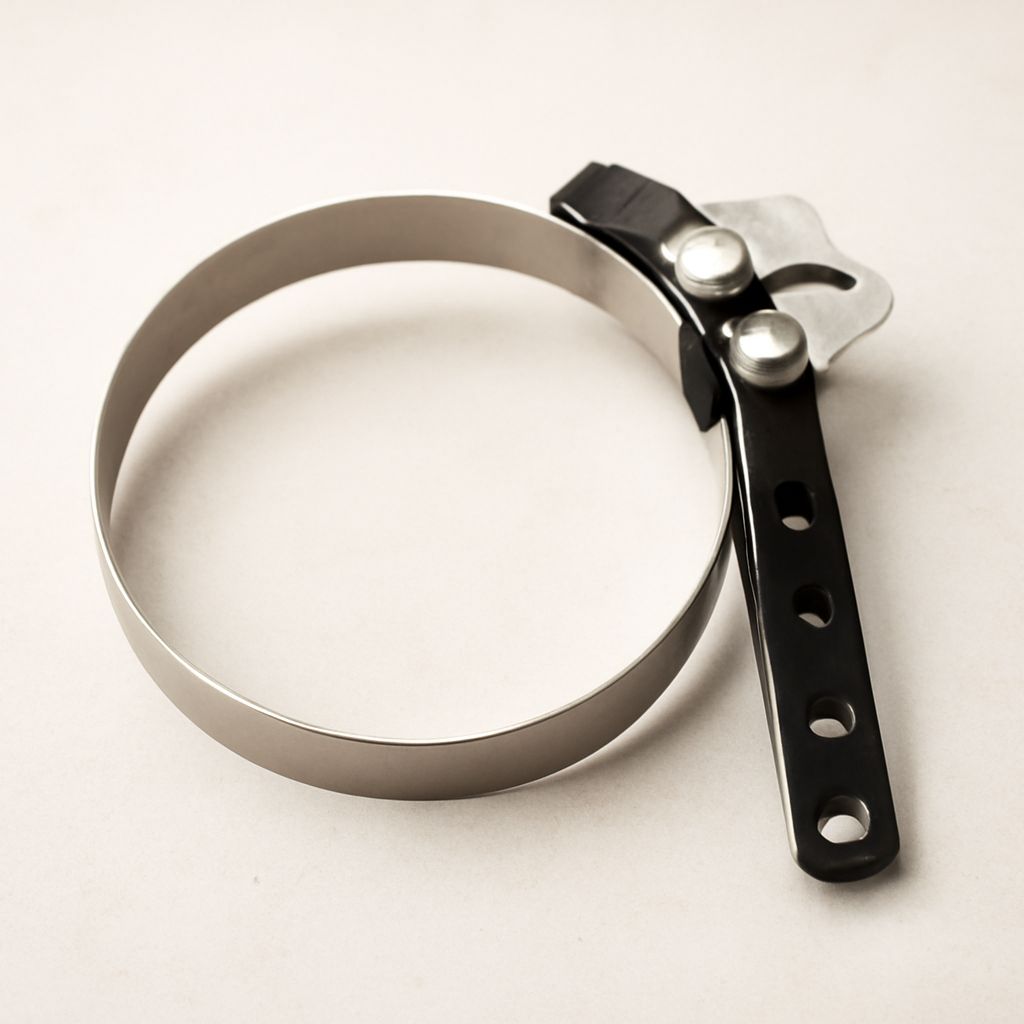
- Band or strap: An adjustable band or fabric strap wraps around a canister and can cover a range of diameters. It needs side clearance and a place to move the handle. A compact wrench for a small filter still needs enough exposed circumference to grip.
- Chain: A chain wrench can bite into a stubborn metal canister where the chain and handle have room. Its teeth and concentrated force can crush the can, so reserve it for removal when gentler options fail and avoid reusable housings.
- Pliers or adjustable jaws: These can grip several diameters and are convenient when the side is open. Check jaw reach and handle travel; squeezing too hard can deform the canister.
- Three-jaw end tool: This tightens its grip as it turns and can reach a recessed canister from the end. Check its diameter range, jaw depth and direction of operation, as well as clearance around the drive.
Compare oil filter wrench sizes with the measurements you took, but also consider how much movement each design needs. The sizes of filter wrenches indicate their grip range or cap diameter, while the shape tells you whether they can operate in the available space. A tool that fits on a bench may hit a crossmember after only a few degrees under the car. If there is no usable swing or straight approach, choose another design or have a shop handle the job.
Work safely and protect the seal
Park on level ground, set the parking brake, and chock the wheels that remain on the ground. If you must raise the vehicle, use the manufacturer’s lifting points and correctly rated jack stands on firm, level ground. Never work under a car supported only by a jack. If you cannot secure it or reach the filter safely, stop.
Allow the engine and oil to cool enough to avoid burns. Wear eye protection and gloves, position a drain pan, and follow the vehicle’s oil-change procedure. Oil may still spill when the filter comes loose. With the oil filter wrench squarely seated, turn in the removal direction slowly; if it slips, stop and improve the fit instead of adding force at an angle. A wrench for a small filter should grip securely without crushing the part.
Before installing a replacement, clean the mating surface and make sure the old spin-on gasket has come away with the old filter. Two stacked gaskets can leak. For a cartridge, replace and position the supplied O-rings or seals as directed, including the correct groove; avoid nicking them. Follow the filter or vehicle manufacturer’s instructions for lubrication and tightening. A reusable cap may have a specified torque, while a spin-on filter may have a different installation procedure. Use the specified tool and torque where required, rather than applying a universal number.
Refill with the specified oil and quantity, check for leaks following the vehicle’s procedure, then recheck the level. Inspect the area again after a short drive, and recycle used oil and the old filter through an appropriate collection site.
The best oil filter wrench is the one that seats securely on your installed part and can turn through the space around it.