You pull the washer control, but the windshield stays dry. Before buying a new windshield washing motor, follow the fluid’s route: check the reservoir, consider the temperature, listen briefly for the pump and look for signs of a leak. Those observations can narrow the problem to the fluid supply, the spray path or the electrical side.
The windshield spray pump is only one part of that path. A full reservoir and a quiet pump suggest different next steps from a motor that hums while fluid drips under the car. Neither sound alone proves which part has failed.
Windshield Wiper Pump or Wiper Motor: Which Part Is It?
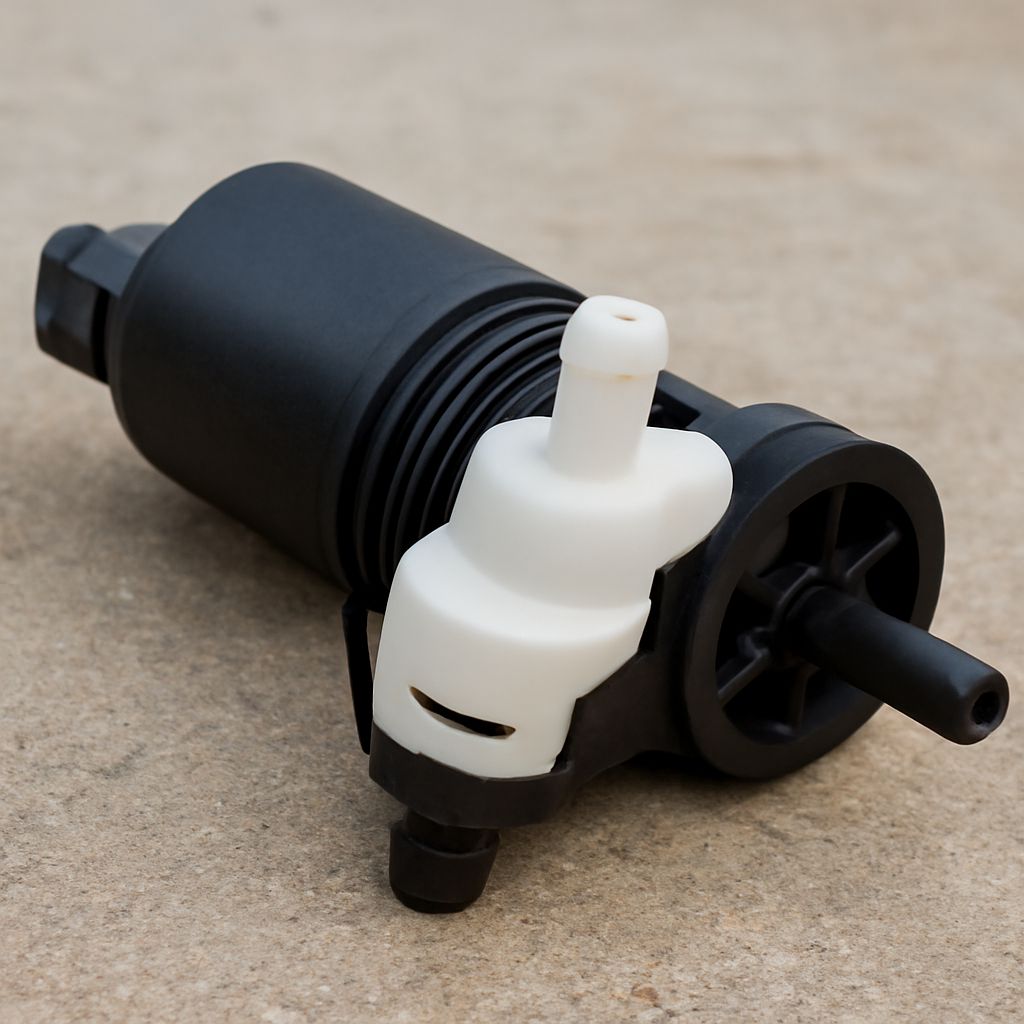
The term windshield wiper pump refers here to the washer pump: it moves cleaning fluid from a reservoir through hoses to the windshield nozzles. The motor that powers the windshield washer pump drives the fluid, not the blades. The wiper motor is a different component; it moves the blades across the glass through a linkage or other mechanism.
Think of a garden hose and a window squeegee. One delivers liquid; the other sweeps. If the blades move but no fluid appears, the blade motor has done at least part of its job. The fault may lie in the fluid supply, the washer circuit or the plumbing. If the blades also fail to move, tell the technician about both symptoms; the causes might be related, but that is not established by the symptoms alone.
The windshield washer fluid pump needs fluid to move. Running the windshield cleaning-fluid pump dry repeatedly is a poor test. The 2025 Ford Bronco Sport manual warns that operating its washers with an empty reservoir can overheat and damage the pump.
Start With the Reservoir and Weather
Park safely, switch the vehicle off and locate the washer reservoir using your owner’s manual. Identify the correct filler before opening it. If the level is low, add the washer fluid specified for your vehicle and conditions. Do not pour engine coolant into the tank. A level that falls again soon after filling is a reason to look for a leak, not proof that the windshield washing pump is bad.
If the reservoir is visibly empty, fill it before trying the control again. If you cannot see the level, use the method described for your vehicle rather than guessing from the filler neck. The 2022 Kia Carnival manual, for example, directs owners to check the fluid level when the washer does not work and warns against operating the pump with an empty tank.
Cold weather adds another possibility: fluid or moisture may freeze in a reservoir, hose or nozzle. If freezing is suspected, let the vehicle and washer system thaw in a suitable sheltered place before retesting. Use fluid rated for the expected temperature and follow its mixing instructions. Ford specifically warns Bronco Sport owners not to dilute ready-to-use fluid with water, because it can freeze and damage components.
Warm the windshield with the defroster before using washer fluid in freezing weather. Fluid that freezes on the glass can suddenly obscure the view. Clear ice from the glass and blades before operating the wipers; do not keep cycling the pump against an apparently frozen system.
Listen Once, Then Look at the Spray Path
With adequate fluid and the windshield wet enough for the blades to move safely, operate the control briefly as your manual directs. An assistant can observe from a safe position away from moving wipers and the engine compartment. Listen from the cabin or outside with the hood closed. Some cars run the blades automatically during washing, which can make the washer motor’s sound difficult to distinguish.
A hum with little or no spray suggests an electrical motor may be running, but it does not prove the pump is delivering normal pressure. Fluid could be escaping through a disconnected or damaged hose, restricted by a blocked nozzle, or not being moved effectively by the pump itself. Look for fluid collecting beneath the vehicle or wet areas around accessible hose connections. Do not put hands near moving parts.
A weak stream from one nozzle points toward a local restriction, damaged line or nozzle issue. If one side sprays normally and the other does not, note which side. Visible dirt around a nozzle can be wiped away gently; avoid forcing a pin into the opening, which may damage or alter it. A technician can clear or replace a restricted component using the proper procedure.
Fluid on the ground instead of the glass suggests a leak somewhere in the supply path. The location of a puddle is a clue, not a precise diagnosis: liquid can travel along body panels before dripping. Stop repeated testing, especially if the reservoir is draining. The hose, tank, pump seal or another connection may need inspection.
What Silence Can Mean
If there is no identifiable hum, the windshield washer motor may not be receiving power, may lack a proper ground, or may itself be faulty. A fuse, wiring, connector, control switch or vehicle control module can also be involved. A quiet pump is not an electrical diagnosis; ambient noise and the location of the unit may make a working motor hard to hear.
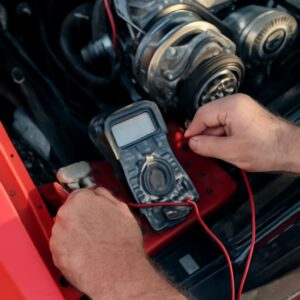
The motor for the windshield washer pump should be assessed using the vehicle’s wiring diagram and specified test procedure. A qualified technician can check the relevant fuse and circuit, then determine whether the command and electrical supply reach the pump when requested. Fuse locations, circuit design and access vary by model. Replacing a fuse with a higher rating, repeatedly replacing one that blows, or applying power to unknown terminals can cause further damage.
If the pump must be removed, access may depend on the vehicle’s layout. The shop can inspect the connector and fluid path at the same time instead of replacing parts based only on a noise. A proper repair also includes a functional spray check and a look for leaks.
Prepare a Useful Observation Record
Note the vehicle’s year, make and model; the fluid level and weather; and whether the front and, if fitted, rear washer respond. Record observations in plain language, for example: “Reservoir full; brief hum; front left nozzle sprays, front right does not; fluid drips near the passenger-side front wheel.” That gives the repair shop sound, outlet and leakage clues to trace the fault.