Understanding a dual-clutch gearbox helps explain why your car can change gears quickly yet feel different from a conventional automatic when you inch into a parking space. The same basic idea works in an eight-speed dual-clutch unit: one clutch drives the car while the transmission prepares another gear for the next shift.
Two clutches, two paths
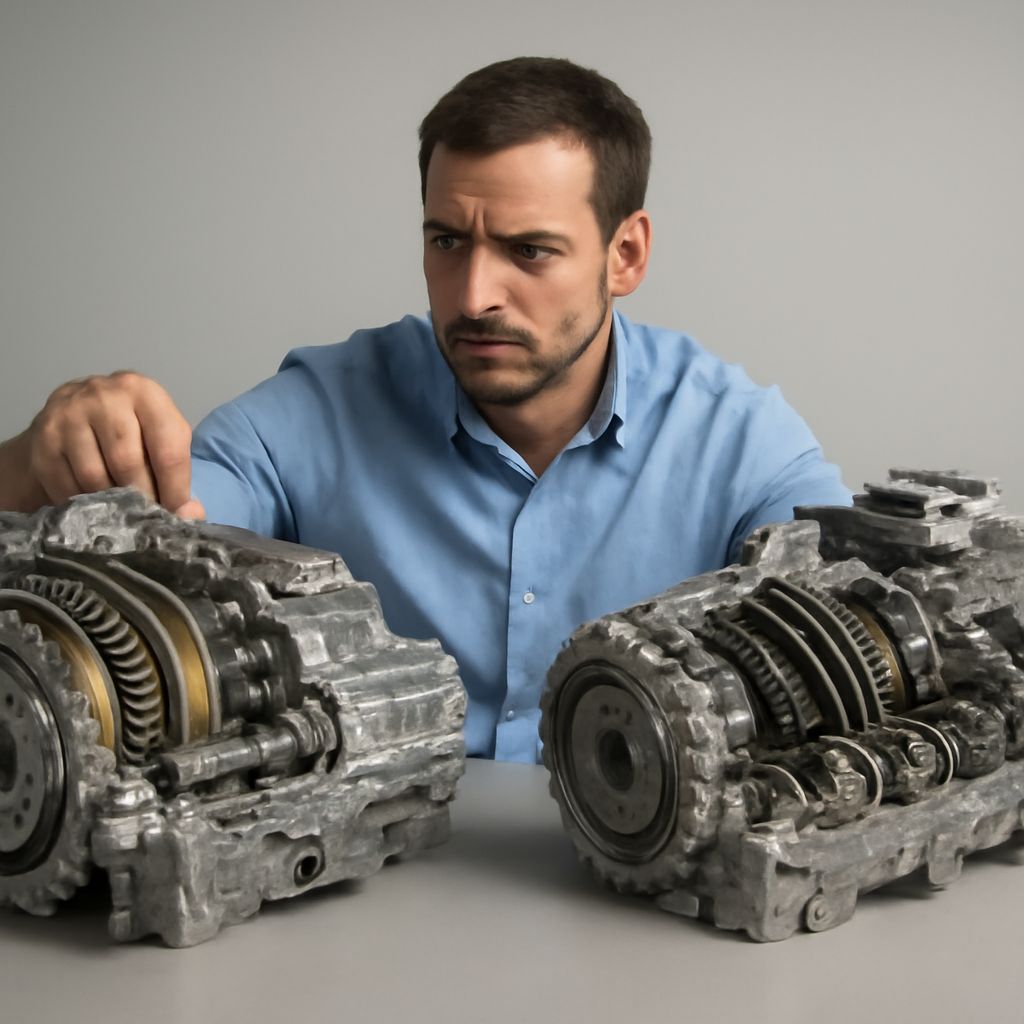
How does a dual clutch work? Think of two paths connecting the engine to the wheels. In a common arrangement, one clutch connects to a gear set containing the odd-numbered ratios, while the other connects to a gear set with the even-numbered ratios. A control system operates the clutches and selects the gears; there is no clutch pedal for the driver to coordinate. Hyundai describes this odd/even arrangement in its explanation of DCT technology.
A dual clutch transmission, often abbreviated DCT, uses fixed gear ratios, much as a manual gearbox does. The difference is that the vehicle operates the clutches and shifts for you. The two paths let the control system have a likely next gear ready before it is needed. Selecting that gear does not mean both clutches are fully engaged and driving the wheels at once.
The point is to shorten the interruption in power during a change. The result depends on the vehicle’s programming, driving conditions, and the gear needed; a DCT will not always deliver the same shift feel.
Follow a first-to-second shift
Imagine pulling away from a stop in Drive:
- First gear drives the car. The first clutch engages progressively, connecting the engine through the odd-gear path. Some slip during the launch allows the engine and the initially stationary wheels to come up to compatible speeds.
- Second gear is selected in advance. The even-gear path can have second ready while its clutch is still disengaged. The car is still moving in first.
- The clutches hand over torque. As the controls command the upshift, the first clutch releases while the second engages. Engine torque moves from the first-gear path to the second-gear path.
- The next likely gear is prepared. Once second is carrying the load, the other path can prepare another ratio, often third if acceleration continues.
Preselection is a prediction, not a promise that the next shift must be an upshift. If the driver suddenly asks for more power or slows down, the transmission may need a different gear from the one it prepared. The controls must then select the appropriate ratio, which can change how quickly the shift happens.
8 Speed Dual Clutch: What the Number Means
Eight speeds means eight forward gear ratios. Two clutches refer to the way the transmission connects and hands power between its gear paths. They count different things: an 8 speed dual clutch system can have eight forward ratios while still using two clutches.
One production example is the gasoline-powered 2025 Hyundai Santa Fe. Hyundai lists an eight-speed wet DCT with SHIFTRONIC for its 2.5-liter turbo models. The example makes the count concrete; other vehicles use different numbers of ratios and different transmission designs. Check the engine and model year when comparing specifications, since a model name alone does not identify every powertrain.
In an eight-speed dual-clutch transmission, lower ratios multiply engine torque for starting and climbing; higher ratios let the engine turn more slowly at a given road speed. The actual ratios and shift points vary by model. Eight gears alone cannot tell you how smooth or durable a particular transmission will be.
Wet and dry clutches
A wet dual-clutch gearbox runs its clutch packs in oil, which helps carry heat away. A DCT with dry clutches operates its friction surfaces without that oil bath. Both designs use friction to connect the engine to a gear path, and both can generate heat when a clutch slips during a start or low-speed maneuver.
For an owner, the distinction matters when identifying the correct service requirements. A wet design has clutch-cooling oil, but fluid specifications, service procedures, and intervals depend on the particular transmission and vehicle. A dry clutch does not mean the gearbox contains no lubricant. Use the maintenance schedule and specified fluids for your vehicle instead of applying one interval to every DCT.
What happens in traffic and on hills?
At walking speed, the clutch may engage gradually as the car starts moving. That can make the response feel different from a torque-converter automatic, especially when alternating between brake and accelerator in a parking maneuver. Allow space and use smooth inputs so the car can respond without repeated abrupt launches.
On a hill, hold the car with the brake or the vehicle’s hold feature, not with the accelerator. Hyundai’s 2026 Elantra DCT warning guidance warns that holding or creeping uphill with the accelerator can damage the clutch and transmission. Its instructions also address repeated stop-and-go starts on steep grades, which can raise transmission temperature.
If that Elantra displays a high-temperature warning, Hyundai directs the driver to stop in a safe place, select Park, and leave the engine running while the system cools. Follow the warning and the owner’s manual for your own vehicle: wording and required steps can differ. A hill-start feature may briefly assist a launch, but it is not a substitute for holding the brake while waiting.
Automatic mode and other transmission types
In Drive, the dual clutch transmission chooses shifts based on inputs such as speed and accelerator demand. If the car has a manual shift mode or paddles, you can request an upshift or downshift, while the controls still operate the clutches and may limit requests to protect the powertrain. Exact controls vary by model.
A conventional automatic typically uses a torque converter, a fluid coupling, to help transfer power when starting, along with a geared transmission. Some DCTs also use a torque converter: Acura describes one in a DCT. A continuously variable transmission, or CVT, changes its effective ratio over a range rather than relying solely on a series of fixed forward ratios. Each can be tuned for different responses, so a test drive in traffic and during parking tells you more than the label alone.
A small change in engine speed or a slight engagement sensation while creeping can reflect normal clutch operation. A persistent shudder, repeated overheating warning, burning smell, or loss of drive calls for diagnosis; stop safely and follow the displayed instructions, then have the vehicle inspected if the warning persists or the behavior is abnormal.