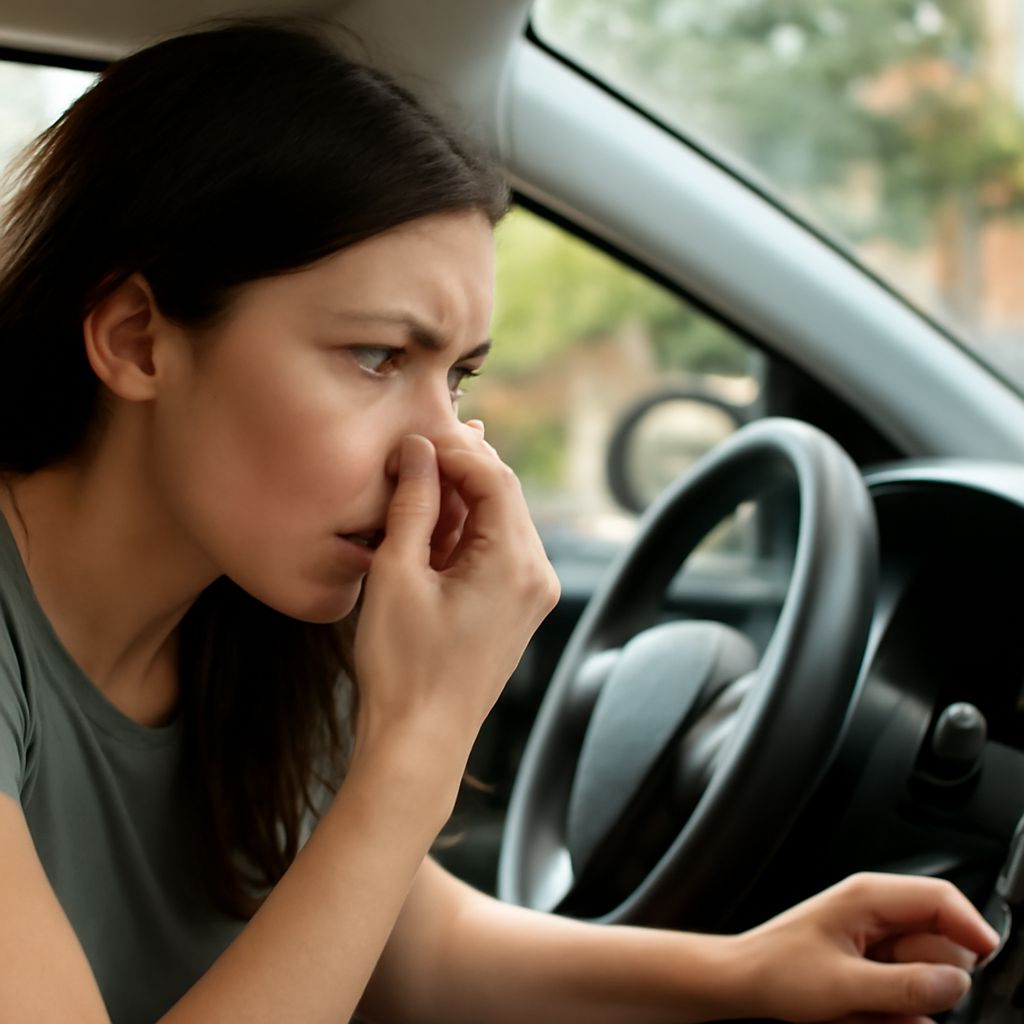
A gasoline odor inside a vehicle is not a minor inconvenience to ignore. Why does my car smell like gas is a question that points to one of several mechanical issues, ranging from minor to genuinely dangerous. Why do I smell gas in my car after fueling, after sitting overnight, or while driving represents three distinct scenarios with different likely causes. In each case, the smell signals that fuel is escaping the closed system somewhere it should not be. I smell gas in my car is a statement that warrants prompt investigation, not an extended wait. Gas fumes in car cabins can accumulate to levels that irritate the respiratory system and, in extreme cases, create fire risk. Gas smell inside car interiors never has an acceptable cause, so identifying the source and addressing it directly is the practical path forward.
Fuel System Leaks
Fuel Lines and Connections Rubber fuel lines age and develop small cracks, especially in vehicles older than ten years or those exposed to repeated heat cycling. A cracked line allows fuel to drip or mist onto hot engine components below. The smell becomes most noticeable during or immediately after driving, when fuel pressure in the system runs highest. A visible wet spot under the vehicle near the fuel tank or along the undercarriage often accompanies this cause. Any sign of an active fuel line drip warrants stopping driving until a technician inspects and replaces the affected section.
Loose or Damaged Fuel Injectors Fuel injectors spray atomized fuel directly into the intake manifold or combustion chamber. A cracked injector body or a deteriorated O-ring seal allows raw fuel to escape into the engine bay. Gas fumes in car interiors from this source tend to be strongest at idle or low-speed driving, when the engine runs under light load and unburned fuel accumulates near the intake. A professional fuel system pressure test identifies injector leaks definitively.
Evaporative Emission System Faults
Modern vehicles route fuel vapors through an evaporative emission control system (EVAP) rather than venting them into the atmosphere. A faulty purge valve, cracked charcoal canister, or loose hose connection allows those vapors to escape into the engine bay or, through gaps in the firewall, into the passenger cabin. Why do I smell gas in my car when the engine is cold often points here, because the EVAP system is most active during cold starts. A stored EVAP fault code, often a P0440-series code, typically accompanies this failure and appears when a technician scans the OBD-II port.
Exhaust System Issues
A running-rich condition, where the engine burns more fuel than it can combust completely, sends partially burned hydrocarbons through the exhaust. If an exhaust manifold gasket fails or a crack develops in the manifold itself, those fumes can migrate toward the passenger compartment through gaps in the firewall. Gas smell inside car cabins with an accompanying black soot buildup at the tailpipe supports this diagnosis. A catalytic converter operating below temperature, often due to a failed oxygen sensor, also allows uncombusted fuel to pass through the exhaust.
Post-Fueling Vapors
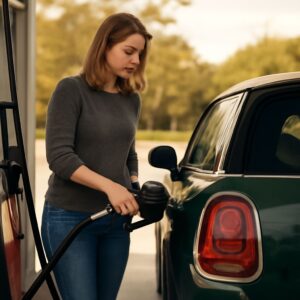
A brief fuel smell immediately after filling the tank is relatively normal if the gas cap was removed for an extended period on a hot day. Fuel vapors settle in the tank neck and dissipate within a few minutes of driving with windows open. I smell gas in my car for more than five minutes after fueling, or noticing the smell while driving rather than only at the pump, goes beyond normal vapor displacement and should be treated as a system issue rather than a benign quirk. A damaged or missing gas cap is the simplest cause in this scenario and costs under $20 to address.
When to Stop Driving Immediately
A strong, persistent gas smell inside the vehicle, any visible fuel dripping under the car, or a smell accompanied by a dashboard warning light requires stopping the vehicle in a safe location, turning off the engine, and keeping occupants away from the vehicle until a roadside service or tow can transport it to a shop. Why does my car smell like gas under these conditions is a question for a technician to answer with the vehicle off the road, not while continuing to drive.
Address a gas odor by starting with the simplest causes: check the gas cap, scan for fault codes, and have a technician inspect fuel lines and EVAP components. Most causes are straightforward to repair when caught early.