Spotting a stain on the driveway raises an immediate question: what is it, and how serious is it? When my car is leaking oil from the front, the location and the color of the fluid both carry information. Car fluid colors range from nearly clear to bright red to dark brown, and each shade points to a specific system. Identifying the fluid quickly can prevent a minor seep from becoming a costly repair.
Fluid leaking from front passenger side of car often confuses drivers because multiple components sit in that area. A red fluid under car suggests a transmission or power steering issue. A yellow fluid from car typically comes from the coolant reservoir or brake fluid, depending on shade. Understanding what each color means is the first step to an accurate diagnosis.
How Car Fluid Colors Help You Identify the Leak
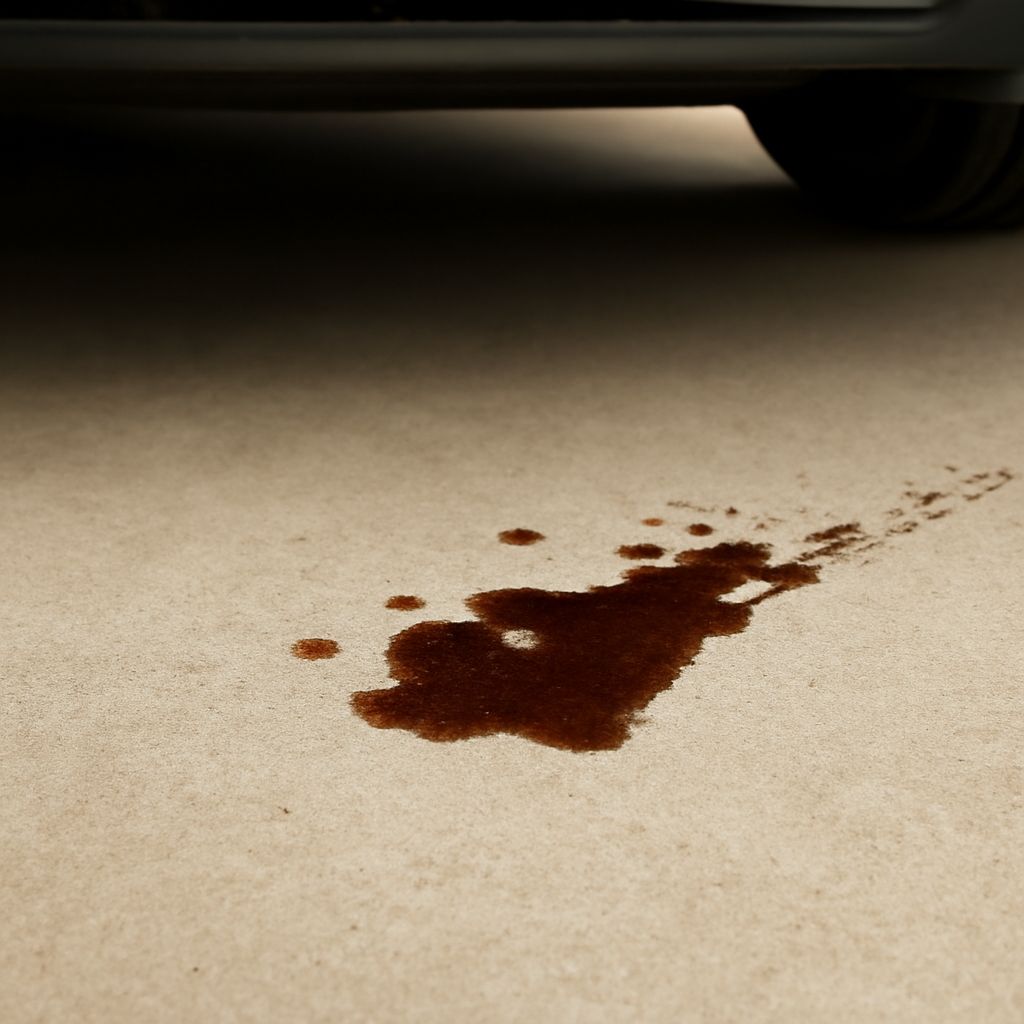
Car fluid colors follow a predictable pattern once you know what to look for. Engine oil ranges from amber when fresh to dark brown or black as it ages. Transmission fluid runs red or pink and has a slightly oily texture. Coolant comes in green, orange, pink, or yellow, depending on the formulation. Brake fluid is nearly clear with a slight yellow tint. Power steering fluid can look similar to transmission fluid, often red or light brown.
The shade alone is not enough. Checking where on the pavement the puddle forms, how large it is, and whether it has a distinct smell helps narrow the source. Oil has a distinctly burned odor when it drips onto hot exhaust components. Coolant smells sweet. Brake fluid has a sharp chemical smell.
What Causes Oil to Leak from the Front of the Engine
When my car is leaking oil from the front, the most common sources include the crankshaft front seal, the timing cover gasket, and the valve cover gasket on engines where it extends toward the front. The crankshaft seal sits where the crankshaft exits the engine block to connect with the harmonic balancer. Over time, this seal dries out and hardens, losing its ability to hold back oil under pressure.
The timing cover gasket seals the metal cover that protects timing chain or belt components. Corrosion, heat cycling, and age all degrade this gasket. Oil seeping from this area often runs down the front of the engine and pools directly under the front of the car. A mechanic confirms the source by cleaning the area thoroughly, then running the engine to watch where fresh oil appears.
Fluid Leaking from the Front Passenger Side of the Car
Fluid leaking from front passenger side of car deserves particular attention because several systems converge there. On many front-wheel-drive vehicles, the right axle shaft and its CV boot pass through the transmission housing on the passenger side. A torn CV boot can throw grease rather than drip it, but a failing axle seal leaks transmission fluid in a slow, steady pattern.
The power steering rack, where equipped, also sits toward the front passenger area on some platforms. A rack seal failure produces a steady drip that increases when the steering wheel is turned to full lock. Checking the color and consistency of the fluid narrows it to one system quickly. Transmission fluid feels slippery and smells slightly burned; power steering fluid has a similar texture but often a more pungent smell.
Red Fluid and Yellow Fluid: What Each Means
Red fluid under car almost always traces back to the automatic transmission or, on older vehicles, the power steering pump. Transmission fluid leaks appear under the center or front of the car, while power steering fluid typically drips closer to the steering rack. Both require prompt attention. Running a transmission low on fluid causes slipping and long-term damage to clutch packs.
Yellow fluid from car is most often coolant, particularly from vehicles that use a yellow or green-yellow extended-life formula. It can also be brake fluid, which carries a pale yellow tone when fresh. Coolant leaks at the front often originate from a hose connection, the water pump weep hole, or the radiator end tank. Brake fluid leaks at the front of the car suggest a caliper, brake line, or master cylinder issue.
How to Respond When You Spot a Puddle
Place a piece of cardboard under the car overnight to capture a fresh sample of the fluid. The color, consistency, and smell on the cardboard confirm which system is losing fluid. Check the corresponding reservoir level the next morning before starting the engine. A low reading confirms an active leak rather than old residue.
For oil, coolant, or brake fluid loss, do not drive the vehicle until the level is confirmed safe and the leak rate is known. Running an engine low on oil causes bearing and cylinder damage quickly. Running low on coolant leads to overheating. Brake fluid loss is a safety emergency that requires immediate professional evaluation.
Pro tips recap: Match the fluid color to the correct reservoir before assuming the worst. Clean the suspected area and run the engine briefly to confirm the leak source. Check fluid levels first thing in the morning before the car moves. Any brake fluid loss or rapid oil drop warrants a same-day shop visit.