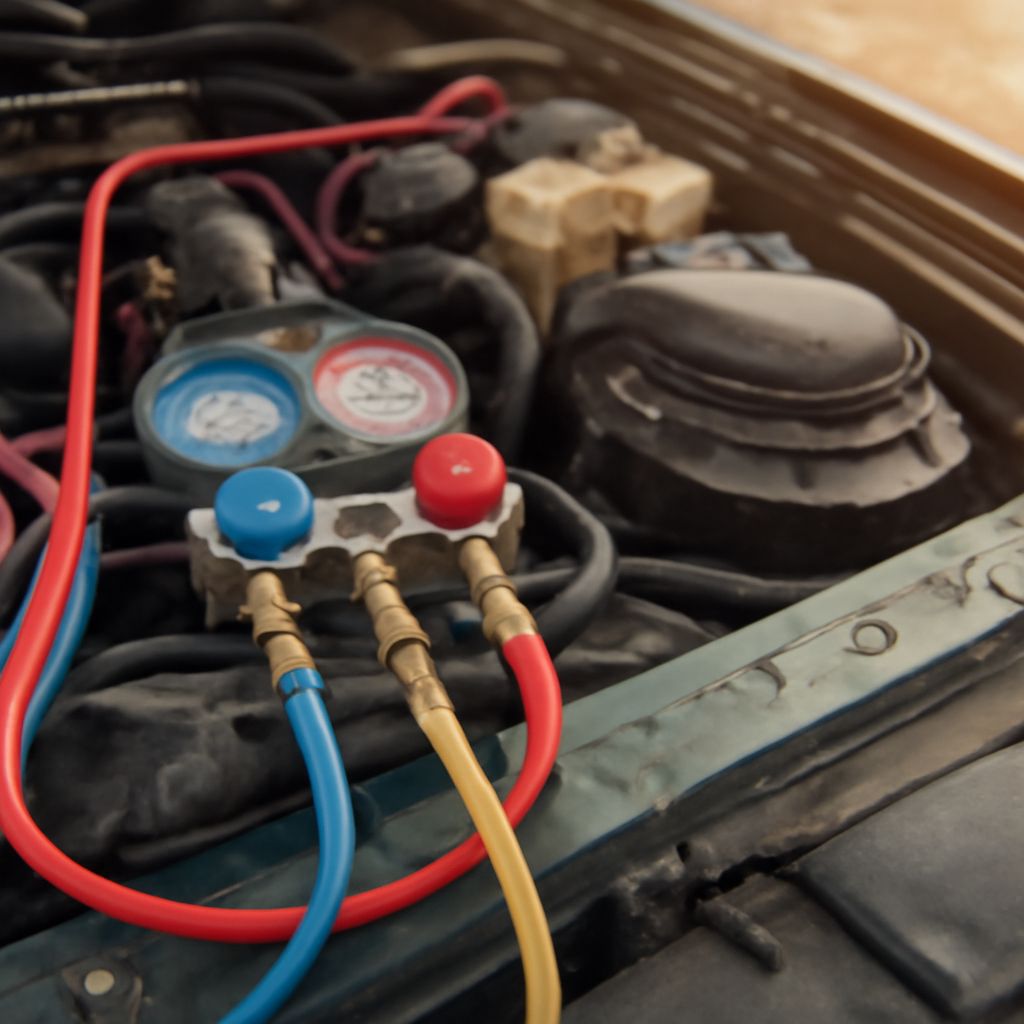
Have you ever wondered if the operation of your car’s air conditioning affects your fuel consumption? It’s a question many car owners ponder, especially when striving for optimal efficiency. The connection between a car’s AC system and gasoline usage is often misunderstood, leading to concerns such as a car AC smelling like gas or questioning the need for a car AC flush.
Furthermore, understanding how a car starts and runs, alongside estimating car AC repair costs, can help drivers make informed decisions. This article explores these topics, providing insights into why AC efficiency matters and offering practical tips for maintaining your vehicle’s air-conditioning system.
Introduction to Car AC and Fuel Use
Car air conditioning systems have become an essential component for vehicle comfort, particularly in warm climates. Yet, the question remains: does car AC use gas? The AC system itself does not directly consume gasoline; however, it relies on the engine to function, which indirectly affects fuel consumption. Therefore, while the AC may not use gas in a conventional sense, its operation can lead to increased fuel usage.
Due to the engine’s involvement in powering the AC, drivers may notice a slight decrease in fuel efficiency when the air conditioning is in use. Understanding the intricacies of this relationship is key to optimizing your vehicle’s performance and managing costs effectively.
Does Car AC Use Gas?
While the AC system itself does not burn gasoline, it requires energy from the engine, which runs on fuel, to operate. Therefore, activating your car’s air conditioner can lead to increased fuel consumption. This is because the engine has to work harder to power the AC compressor, which is responsible for cooling the air.
The added workload on the engine means that, indirectly, the answer to “does car AC use gas” is yes, as it contributes to higher fuel usage. Accurate calculations on fuel efficiency can assist in understanding the overall impact of AC usage on gas consumption.
Why Your Car AC Might Smell Like Gas
A car AC smelling like gas can be alarming and signal underlying issues. This odor often results from a fuel leak or other mechanical problems within the vehicle. When gasoline vapors escape, they can be pulled into the AC system, causing the smell to permeate the cabin.
If your car’s AC starts emitting a gas-like smell, it is advisable to seek professional assistance promptly. Regular inspections and adhering to professional best practices can prevent such occurrences and ensure the longevity of your vehicle’s air-conditioning system.
Understanding Car AC Flush
A car AC flush is a maintenance procedure aimed at cleaning the air conditioning system to enhance its performance and efficiency. Over time, contaminants can accumulate within the AC system, hampering its function and possibly leading to increased fuel consumption.
Performing a car AC flush can help remove these impurities, allowing the system to operate more smoothly and efficiently. Regular flushing as part of routine maintenance can prevent issues like a car AC smelling like gas, improve cooling performance, and extend the lifespan of the system.
How a Car Starts and the Role of AC
The process of how a car starts involves several key components working together, including the ignition system and battery. While the AC does not play a direct role in starting the engine, it can affect engine load once the vehicle is running.
When the AC is turned on, the engine must supply power to the compressor, increasing the workload. Understanding how a car starts and the interplay between various components can aid in diagnosing any issues and improving overall vehicle efficiency.
Estimating Car AC Repair Costs
Estimating car AC repair costs can vary widely depending on the issue at hand. Simple repairs, like recharging the refrigerant, may be relatively inexpensive, while extensive repairs, such as replacing the compressor, can be costly.
To avoid unexpected expenses, regular maintenance and inspections are recommended. By keeping the system in good condition, drivers can reduce the likelihood of major repairs and manage costs effectively.
Tips for Maintaining Efficient Car AC
Maintaining an efficient car AC system involves several key practices. Regular checks for leaks, ensuring adequate refrigerant levels, and performing car AC flushes are effective ways to keep the system running smoothly.
- Ensure the AC is serviced according to professional standards.
- Avoid running the AC at maximum settings for prolonged periods.
- Clean or replace the cabin air filter periodically.
Bottom line: Understanding the relationship between car AC use and fuel consumption is crucial for optimizing efficiency and managing costs. Regular maintenance, professional inspections, and adhering to best practices can prevent issues like a car AC smelling like gas and ensure the longevity of your vehicle’s air conditioning system.