Buying a used vehicle involves more uncertainty than purchasing new, but a thorough inspection before signing anything reduces that risk substantially. What to check when buying a used car covers everything from rust and structural damage to how the engine sounds at idle. Knowing what to look for in a used car before a test drive separates buyers who drive away confident from those who discover problems after the sale.
Things to look at when buying a used car fall into two categories: what can be assessed visually without tools, and what requires a mechanic with a lift and diagnostic equipment. What to look for in used car shopping also includes documentation, service history, and vehicle history reports. Things to check on a used car should happen in a logical order, starting outside the vehicle and working inward before ever turning the key.
Exterior Inspection
Body Panels and Paint
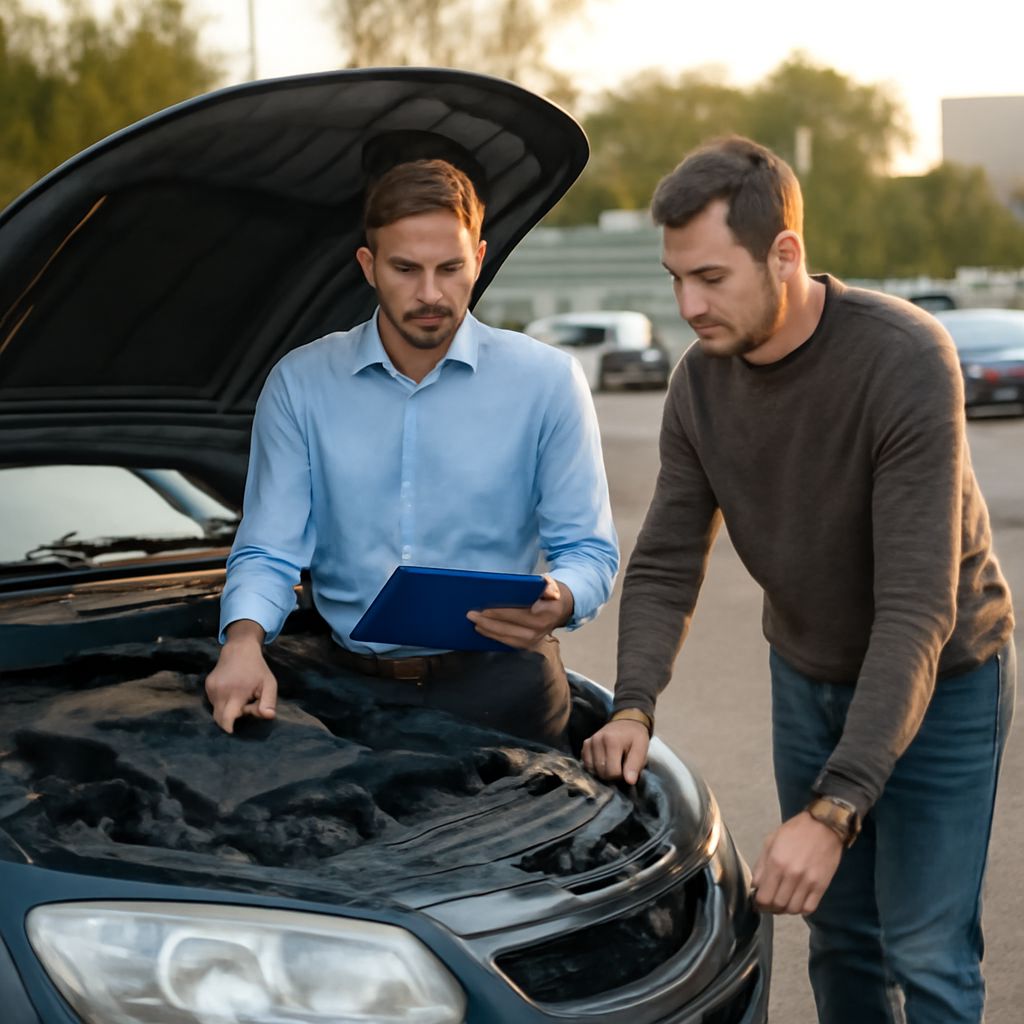
Stand back and sight down each panel from the front quarter to the rear. Ripples, color mismatches, or overspray on rubber trim indicate previous body repair, which may or may not signal a significant collision. Consistent panel gaps between doors, hood, and trunk lid suggest the body structure is straight. Uneven gaps on one side compared to the other often point to frame or unibody damage from a past accident.
Rust and Corrosion
Surface rust on brake rotors is normal for a parked vehicle, but structural rust on the frame rails, subframe, or floor pans is a serious problem. Crouch down and look under the vehicle with a flashlight. What to check when buying a used car in this area: look for bubbling paint, flaking metal, or rust-through holes near wheel wells and along the rocker panels.
Under the Hood
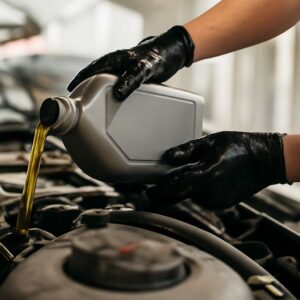
Check the oil level and condition. Black, gritty oil on the dipstick suggests long service intervals. Milky or foamy oil indicates coolant contamination, which often means a failed head gasket. Look at the coolant reservoir; the coolant should be clear or colored without visible debris. Check all visible belts and hoses for cracking or dry rot.
Start the engine cold if possible and listen for ticking, knocking, or rattling that fades or changes as the engine warms. Blue smoke from the exhaust at startup suggests oil burning. White smoke that persists beyond the first minute after cold start can indicate a coolant leak internally. These are the details of what to look for in a used car that sellers rarely volunteer.
Interior and Electronics Check
Dashboard Warning Lights
Turn the key to the “on” position before starting the engine and confirm that warning lights illuminate briefly before the engine starts. A seller who specifically asks to start the car for the buyer may be hiding a check engine light that has been cleared recently but will return. What to look for in used car interiors also includes unusual smells, damp carpet, or staining under the floor mats, which can indicate water intrusion.
Seat and Trim Condition
Test every seat adjustment, window, lock, and climate control function. Wear patterns on the driver’s seat and pedal pads that do not match the stated mileage are a clear sign the odometer reading may not reflect actual use. Things to check on a used car in this area take only a few minutes but can reveal significant discrepancies.
Test Drive Essentials
Drive the vehicle on both surface streets and a highway if possible. Brake firmly but safely to check for pulling, pulsation, or unusual sounds. Accelerate hard briefly to feel for hesitation or misfiring. Things to look at when buying a used car on the road include steering that tracks straight without hands, a transmission that shifts smoothly through all gears, and an air conditioning system that cools adequately.
Next Steps
After completing the personal inspection, arrange a pre-purchase inspection with an independent mechanic before finalizing any purchase. Pull a vehicle history report using the VIN to check for title issues, accident records, and odometer discrepancies. Things to check on a used car extend into paperwork as much as mechanics: confirm the seller’s name matches the title, and verify the vehicle is free of open liens before exchanging money.