Finding that a car is overheating with full coolant often catches drivers off guard. The assumption is that a full reservoir means the cooling system is fine, but coolant level and cooling system function are two separate things. When the temperature gauge climbs despite a full tank, the cause is almost always mechanical, not a matter of adding more fluid.
The pattern gets more specific when a car heats up when idling but cools when driving. That behavior points toward components that depend on vehicle speed to function, like the radiator fan. Whether the coolant reservoir full but car overheating situation appears suddenly or builds over time, the diagnostic path follows a clear sequence. The same applies when a car has coolant but still overheating, and when the car temperature gauge goes up when idle without warning.
Why a Car Is Overheating with Full Coolant
The Role of the Thermostat
The thermostat regulates coolant flow by opening once the engine reaches operating temperature. A thermostat stuck in the closed position blocks coolant from circulating through the radiator, causing the engine to overheat even when the system holds its full volume of fluid. Replacement is straightforward and inexpensive, making it one of the first components to check when overheating occurs.
Water Pump Failures
The water pump moves coolant through the engine block, cylinder head, and radiator. A worn impeller, a failed bearing, or a damaged seal can reduce flow to the point where the coolant sitting in the reservoir never reaches the areas that need cooling. The pump may look intact externally while the internal impeller has corroded or broken off entirely.
Air Pockets in the Cooling System
Air trapped in the cooling system creates hot spots that fluid cannot reach. This often happens after a repair if the system was not bled properly. The reservoir reads full because the air displaces coolant volume, but circulation remains compromised. Bleeding the system through the bleeder valve or by running the engine with the cap off until bubbles stop appearing resolves this in most cases.
Car Heats Up When Idling but Cools When Driving
Fan Clutch and Electric Fan Problems
At highway speeds, airflow through the grille keeps the radiator cool without fan assistance. At idle, the cooling fan is the only source of airflow. A failed fan clutch on mechanical fan setups, or a burned-out electric fan motor, means the radiator loses its primary cooling source the moment the vehicle stops moving. Testing the fan directly by checking operation when the AC is on, which forces the electric fan to run, helps isolate the fault quickly.
Restricted Airflow Through the Radiator
Debris buildup between the AC condenser and radiator core reduces airflow even when the fan works correctly. Bugs, leaves, and road grit pack into the fins over time. A visual inspection from the front of the vehicle and a gentle rinse with a garden hose often restores adequate airflow without any parts replacement.
Coolant Reservoir Full but Car Overheating: Common Causes
Head Gasket Leaks
A failing head gasket allows combustion gases to enter the cooling circuit, which creates pressure and foam in the coolant. The reservoir may appear full, but the coolant becomes contaminated and loses its heat transfer efficiency. White exhaust smoke, milky oil, or bubbles in the overflow tank are reliable indicators. A block test using combustion leak test fluid gives a definitive result without engine disassembly.
Blocked Radiator Passages
Scale and mineral deposits from years of tap water use can narrow or block the internal passages of a radiator. Even with proper coolant volume, flow restriction causes heat buildup. A radiator flush with appropriate descaling solution followed by fresh coolant mix at the correct ratio addresses this. In severe cases, radiator replacement is more cost-effective than repeated flushing.
Reading the Car Temperature Gauge Goes Up When Idle
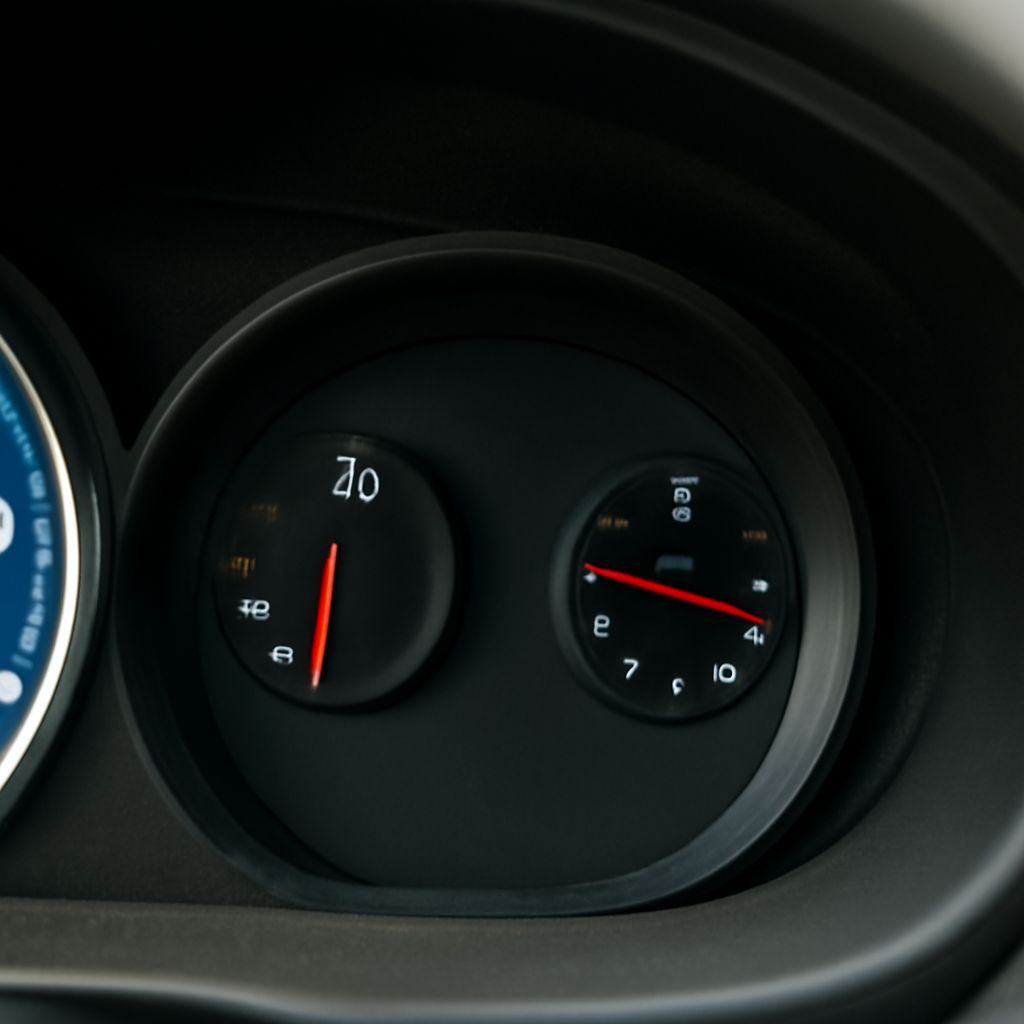
The car temperature gauge goes up when idle most reliably in electric fan failure scenarios, but it can also appear during low-speed stop-and-go traffic when cumulative heat builds faster than the system dissipates it. A gauge that climbs slowly at idle but returns to normal range after a few minutes of driving, then climbs again at the next stop, strongly implicates the fan circuit. A gauge that climbs without recovery at any speed points to thermostat, water pump, or head gasket issues.
Car Has Coolant but Still Overheating: Next Steps
When a car has coolant but still overheating, the diagnostic sequence starts with the simplest, least expensive components: thermostat, then fan, then water pump, then head gasket. Pressure-testing the cooling system identifies external leaks that may not be visible during a cold inspection. Checking coolant condition, color, and pH with test strips reveals whether the inhibitors have depleted and the coolant is no longer protecting metal surfaces from corrosion-driven damage.
Pro tips recap: A full coolant reservoir does not confirm a functioning cooling system. Address fan and thermostat issues first when overheating appears primarily at idle. Head gasket testing is warranted when no other cause is found and the coolant reservoir full but car overheating pattern persists despite other repairs.