The right replacement depends on the exact motorcycle and its fuel system. A stock bike may need a model-specific replacement, while a modified engine may require a documented pump and regulator combination suited to its changed demands. A fuel pump for a motorcycle has to fit electrically and mechanically as well as deliver fuel under the required conditions.
That distinction also matters when shopping for a higher-performance fuel pump. A larger flow number can sound reassuring, but the useful question is whether the complete kit matches the pressure, electrical supply and installation specified for your bike.
Identify the bike and the system
Start with the make, model, model year and market. Record the vehicle identification number and any relevant production details, then compare them with the parts catalog or service information for your motorcycle. Similar names can cover different engines, tanks and fuel systems. A listing for the right brand or displacement alone leaves too much unanswered.
Check whether the existing pump is an in-tank component or part of a larger assembly, and whether the bike uses fuel injection or a carburetor. The replacement must be intended for that arrangement. The motorcycle fuel pump may be sold separately, as a repair kit for the original module, or as part of a complete assembly. These products can involve different labor and different reused components.
Use the motorcycle manufacturer’s parts diagram to identify the original assembly and relevant part numbers. Then consult the replacement manufacturer’s application list, including any notes about year, trim or region. If the listing conflicts with the original parts information, give the supplier the VIN and ask for confirmation in writing. A photograph of a similar connector or housing is not enough to settle the question.
Confirm the diagnosis first
Hard starting, stalling or hesitation can prompt a pump search, but each has several possible causes. A restricted filter, electrical fault, contaminated fuel or another component can produce similar complaints. Ask a qualified motorcycle technician to compare the actual symptoms and test results with the service manual before ordering parts.
Pressure and delivery tests are useful only when performed and interpreted under the specified conditions. Electrical supply matters too: Delphi explains that low voltage or a poor connection or ground can make a pump underperform. A new pump cannot correct the underlying wiring problem.
Ask what was measured, what specification applied and whether contamination or an electrical issue also needs attention. This gives you a reason for selecting a pump or assembly rather than buying one on the strength of a symptom alone.
Performance fuel pump claims and operating conditions
A performance fuel pump may advertise flow in gallons per hour or liters per hour. That figure is meaningful only with the pressure and voltage at which it was measured. Imagine a pump moving water uphill: changing the resistance changes the amount delivered. Comparing two flow figures taken at different pressures tells you little about their relative delivery in your system.
For a higher-output fuel pump, find the motorcycle manufacturer’s required fuel pressure and the operating conditions in the service documentation. Ask the pump supplier for a flow-versus-pressure specification at the relevant supply voltage, plus the permitted pressure range. The system must deliver the required fuel at its working pressure, not merely reach a large free-flow number. A regulator, filter and lines also form part of the system, so ask how the proposed pump works with the existing arrangement.
Before choosing a fuel pump for higher performance, give the specialist a list of changes and the intended use. A pump advertised for greater performance is not a guarantee of more power: the engine and its fuel control must be matched to the complete setup. Do not select an arbitrary pressure or assume that more flow can compensate for an incompatible regulator.
Check electrical and physical fit
Compare the specified voltage, current draw, connector, polarity and control requirements with the motorcycle’s documentation. A pump can physically fit while demanding more current than the original circuit is designed to supply. Ask the manufacturer or technician to verify the pump, fuse, wiring and control arrangement together. Avoid cutting connectors or changing fuse ratings to force an undocumented fit.
For an electric pump kit for a motorcycle fuel system, check dimensions, inlet and outlet orientation, mounting method and clearance inside the original housing or tank. Verify whether the pump is designed for the fuel and additives specified for your bike. A unit marketed for an automobile may share a voltage or shape, but that does not establish fit or suitability for a motorcycle’s system.
If the kit requires an adapter, use only the parts and configuration its maker approves for the application. Ask whether the existing regulator, sender, housing and electrical connections are retained or replaced. A complete module can be the better comparison when those parts are damaged or cannot be serviced separately.
Compare what comes in the box
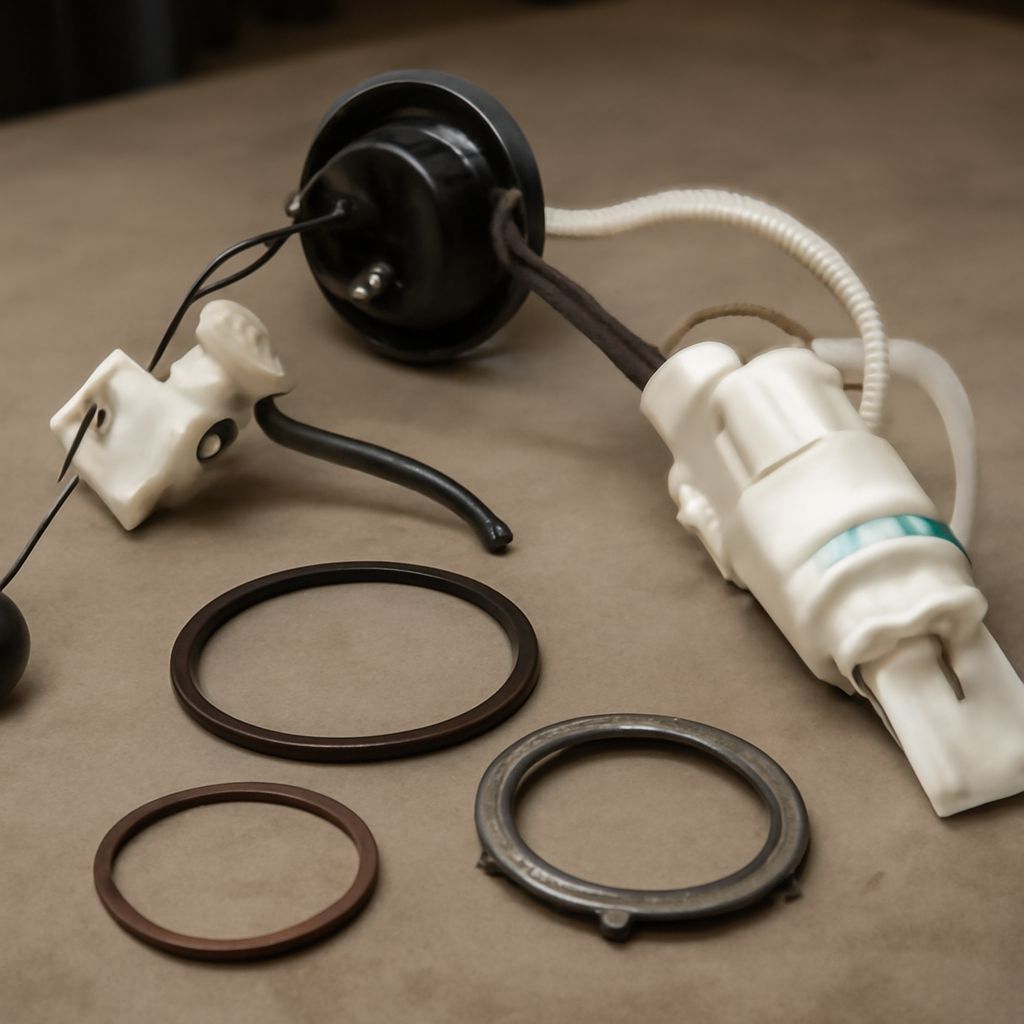
An electric fuel pump kit can contain a pump alone or a collection of service parts. Check the itemized contents of a kit for your motorcycle’s fuel pump for the strainer, filter, seals, hoses, clamps, wiring and regulator as applicable. Confirm which pieces your bike requires and which must be purchased separately. A low advertised price may change once the missing parts and labor are included.
For example, Quantum’s HFP-382-S122RT listing identifies a pump, pressure regulator, tank seal and strainer, while directing buyers to confirm the exact year and model. The product name illustrates why contents and application are separate checks; it does not make the kit suitable for every Suzuki.
Compare the total installed estimate, warranty and availability of the parts that will remain in the original assembly. Ask whether the technician will inspect the tank for contamination and replace required seals, filters or other service items according to the motorcycle manufacturer’s instructions.
Plan professional installation and verification
Fuel and its vapor are flammable, and injection systems can retain pressure. Have a qualified technician use the model-specific service procedure and appropriate equipment. If you smell fuel or see a leak, shut the motorcycle off, move away from ignition sources and arrange professional assistance rather than riding it.
After installation, ask the shop to check for leaks and verify fuel pressure and operation according to the service manual. Keep the part number and the test results with your records. For a motorcycle’s fuel pump, choose a kit only when the manufacturer confirms the exact model and the complete electrical, fuel and mounting application.