A clogged air filter quietly degrades engine performance, reduces fuel economy, and can contribute to emissions issues, yet many drivers skip this maintenance item entirely. Knowing how often to change air filter in car terms depends on driving conditions, vehicle age, and the type of filter installed. The manufacturer recommendation is a starting point, but real-world conditions often call for more frequent attention.
For most passenger cars, the general guidance on how often to replace car air filter falls between 15,000 and 30,000 miles under normal driving conditions. Dusty environments, gravel roads, or stop-and-go city driving can cut that interval in half. Figuring out when to change air filter in car means looking at both the mileage clock and the filter’s physical condition. Drivers who understand how often change car air filter intervals vary by environment will catch problems before they affect performance. The question of when to replace car air filter is simpler than it sounds once the right habits are in place.
Standard Replacement Intervals
Most manufacturers recommend inspecting the engine air filter every 15,000 miles and replacing it between 15,000 and 30,000 miles depending on conditions. Vehicles driven primarily on paved roads in moderate climates tend to reach the upper end of that range. Trucks and SUVs used on construction sites, unpaved roads, or agricultural settings may need a new filter every 10,000 miles or less.
Cabin air filters, which are different from the engine air filter, typically need replacement every 12,000 to 15,000 miles. Both items are often grouped together during routine service visits, making it easy to address them at the same time.
How to Inspect the Filter
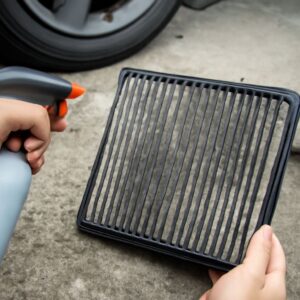
Removing the air filter for a visual check takes less than five minutes on most vehicles. A new filter is white or off-white. A filter that has accumulated moderate gray dust can still function adequately. A dark brown or black filter clogged with debris needs replacement immediately. Hold the filter up to a light source: if little to no light passes through, it’s time for a new one.
Understanding when to change air filter in car isn’t just about mileage. Smell the filter too. A musty odor suggests moisture has entered the housing, which can promote mold growth inside the intake tract.
Effects of a Clogged Filter
A restricted air filter forces the engine to work harder to draw in the air it needs for combustion. This increases fuel consumption and can reduce throttle response. On older vehicles without sophisticated engine management systems, the effect on performance is more noticeable. Modern vehicles adjust fuel trim automatically, but prolonged use of a blocked filter still causes measurable inefficiency.
Knowing how often to replace car air filter directly impacts long-term engine health. Dirt that bypasses a deteriorated filter can reach the combustion chamber and accelerate cylinder wall wear over time.
Choosing a Replacement Filter
OEM-spec paper filters are the standard choice and work well in most conditions. High-flow aftermarket filters made from oiled cotton gauze claim improved airflow but require periodic re-oiling and cleaning rather than simple replacement. For most drivers, a quality paper filter that meets or exceeds OEM specifications is the practical choice.
Price varies from $10 to $40 for most passenger vehicle applications. The cost of the filter is negligible compared to the potential fuel savings and engine protection it provides when replaced on schedule.
When to Replace Car Air Filter Between Services
If the check engine light comes on alongside rough idle or reduced power, a severely clogged filter may be contributing to the problem. Most scan tools will show a lean fuel mixture code in this situation. Drivers who know how often change car air filter intervals apply in their specific environment can often prevent this scenario entirely by checking the filter at every oil change.
Bottom line: Replace the engine air filter every 15,000 to 30,000 miles under normal conditions, and more frequently in dusty or demanding environments. A visual inspection at each oil change costs nothing and catches a dirty filter before it affects fuel economy or engine health.