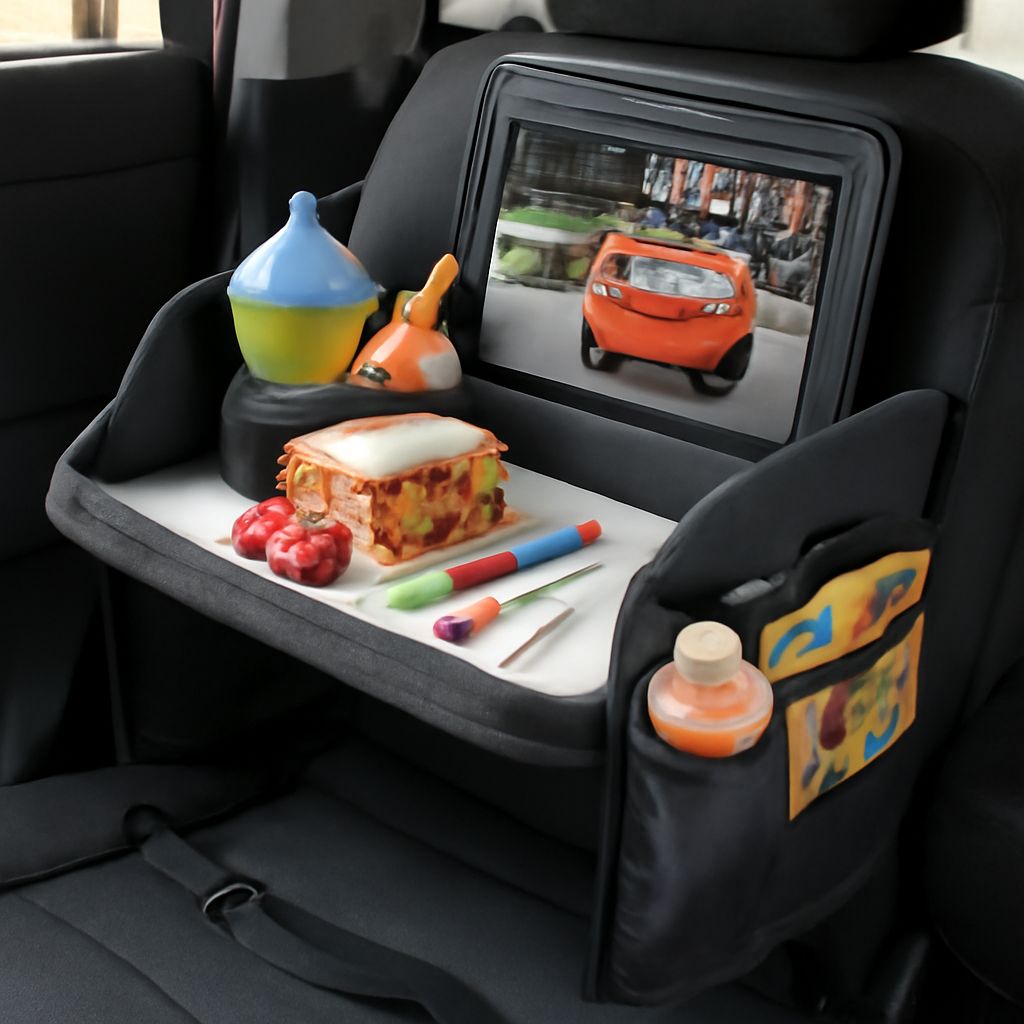
Long drives with children produce a predictable problem: boredom sets in, snacks end up on seats, and drawing materials need a flat surface. A car seat tray addresses all three by giving children a stable workspace attached directly to the seat in front of them or clipped to their own restraint. The right tray keeps activities contained, reduces mess, and gives kids a sense of their own defined space during extended travel.
A car seat table differs from a basic tray in its rigidity and surface area. A car seat travel tray clips to the back of the front passenger seat, while a travel tray for car seat attaches directly to the child restraint. A car seat desk goes further, offering a larger work surface suited to older children who need space for tablets, workbooks, or larger craft projects. Each type fits different age ranges and vehicle configurations.
What a Car Seat Tray Does and Who Needs One
Age and Size Considerations A car seat tray works best for children between about 18 months and 8 years, depending on the tray style and seat type. Younger toddlers in rear-facing seats cannot use most tray designs because their orientation prevents the standard attachment method. Children in forward-facing harness seats and high-back boosters can use most clip-style trays without issue. Older children in backless boosters often use a different format, typically a lap desk that rests on the thighs rather than attaching to the seat.
Attachment Methods and Seat Compatibility Most car seat travel tray designs use an adjustable strap that loops over the headrest of the seat in front. Tightening the strap draws the tray surface close to the child and keeps it stable during vehicle movement. Some designs add a non-slip bottom surface that rests against the seat-back for additional stability. Before purchasing, checking whether the tray fits between the front headrest posts and the seat-back padding prevents sizing mismatches.
Car Seat Table vs. Car Seat Travel Tray: Key Differences
A car seat table typically refers to a rigid, flat surface with raised edges to prevent items from sliding off. The raised lip keeps crayons, cups, and small toys from rolling onto the floor during turns and lane changes. A car seat travel tray usually has a softer, pillow-like base that conforms to the child’s lap and provides a degree of cushioning, which is more comfortable for longer use periods.
The pillow-base design of a travel tray for car seat also absorbs minor turbulence better than a rigid table. Rigid designs handle heavier loads, such as a tablet in a protective case, more reliably. Neither type should be used as a primary support surface for a child’s arms during a collision, as both are designed for normal travel conditions, not crash scenarios.
Choosing a Travel Tray for Car Seat Types
Convertible and Booster Compatibility
A travel tray for car seat compatibility varies by the restraint type the child uses. Convertible seats in forward-facing mode typically allow standard headrest-loop trays without obstruction. High-back booster seats have built-in headrests that may sit higher than the front seat headrest, which can change the tray angle. Checking the tray manufacturer’s compatibility notes against the specific seat model prevents ordering a unit that does not sit level.
Weight and Storage
Travel trays are travel accessories, which means they come out of the vehicle at the destination. A tray that weighs under one pound and folds flat fits in a door pocket or under the front seat. Rigid trays with non-folding designs take up more space but offer greater durability for children who press hard on their work surface. For families who travel frequently, the fold-flat option reduces clutter and simplifies packing.
Car Seat Desk Features for Older Kids
A car seat desk targets children roughly 6 and older who need a larger surface for writing, drawing, or using a tablet. These units are typically lap-rest designs rather than headrest-clip designs, placing the surface across the child’s thighs. The increased size accommodates standard letter-size paper and most tablet sizes up to 11 inches.
Some car seat desk models include cup holders, pencil slots, and device holders along the sides. Built-in storage reduces the number of loose items that end up in the seat gap. The tradeoff is that larger desk designs are heavier and bulkier than compact travel trays, which affects how easy they are to pack and retrieve.
Practical Tips for Using a Tray on Road Trips
Attaching any tray style before the child is buckled in simplifies setup. Placing the strap over the headrest with the child out of the seat prevents the awkward reach-around required when working around a seated child. Setting the tray height so it sits level with the child’s natural elbow position reduces fatigue during long activity sessions.
Keeping the tray stocked with contained items, meaning items that stay on the surface rather than rolling, reduces how often the driver needs to retrieve dropped items. Silicone mats placed on top of the tray surface add grip that holds cups and small containers in place without adhesive.
Key takeaways: Match the tray design to the child’s seat type and age range before purchasing. A car seat travel tray with a pillow base works for most toddlers and younger children; a car seat desk suits older children who need more surface area. Always verify headrest strap compatibility with the specific front seat configuration in the vehicle.