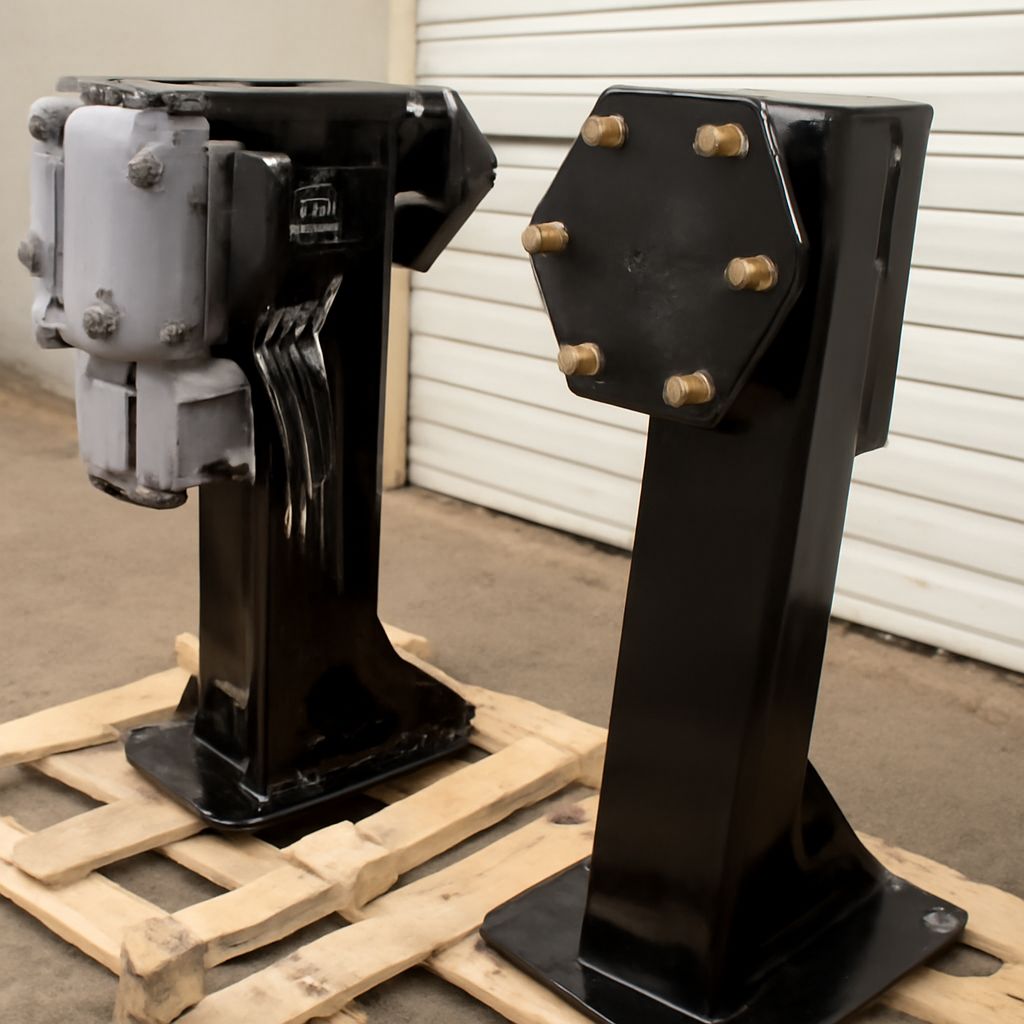
The right choice depends on two things: the weight the equipment is documented to carry and whether its mounting hardware fits your particular engine. Stands for engines may have enough capacity yet lack a suitable mounting pattern; holders for engines may match the bolt holes but have a lower load rating than the stand itself.
Start with the engine as it will sit during the job. A bare block, a long block and an assembly with accessories can have different weights and clearances. Then compare that configuration with the instructions for every part of the support system.
Determine the weight you will actually support
Find the engine model and part number, then look for a manufacturer’s weight for that specific configuration. Note whether the figure covers the components you intend to leave attached. A catalog number for a crate engine is a better starting point than a weight quoted for an entire family of engines.
For example, Chevrolet Performance’s 2024 catalog lists its LS3 6.2L crate engine, part 19435098, at 415 lb and its LS3 long block, part 19435106, at 384 lb. Those figures belong to those catalog configurations; they are not a universal weight for every LS3 removed from a car. Identify what is included before adding or subtracting anything from a published figure.
Make a list of the parts remaining on your assembly, such as manifolds, accessories and the flywheel or flexplate, as applicable. Account for fluids if they remain in it. Use documented weights for additions and avoid counting an item twice. If you cannot establish a reliable total, ask the engine manufacturer or a qualified shop for the weight of the configuration before selecting the equipment.
Engine holder capacity and the complete setup
The label on an engine stand describes a limit for the stand under the manufacturer’s stated conditions. An adapter or mounting plate can carry its own limit, and its instructions may restrict which engines and mounting arrangements it supports. Read both sets of documents together when comparing engine stands.
A concrete example shows why. OTC’s instructions for its 1750 and 1750A stands list a maximum capacity of 6,000 lb. Its separate 528859/205466 adapter instructions specify a 3,000 lb maximum and identify the John Deere engine series for which that adapter is designed. With that combination, the adapter’s lower rating limits the load; its application list still matters. This heavy-duty example illustrates the comparison, not a recommendation for a passenger-car engine.
Compare the documented working weight with the lowest applicable rating in the assembled system. Leave room for any load you plan to add during the work and follow any more restrictive manufacturer conditions. If a plate’s rating or intended application is missing, obtain its documentation before relying on it. A larger number on the upright cannot establish the capacity of an unidentified plate.
Check where the bolts have to go
An engine service stand can look adjustable and still fail to line up. Find the engine manufacturer’s designated mounting points and compare their spacing and orientation with the plate, arms or engine-specific adapter. Check the number of attachment points required and whether each arm can reach its point without interference. An adjustable arm’s range is a physical limit, not proof of compatibility with every block.
The engine holder must also allow the mounting surfaces to sit as the instructions require. A protruding casting, oil pan or accessory can obstruct an arm or prevent the assembly from seating. Check the space around the rear face and the path the engine will take if you intend to rotate it. The center of mass matters here: like a weight held far from your hand, an offset load is harder to control as it turns.
Ask the stand or adapter manufacturer for an approved application or drawing when the dimensions are unclear. If a specified adapter is required, include it in the cost and capacity comparison. Do not drill, bend or modify a mounting plate to make an undocumented fit work.
Match fasteners to the engine and adapter
The bolt holes are only one part of the connection. Verify the required thread diameter, pitch, grade, length and engagement against the engine and adapter instructions. The bolts must pass through the mounting hardware and engage the block as specified, without bottoming in a blind hole. Washers, spacers and torque values should follow the relevant instructions for that exact arrangement.
OTC’s adapter instructions, for example, give different fastener details for particular John Deere configurations, including a specified minimum thread engagement and torque for one application. Those figures are useful for that application only; they are not a recipe for mounting a car engine. If the documents do not specify the connection clearly, get the missing details from the manufacturer or a qualified professional.
Before transferring the load, inspect stands for engines and their fasteners for damage and follow the assembly and positioning instructions. Keep the lifting equipment attached until the engine is securely mounted and the hardware tightened as directed. OTC explicitly gives this sequence in its adapter instructions and calls for releasing the lifting equipment carefully and slowly.
Plan the work and movement
Check that the base, floor and available space meet the manufacturer’s instructions. Stands for engine repair need room for the legs, lifting equipment and the person turning the assembly. A level, firm work area also lets you inspect the mounting points without having to reach around clutter.
With engine stands that rotate, decide whether rotation is needed for your repair. Confirm that the handle, locking mechanism and available swing clearance suit the job before the load is transferred. Components added or removed during work can change balance, so reassess control and follow the instructions for the particular equipment as the configuration changes.
An engine cart serves a different purpose: it may be intended to transport or store an assembly rather than hold it for rotation and service. Use its own documentation for capacity, attachment and permitted movement. Likewise, an engine stand should be moved loaded only when its manufacturer permits it and under the stated conditions.
Make the final comparison
Put the figures and fit details side by side: documented weight in the intended configuration, capacity of the stand and each adapter, approved mounting points, fasteners and clearance. If the load or connection cannot be confirmed, resolve that gap before putting weight on the equipment. Choose a stand for the engine only when the complete setup has sufficient documented capacity and a mounting arrangement confirmed for that engine.