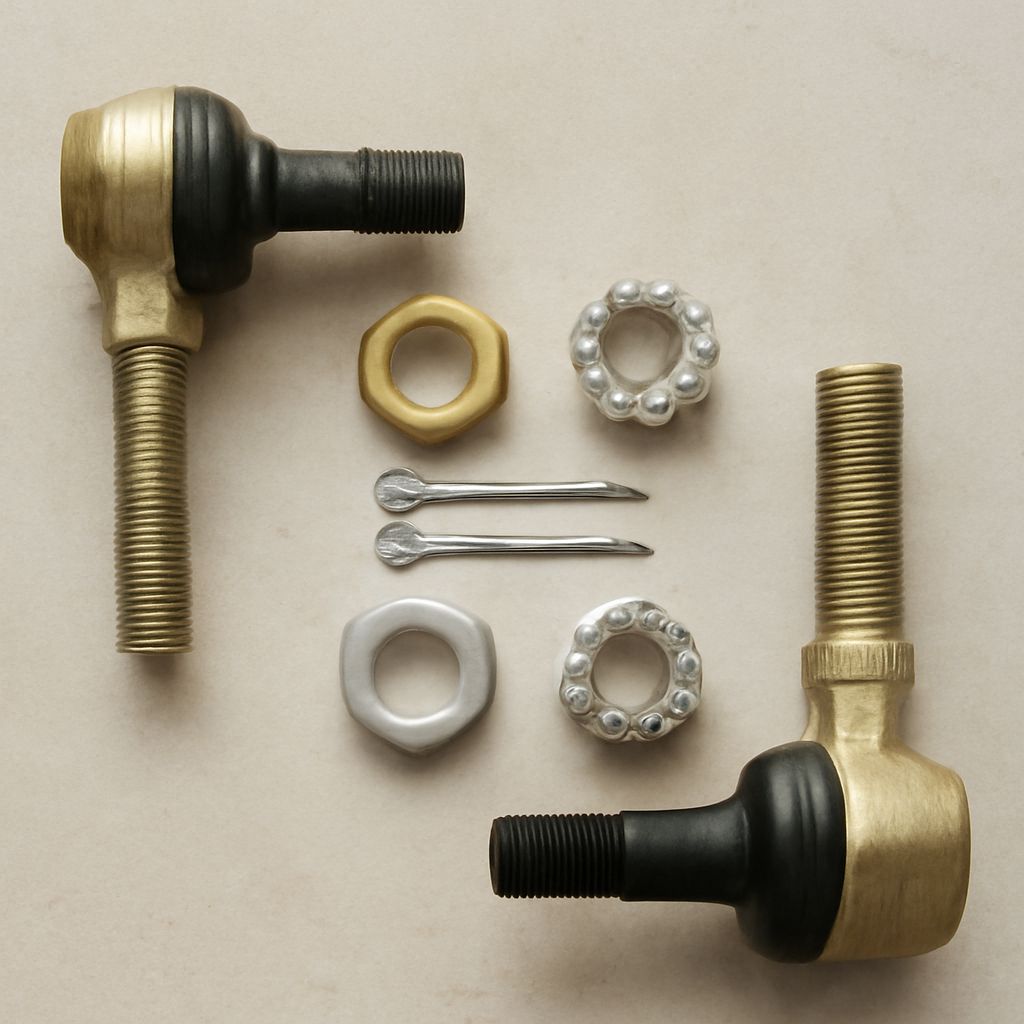
Recognize a steering problem early and you can arrange an inspection before a worn joint leaves you without reliable control. If a tie rod has loosened, the steering may feel vague or the front end may clunk. A noise from a worn tie rod is one possibility, but the sound alone cannot identify the part.
Take a change in steering seriously. If the vehicle suddenly wanders, responds unpredictably, or makes a hard clunk with a change in steering feel, ease off the accelerator and move to a safe stopping place as traffic permits. Turn on your hazard lights, stop, and arrange a tow. Do not keep testing it on the road.
What the joint does
On a typical rack-and-pinion system, the steering wheel turns a mechanism that moves a rack sideways. Tie rods carry that movement to the steering knuckles at the wheels. Think of the assembly as a push-and-pull link: motion at one end should produce a corresponding movement at the other.
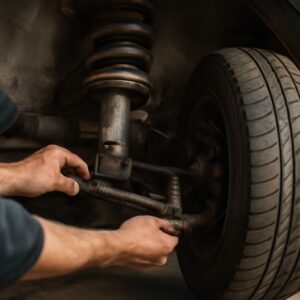
Each side normally has an inner joint at the rack and an outer joint connected to the knuckle. The joints pivot as the wheels steer and the suspension moves. Wear can create slack where the joint should transmit force. A loose tie rod can let the wheel change direction slightly before the steering system takes up that slack.
A torn rubber boot is a reason to have the joint examined. It may allow water and dirt in or lubricant out, accelerating wear. The tear itself does not establish how much play the joint has; the technician needs to inspect the assembly.
Tie Rod Noise and Other Clues
A clunk from a tie rod may be heard when turning at low speed or going over a bump. Tie rod noise can be intermittent, and its location is difficult to judge from the driver’s seat. Sway bar links, ball joints, struts and other components can also make front-end noises. Tell the shop when the sound occurs rather than ordering a particular part based on the sound alone.
Other signs worth reporting include:
- Steering play: The wheel moves farther than usual before the car responds, or the car needs frequent small corrections to track straight.
- Wandering or pulling: The vehicle drifts or feels less predictable. Tire pressure, road slope and alignment can also affect tracking.
- Vibration: A shake in the steering wheel can accompany steering or suspension wear, though wheels and tires are other possible sources.
- Uneven tire wear: A worn joint can affect wheel alignment, allowing tires to scrub. Ask the shop to inspect the wear pattern and measure alignment after any necessary repair.
MOOG’s overview of failing tie rods describes steering, tire-wear and noise symptoms. You do not need every symptom for an inspection to be worthwhile. Equally, one symptom is not a diagnosis: the shop must find where the movement or sound originates.
Can you keep driving?
The problem with driving with a bad tie rod is that the condition of the joint cannot be measured from the driver’s seat. A worn connection may worsen, and a separated connection can take away steering control. In a GM recall acknowledged by NHTSA, an improperly tightened inner attachment could separate from the rack; owners of the affected vehicles were told to have them towed for inspection and repair. That recall describes a specific defect, but it illustrates what a failed connection can do.
There is no dependable mileage or speed that makes driving a car with a worn tie rod safe. If you suspect steering linkage damage, stop driving and arrange a tow to a repair facility. Describe the symptoms to the dispatcher as well as the shop. If steering changes abruptly while you are moving, keep your hands on the wheel, slow gradually, avoid sudden maneuvers, and pull off where you can safely stop. If you cannot reach a safe location or are in immediate danger, call emergency services.
How a shop finds the play
Explain when you first noticed the change, whether it happens in a turn or over bumps, and whether it followed a pothole strike. A technician can inspect the tires, steering and suspension, then isolate the movement at the joints. MOOG’s front-end inspection guide describes checking both ends for play and examining the boots.
The distinction matters. An outer joint sits at the wheel-side knuckle; the inner joint connects to the steering rack and is generally covered by a bellows boot. A technician can watch and feel the linkage while applying movement, checking whether the slack is in the inner joint, outer joint, mounting, or another component. Looseness in the inner tie rod calls for attention at a different location than wear at the outer end.
Ask the technician to show you the movement and identify the failed side and part. Play in a tie rod can be confused with movement elsewhere, so a wheel-rock test alone does not identify which piece is worn. Do not crawl under a vehicle supported only by a jack or ask someone to move the steering while you reach into the linkage.
Repair and alignment
The shop should replace a worn or damaged part using the correct procedure and hardware for the vehicle, then check the rest of the steering linkage. Ask for an estimate that identifies the inner or outer component, labor and alignment. Replacement needs depend on the inspection; a shop should explain any recommendation to replace parts on both sides.
Tie-rod adjustment affects toe, the direction the wheels point relative to each other. After replacement, have the alignment checked and adjusted to the vehicle manufacturer’s specifications. Ask for the before-and-after readings and a description of any tire damage. An alignment cannot cure a worn joint: the mechanical fault must be addressed first.
When the clunk returns
If a tie rod makes a knocking sound, a repair should address the identified cause. A recurring front-end knock can come from another component. If the tie rod end is loose, the shop should be able to locate movement at that joint; a noisy tie rod is only one possible source. Note whether the sound occurs during turns, bumps or both, and return to the shop for an inspection. If the noise comes with new steering play or wandering, stop driving and arrange a tow.