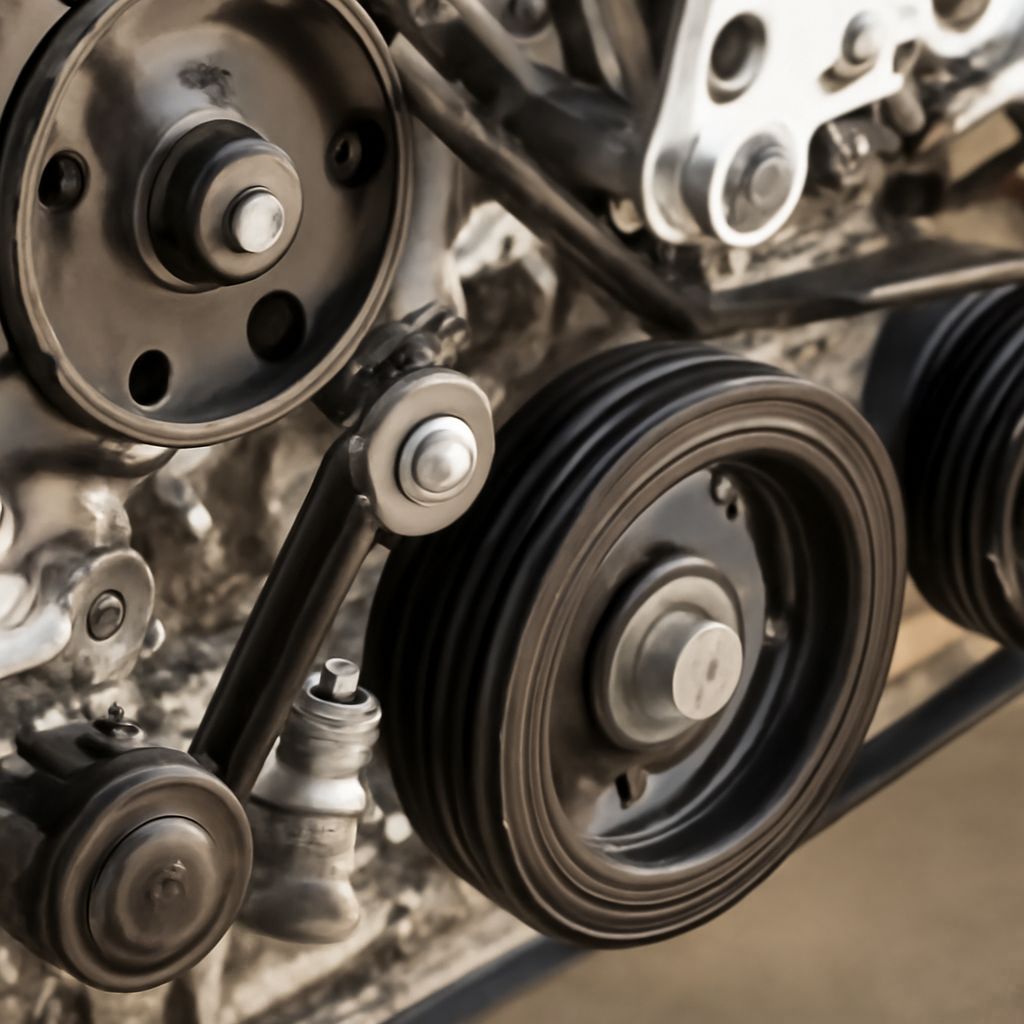
What do the engine compartment and the passenger cabin have in common? Both rely on belts that most drivers take for granted. The car serpentine belt powers essential accessories like the alternator and power steering, while the timing belt car keeps the engine’s valves and pistons synchronized. Fail to maintain either and the vehicle can leave a driver stranded — or worse. In the cabin, a faulty car seat belt clip can compromise restraint in a crash, and worn car seat belt covers may cause chafing that discourages proper buckle use. A dependable car seat belt buckle is the last line of defense.
Understanding both systems helps vehicle owners schedule maintenance proactively and choose the right accessories for daily safety.
Understanding the Car Serpentine Belt
The car serpentine belt is a long, continuous rubber belt that snakes around multiple engine pulleys. It drives the alternator, air conditioning compressor, water pump, and power steering pump simultaneously. A single belt doing the work of several older V-belts means fewer components to monitor — but also a more consequential failure if the belt snaps.
Signs of Wear and Replacement Timing
Serpentine belts typically last 60,000 to 100,000 miles depending on material and driving conditions. Visual inspection should happen at every oil change. Look for fraying along the edges, cracks across the ribs, glazing on the flat side, or missing chunks. Squealing noises on startup or during sharp turns often indicate a slipping or worn serpentine belt. Replace it at the first sign of deterioration rather than waiting for a roadside failure.
A tensioner pulley check is equally important. If the tensioner spring is weak, the belt can slip even when new. Technicians typically replace both the belt and tensioner together to avoid a repeat service visit within 12 months.
How It Differs from a Timing Belt
The timing belt car is located inside the engine and connects the crankshaft to the camshaft. Unlike the serpentine belt, it is not visible without removing engine covers. Timing belt replacement intervals run from 60,000 to 105,000 miles. Interference engines — where the pistons and valves share the same space — can sustain catastrophic damage if the timing belt fails without warning. Non-interference engines are more forgiving but still require timely replacement. Confusing the two belts is a common mistake; they are separate components with separate maintenance schedules.
Car Seat Belt Systems and Components
Modern vehicle restraint systems rely on three-point seat belts that distribute crash forces across the chest, shoulder, and hip. The retractor stores excess webbing during normal driving and locks instantly during deceleration events. The latch plate slides along the webbing, and the car seat belt buckle receives and secures it with a click that can be heard and felt. Proper engagement of the buckle is not optional — it is a legal requirement in all U.S. states for front-seat occupants and most rear-seat occupants as well.
Annual inspections of seat belt components are recommended. Check that the webbing retracts smoothly and shows no cuts or fraying. Confirm that each car seat belt buckle releases cleanly with a single button press, which matters most during an emergency exit after an accident.
Seat Belt Accessories: Clips, Covers, and Buckles
Aftermarket seat belt accessories can improve comfort and fit without undermining safety — provided they meet relevant standards. Cheap accessories that shift belt geometry away from the shoulder and across the neck are hazardous and should be avoided.
Choosing the Right Seat Belt Clip A car seat belt clip repositions the shoulder strap for drivers and passengers who find standard geometry uncomfortable. These are especially common for shorter occupants whose belts may sit too close to the neck. Select clips that are tested for crash retention rather than decorative items sold without safety documentation. A properly designed seat belt clip holds the strap across the center of the collarbone and should not shift position during a 30 mph deceleration event.
Seat Belt Covers for Comfort
Long drives make car seat belt covers a practical addition. Padded fabric or neoprene sleeves cushion the shoulder strap and prevent skin irritation on bare arms during summer months. Verify that any seat belt covers used do not interfere with the belt’s ability to retract fully or lock during a sudden stop. Well-made covers are thin, lightweight, and secured with Velcro or snaps that release quickly if needed. Replace worn or faded covers annually to maintain both hygiene and comfort.
Pro tips recap: Inspect the serpentine belt visually every 12 months or 15,000 miles and replace it along with the tensioner at the manufacturer’s recommended interval. Keep the timing belt on a separate, engine-specific schedule. Check all seat belt components — webbing, clip, covers, and buckle — for wear each year and replace any part that shows damage or fails to function smoothly.