Few things are more unsettling than feeling your vehicle tremble as you slow down. If you’ve noticed car shaking when braking, you’re not alone — this is one of the more frequent complaints that auto repair shops handle. The causes range from minor wear to components that need prompt attention. Understanding why does my car shake when i brake helps drivers make smarter decisions about when to seek service.
Car shudders when braking, car shaking while braking, and the sensation that the car shakes when stopping all point to one or more mechanical issues in the braking or suspension system. The good news is that most causes are well-understood and fixable without replacing the entire brake system.
Warped Brake Rotors: The Most Common Culprit
Brake rotors are the metal discs that the brake pads clamp against to slow the vehicle. Over time, heat cycles and wear cause rotors to lose their flat, even surface. When this happens, the pads make inconsistent contact, and the driver feels a pulsing or vibration through the brake pedal and steering wheel. This is the single most common reason for car shaking when braking.
Rotors can warp from aggressive braking, towing heavy loads, or simply age and mileage. A mechanic can measure rotor thickness and runout with a dial indicator. If the rotor is within the manufacturer’s minimum thickness spec, it can sometimes be resurfaced. If it’s below spec, replacement is the right call.
Worn or Uneven Brake Pads
Brake pads that are worn unevenly, glazed from overheating, or contaminated with brake fluid can cause car shakes when stopping. Glazed pads lose their friction material’s grip and can cause the braking force to fluctuate, creating a shudder through the vehicle. Pads should be inspected at every tire rotation. When thickness drops below about 3mm, replacement is overdue.
Loose or Worn Wheel Bearings
A worn wheel bearing creates play in the wheel assembly. Under braking loads, that play allows the rotor to wobble slightly, amplifying the sensation the driver feels. This can feel very similar to rotor warp. The distinction is that bearing noise often appears at highway speed even without braking. Any looseness in a wheel bearing is a safety issue and should be addressed promptly.
Suspension and Steering Component Wear
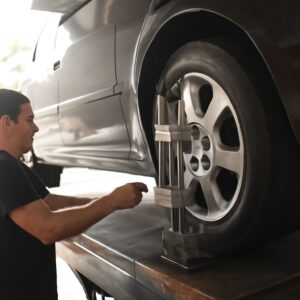
Ball joints, tie rod ends, and control arm bushings all contribute to keeping the wheel in the correct position. When these components wear, braking forces can cause the wheel to shift slightly, making car shaking while braking worse. A technician will check these with a pry bar under the vehicle during a brake inspection.
Brake Caliper Problems
A sticking brake caliper applies uneven pressure to one rotor. This causes that wheel to drag, builds up heat, and can make the car shudder when braking on one side. If one caliper is stuck, uneven pad wear is usually visible on that axle. Calipers can often be rebuilt, but replacement is frequently the more reliable solution.
Out-of-Balance or Damaged Tires
While tire imbalance more often causes vibration at speed rather than specifically during braking, a damaged tire — one with a flat spot or internal separation — can contribute to the car shakes when stopping sensation. A visual inspection and road force balance test will identify these issues.
Key Takeaways
Car shaking when braking almost always traces back to rotors, pads, bearings, or suspension wear. Have the braking system inspected at the first sign of shuddering or vibration, since these problems tend to worsen over time. A qualified technician can diagnose the root cause with a visual inspection and a short test drive.