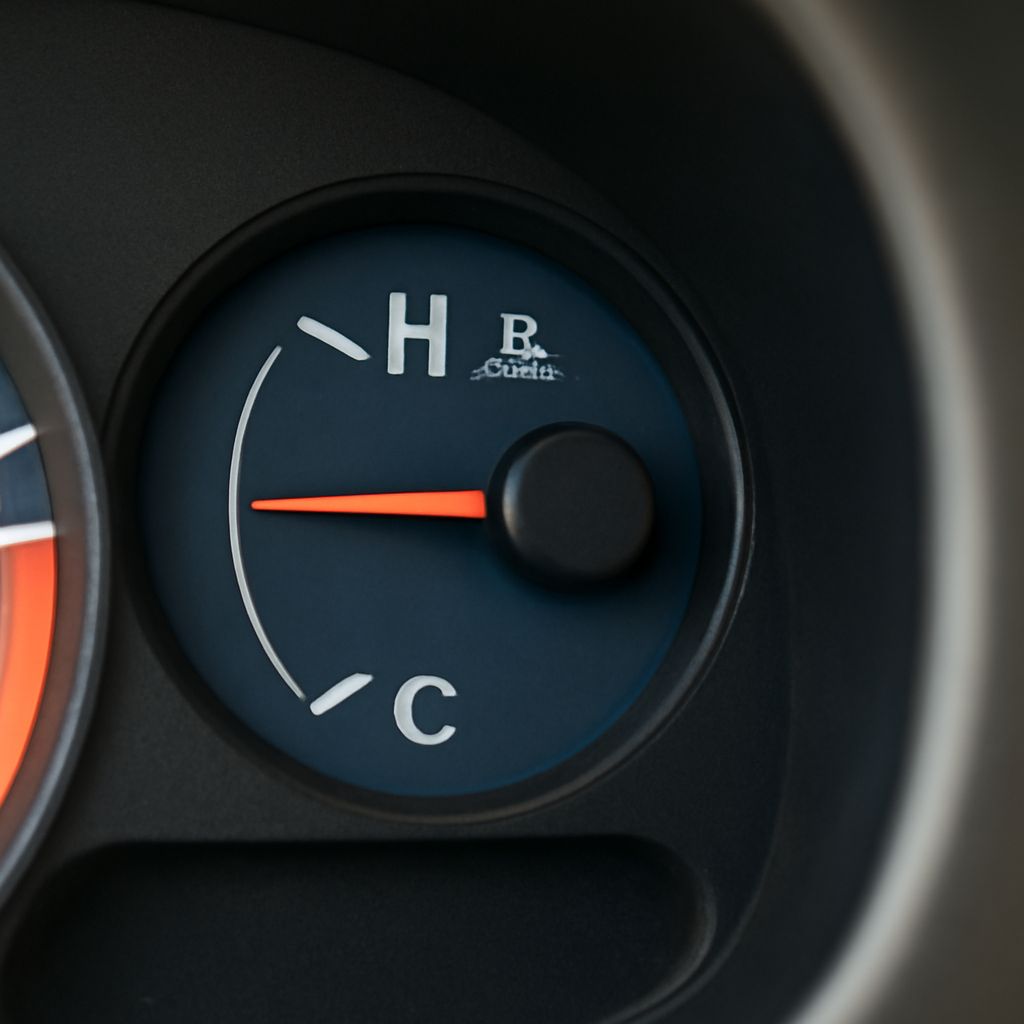
Why does the temperature gauge climb when the car sits still but stay normal at highway speeds? A car overheats when idling because the cooling system relies partly on vehicle motion to push air through the radiator. When that airflow stops, the system depends entirely on the electric cooling fan — and if the fan is weak, blocked, or failed, the engine temperature rises quickly.
Car overheating while idling differs from general overheating in one important diagnostic clue: the problem disappears above around 30 mph. This pattern narrows the fault to components that only matter at low speeds and at rest. A car overheats while idling when the fan, thermostat, coolant level, or radiator flow is compromised, and each of these has a specific test. Car overheating at idle only is never normal and should be investigated before it causes head gasket or engine damage. Similarly, a car overheats when stopped in traffic — a situation that mirrors true idle conditions — pointing to the same set of causes.
Cooling Fan Problems
Electric Fan Failure Most modern vehicles use one or two electric fans behind the radiator. These fans activate when coolant temperature reaches a threshold, typically controlled by the ECU based on a coolant temperature sensor signal. A car overheats when idling most often because the fan motor has failed, the relay has burned out, or the coolant temperature sensor is reading low — giving the ECU false data that the engine is cooler than it is.
Testing the fan directly by supplying power to the motor bypasses the relay and sensor circuit. If the fan spins when powered directly but not during engine operation, the fault is electrical — relay, fuse, sensor, or wiring. If the fan does not spin with direct power, the motor has failed and requires replacement.
Fan Speed and Blade Condition
A fan that spins but delivers insufficient airflow causes the same symptom as total failure, just more gradually. Damaged or bent blades reduce efficiency. On vehicles with viscous-coupled mechanical fans, a slipping fan clutch reduces flow at low engine speeds — the exact condition that matters most when car overheating while idling occurs.
Thermostat and Coolant Flow Issues
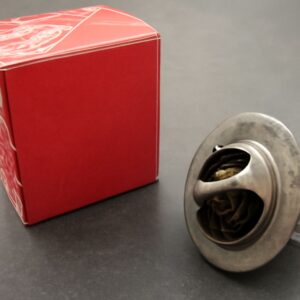
A thermostat stuck in the closed position restricts coolant circulation entirely, causing rapid overheating regardless of fan function. A thermostat stuck partially open may only show problems under load or at idle when the system cannot shed heat fast enough. Replacing the thermostat is inexpensive, and many technicians do so as part of any cooling system repair since it is a common failure point.
Low coolant level reduces the system’s ability to absorb and transfer heat. Even a small leak — around a hose connection, the water pump, or a radiator seam — can drop coolant enough to cause car overheating at idle only, while still allowing normal temperature at highway speeds where the reduced coolant volume moves faster through a cooler radiator.
Radiator Blockage and Airflow Obstructions
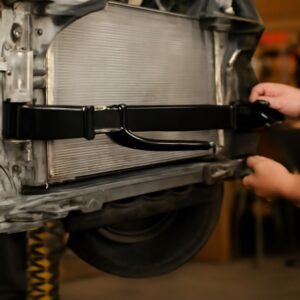
Debris between the radiator and condenser — leaves, insects, or compacted dust — reduces airflow through the core. This matters most at idle when forced airflow from the fan is the only source of cooling. A visual inspection from the front of the vehicle often reveals obvious obstructions, but internal scale buildup inside the radiator tubes is only visible through a flow test or flush procedure.
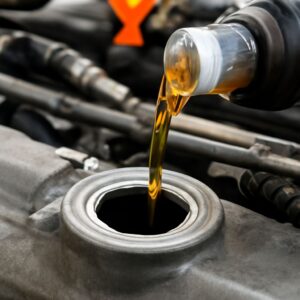
A car overheats when stopped in traffic with a visually clean exterior radiator likely has an internal restriction or a coolant contamination problem — such as oil mixing with coolant from a failing head gasket — which reduces the coolant’s ability to transfer heat effectively.
Water Pump Wear
The water pump circulates coolant through the engine and radiator. A worn impeller — common in older plastic-impeller designs — reduces flow rate without producing obvious external symptoms. The pump may spin normally and show no leaks, but coolant movement through the system slows, causing the engine to retain heat under low-demand idle conditions where circulation matters most.
Next Steps
Start diagnosis by verifying fan operation with the engine warm and the air conditioning off. Check coolant level and condition before moving to component testing. Address any overheating episode promptly — continuing to drive a car that overheats while idling risks warped cylinder heads, a blown head gasket, or seized engine components, all of which cost significantly more to repair than the cooling system fault that caused them.