Most drivers never think about suspension geometry until something goes wrong. What is a control arm on a car? It is a hinged link that connects the wheel hub assembly to the vehicle’s frame or subframe, allowing the wheel to move up and down over road irregularities while keeping it properly aligned. Understanding the control arm car system helps drivers recognize problems before they become expensive or dangerous.
A failing control arm affects steering precision, tire wear, and ride comfort. It also indirectly affects the effectiveness of features like car cruise control, since a vehicle that pulls or wanders requires constant driver correction. Even the car arm rest gets less use when the ride is rough enough to demand both hands on the wheel.
What Is a Control Arm on a Car?
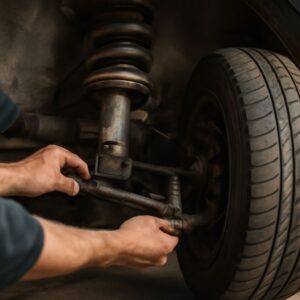
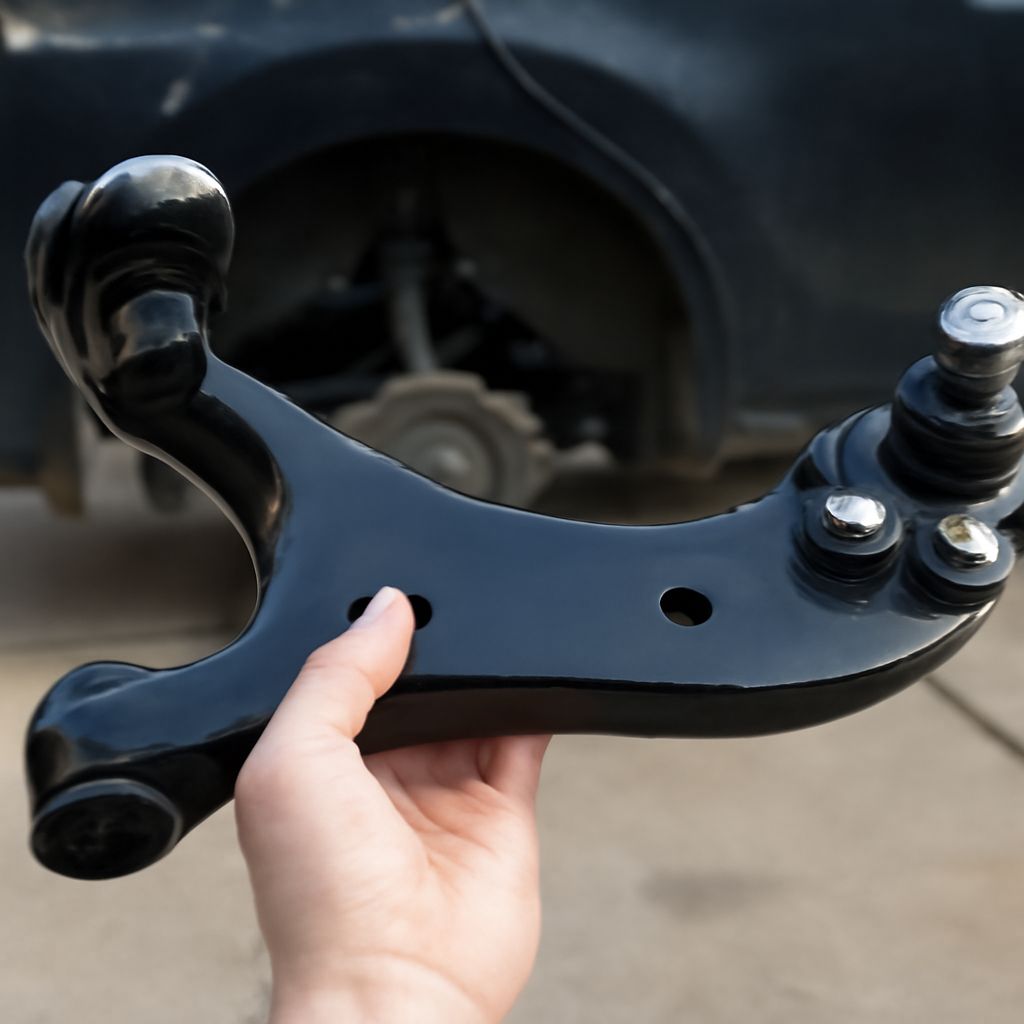
What is a control arm on a car in simple terms? It is a suspension component, usually made of stamped steel or cast aluminum, that acts as the pivot point for wheel movement. Most vehicles have at least two per front corner: an upper and a lower control arm. Each arm connects to the frame through rubber or polyurethane bushings and to the steering knuckle through a ball joint. The bushings absorb minor vibrations, while the ball joint allows the wheel to pivot for steering.
How the Control Arm Car System Works
The control arm car setup keeps the wheel in the correct geometric relationship with the body during suspension travel. When the wheel hits a bump, the arm pivots on its bushing mounts, letting the wheel rise and fall without changing its camber angle significantly. This keeps the tire’s contact patch flat against the road, maximizing grip. A properly functioning system means the steering feels predictable and tires wear evenly across the tread width.
Warning Signs of a Failing Control Arm
Worn bushings in the control arm produce a clunking or knocking noise over bumps, especially at low speeds. The steering may feel loose or vague, and the vehicle can pull to one side during braking. Uneven tire wear, particularly on the inner or outer edge of the front tires, is another common indicator. A failed ball joint in the control arm is more serious: if it separates completely, the driver loses steering control entirely, which is a safety emergency.
Replacement Costs and Repair Options
Replacing a single control arm, including the ball joint and bushings, typically costs between $150 and $400 in parts, with labor adding $100 to $250 depending on the vehicle. Some manufacturers sell the bushings and ball joints separately, which lowers costs when only one component is worn. After any control arm replacement, a four-wheel alignment is necessary to restore proper geometry. Skipping the alignment accelerates tire wear and can make the steering feel off.
Car Arm Rest, Car Climate Control, and Driving Comfort
Driving comfort involves more than suspension. A well-positioned car arm rest reduces fatigue on longer trips by supporting the elbow and shoulder. Car climate control systems that maintain a consistent cabin temperature reduce driver distraction, keeping attention on the road. When suspension components like control arms are in good condition, cabin noise levels drop and the overall driving experience improves, making features like car climate control more effective because the driver is less stressed by road harshness.
Car Cruise Control and Suspension Connection
Car cruise control works best on a vehicle with stable, predictable handling. A worn control arm that causes steering wander forces the driver to disengage car cruise control frequently to correct the vehicle’s path. This not only reduces the convenience of the system but also increases fatigue. Maintaining suspension components in good condition is part of getting the full benefit from modern driver assistance features.
Pro tips recap: Inspect control arm bushings and ball joints at every tire rotation. Address clunking noises promptly, and always follow control arm replacement with a professional alignment to protect tire life and steering accuracy.