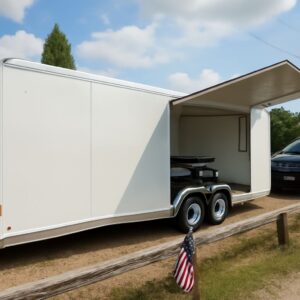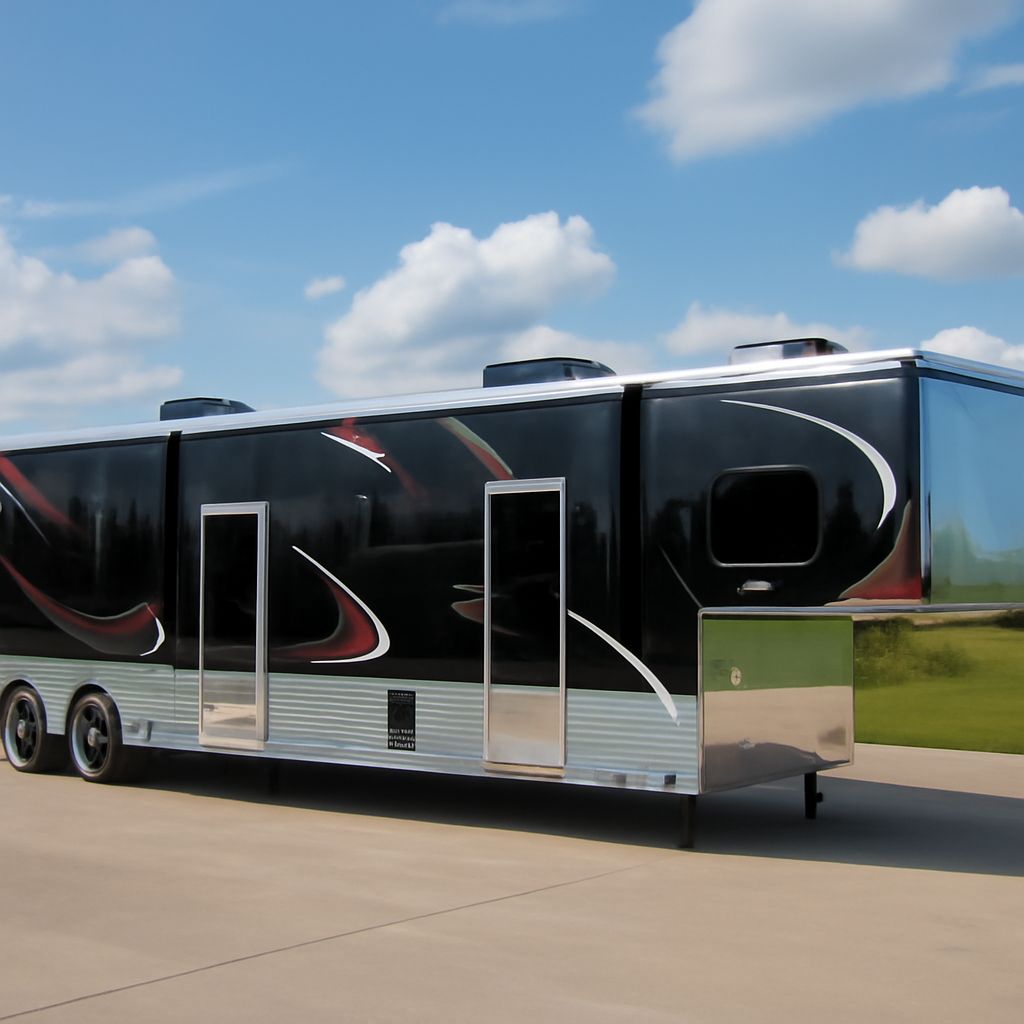
A car hauler with living quarters changes how a race team or enthusiast approaches travel. Instead of booking hotels near the track, the crew sleeps in the trailer, keeps gear organized, and moves from event to event without coordinating separate accommodations. For a race car hauler used across a full season, that convenience adds up to significant time and cost savings.
The options range from basic conversion layouts to full custom builds. A car trailer with living quarters can include a sleeping area above the vehicle bay, a side-door lounge section, or a nose-mounted apartment. A race car trailer with living quarters built for a two-car team has different requirements than one designed for a single-car weekend program. Enclosed car trailer with living quarters configurations offer the most protection for both the vehicle and the occupants.
What a Car Hauler with Living Quarters Includes
Floor Plans and Interior Configurations Living quarter layouts fall into three main configurations: front living, rear ramp with side entry, and loft above the car bay. Front-living designs place the residential section at the nose of the trailer ahead of the vehicle bay. Side-entry designs use a separate door cut into the trailer wall to access a lounge or sleeping area that runs alongside the car storage section. Loft designs use the vertical space above lower-profile vehicles to create a sleeping platform accessible by a fixed ladder.
Typical amenities include a dinette or sofa, a sleeping berth that fits two people, a wet bath or dry bath, a small kitchen with a range and refrigerator, and overhead storage. Higher-spec builds add slide-out sections that expand the living area width when the trailer is parked.
Utilities and Off-Grid Capability
Shore power hookups allow connection to campground or track electrical service. For off-grid use, a generator, solar panel array, or both can power lights, outlets, and climate control. Fresh water tanks and grey water holding tanks eliminate the need for a permanent hookup. Propane systems handle heating and cooking in trailers not connected to electric service.
Race Car Hauler Builds for Competition Teams
Single-Car vs Multi-Car Layouts
A race car hauler configured for one vehicle has more flexibility in how space is divided between car storage, living quarters, and equipment. Multi-car designs must accommodate loading and tie-down positions for two or more vehicles, which compresses the available space for other uses. Teams running two cars often opt for dedicated work areas and tool storage over expanded residential features.
Work Area and Storage Features
A working race hauler typically includes a fold-down workbench, enclosed cabinets for parts and tools, fluorescent or LED strip lighting throughout the bay, and a compressor station for air tools. Fuel cell storage areas with proper ventilation and tire racks along the walls maximize the usable volume of the car bay without creating clutter that slows pre-race preparation.
Car Trailer with Living Quarters vs Standard Trailers
A standard enclosed trailer carries a vehicle and nothing else. A car trailer with living quarters adds significant weight, typically 2,000 to 6,000 pounds depending on the build, and requires a tow vehicle rated for that gross vehicle weight. Suspension upgrades and heavier axles are standard on trailers configured for habitation because furniture, appliances, water tanks, and occupants add load that a basic trailer chassis is not designed to handle over long distances.
The trade-off is convenience versus cost. A basic trailer and separate hotel accommodations cost less upfront, but over a full racing season, the per-event savings from sleeping in the trailer rather than paying for rooms can offset the higher initial purchase price within two to four seasons depending on schedule density.
Race Car Trailer with Living Quarters: Specs That Matter
The most important spec for a race car trailer with living quarters is interior height in the car bay. Most full-size race cars require a minimum of 84 inches of clearance, and some roof-mounted lighting or aero components need more. Length determines how many vehicles fit and how long the residential section can be. Common lengths for combination trailers run from 40 to 53 feet.
GVWR ratings, axle count, and brake specifications govern the towing requirements. A 53-foot combination trailer with a full living quarters section may require a Class 8 truck to move legally on public roads. Knowing the tow vehicle capacity before specifying a trailer avoids building a unit that cannot be registered or operated as intended.
Enclosed Car Trailer with Living Quarters: Key Advantages
An enclosed car trailer with living quarters protects vehicles from weather, road debris, and theft at events where open trailers leave cars vulnerable overnight. The insulated walls and ceiling of an enclosed unit also make it practical to heat or cool the living area, which open or semi-enclosed trailers cannot do effectively. The enclosed structure also dampens noise from nearby generators and PA systems at race venues, making rest between sessions more realistic.
Security features including deadbolt entry doors, camera mounts, and alarm system wiring are more easily integrated into an enclosed design than into an open deck trailer. For teams that travel to multi-day events where the trailer must serve as a base of operations, the enclosed car trailer with living quarters is the functional standard.
Race teams evaluate these builds on a combination of vehicle capacity, living comfort, and long-haul durability. The right configuration depends on schedule length, crew size, and the tow vehicle already in service.