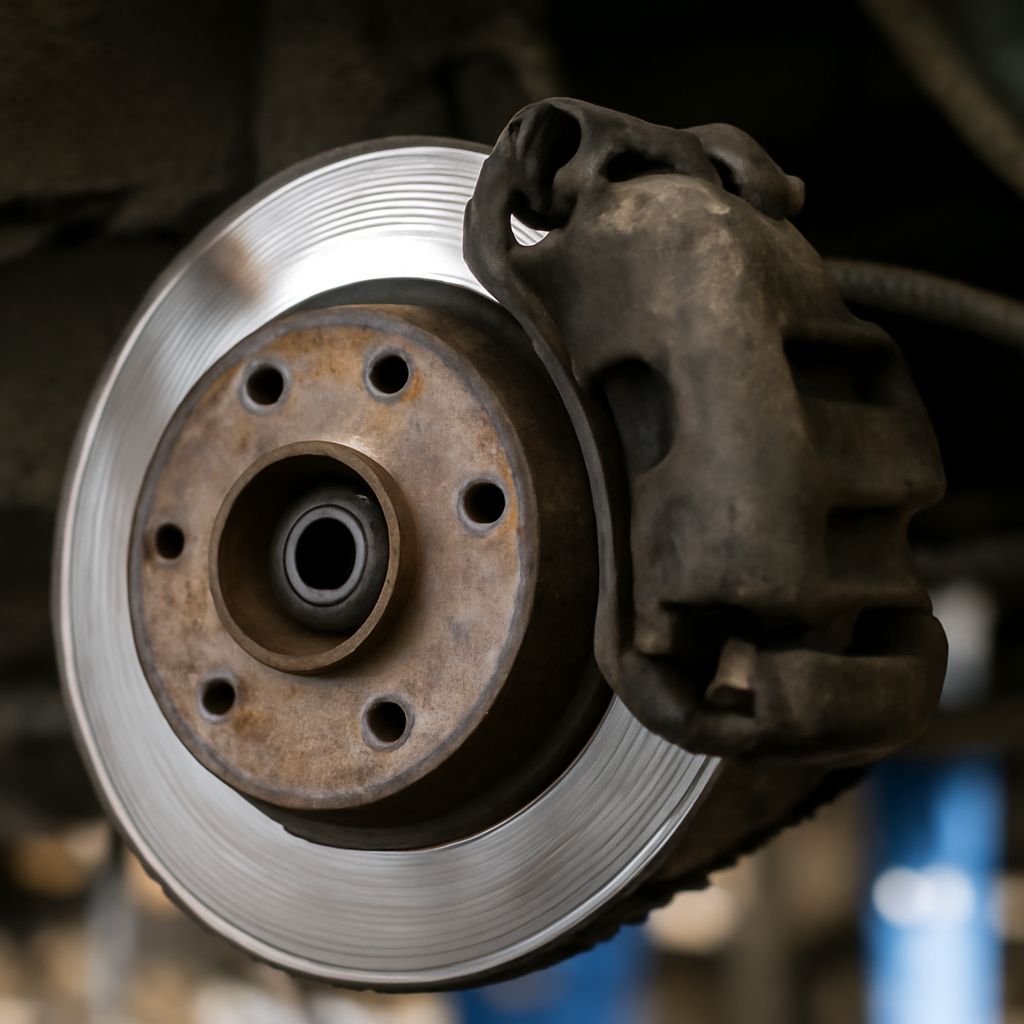
When the brakes slow or stop a vehicle, most of the work happens at a component most drivers have never examined closely. Calipers on car brake systems are the hydraulically actuated clamps that squeeze brake pads against the rotor to create friction and decelerate the wheel. What is a caliper on a car, exactly? It is a C-shaped or box-shaped housing that straddles the rotor and contains one or more pistons driven by brake fluid pressure. Car calipers sit at each wheel — two or four depending on the vehicle and brake configuration. A car brake caliper must function correctly for the braking system to perform safely and consistently. Any caliper for car applications must match the vehicle’s specifications to maintain proper piston size, pad clearance, and hydraulic compatibility.
How Calipers on Car Systems Work
When the brake pedal is pressed, the master cylinder pressurizes brake fluid, which travels through brake lines to the caliper. The fluid acts on one or more pistons inside the caliper housing, pushing them outward. The pistons press the inner brake pad against the rotor; simultaneously, the caliper body (in a floating caliper design) slides inward, pulling the outer pad against the opposite rotor surface. Both pads clamp the rotor from each side, converting kinetic energy into heat through friction. Fixed calipers — common on performance vehicles — use pistons on both sides of the rotor and do not slide; they provide more even pad contact and better heat management under heavy use.
Floating vs. Fixed Car Calipers
Most passenger vehicles use floating (sliding) calipers because they are compact, lighter, and less expensive to manufacture. A floating caliper for car applications uses one or two pistons on the inboard side only and relies on the caliper sliding on guide pins to apply the outboard pad. Fixed calipers mount rigidly and contain opposing pistons on both sides. Car calipers in performance or heavy-duty applications are more often fixed, offering four, six, or even eight pistons for greater clamping force and more consistent pad wear. The distinction matters when sourcing a replacement, since a fixed caliper cannot substitute for a floating one without significant modification.
Signs a Car Brake Caliper Is Failing
A car brake caliper that is sticking, seizing, or leaking affects braking performance and can cause uneven wear or, in severe cases, brake drag that generates dangerous heat. Common symptoms include:
- Pulling to one side under braking — a sticking caliper on that side applies more braking force
- Uneven pad wear — one side worn significantly more than the other
- A burning smell after driving — a dragging caliper keeps the pad in partial contact with the rotor
- Brake fluid leaking from around the caliper body or bleeder screw
- A soft or spongy brake pedal combined with caliper fluid seepage
What is a caliper on a car that is failing? It is a liability. Ignoring these symptoms leads to pad material wearing through to metal, rotor damage, and ultimately brake failure.
Replacement and Maintenance Considerations
Calipers on car brake systems are typically replaced in axle pairs to maintain even braking force side to side. When one caliper seizes or leaks, the opposite side often has similar wear. Rebuilt calipers are a cost-effective option for most passenger vehicles; new calipers are preferable for heavy-duty applications or track use. When replacing a caliper for car use, always flush and replace brake fluid at the same time — old fluid absorbs moisture and degrades sealing performance. Lubricate guide pins with appropriate brake grease; dry or corroded pins are the most common cause of caliper sticking.
Next steps: Inspect caliper condition and pad wear at every brake service interval — typically every 12,000 to 15,000 miles or at each tire rotation. Check guide pin condition and lubrication during pad replacement. If a caliper is leaking or sticking, address it immediately rather than deferring to the next service visit.