Car suspension is one of the most safety-critical systems on any vehicle, yet many drivers only notice it when something goes wrong. Suspension car components absorb road impacts, keep the tires in contact with the pavement, and allow the driver to steer accurately. Without a functioning car suspension system, even mild road irregularities would transfer directly into the cabin and the driver would lose precise control. The suspension of a car sits between the vehicle’s body and the wheels, acting as a buffer and a connector. What is suspension on a car becomes clear when you consider that every bump, pothole, and cornering force passes through it before reaching the occupants.
What Is Suspension on a Car?
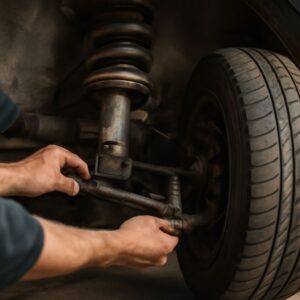
What is suspension on a car in practical terms is a network of springs, dampers, linkages, and bushings that manages how the vehicle’s body moves relative to its wheels. Springs store and release energy as the wheel moves up and down over road surfaces. Dampers, commonly called shock absorbers or struts, control how quickly that spring energy dissipates so the vehicle does not bounce repeatedly after hitting a bump. Linkages like control arms and tie rods maintain the geometry of the wheel relative to the body. Bushings are rubber or polyurethane inserts that isolate noise and vibration while allowing controlled movement at pivot points.
Key Components of the Car Suspension System
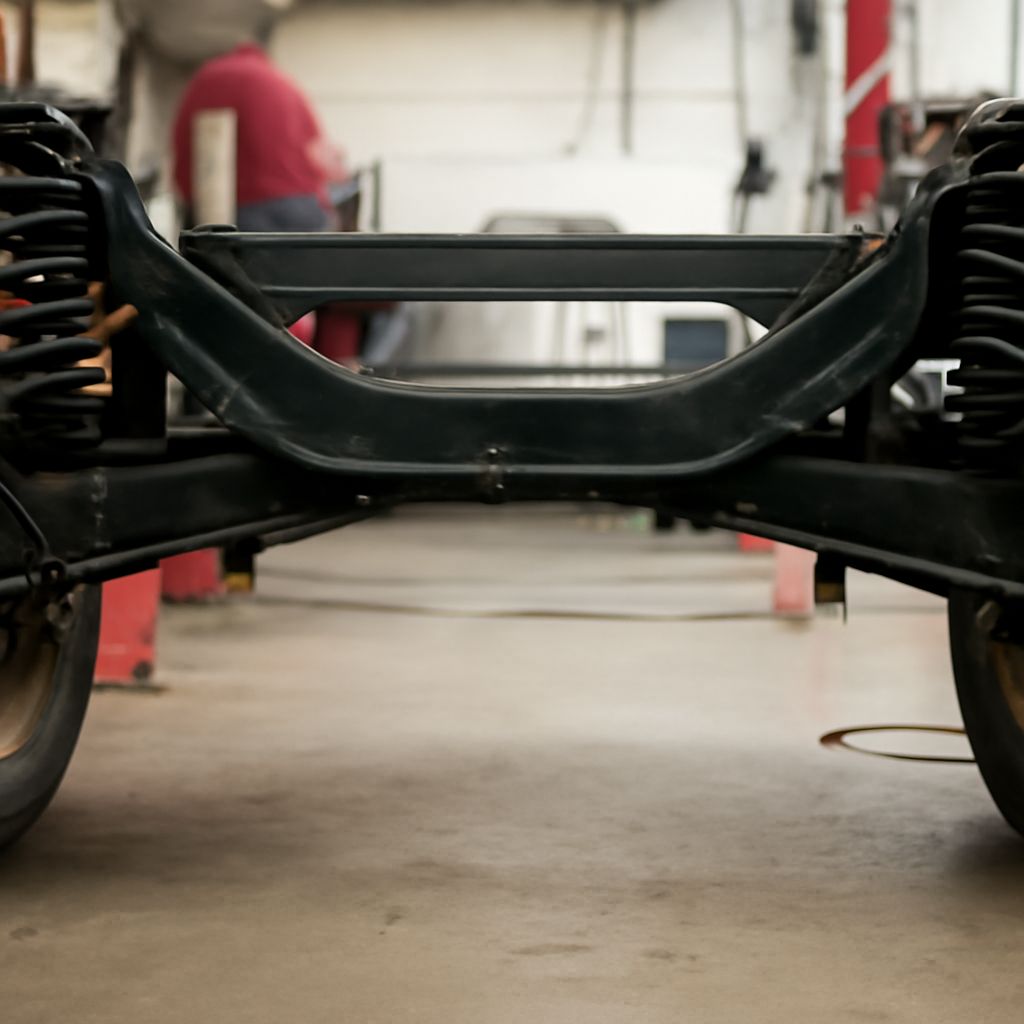
The car suspension system varies by vehicle design, but most passenger cars use one of a few established layouts. MacPherson strut systems are the most common on front axles because they are compact and lightweight. Double-wishbone suspension uses two control arms per corner for more precise wheel geometry control and is common on performance vehicles. Multi-link rear suspension provides a balance of ride comfort and handling for modern sedans and crossovers. Leaf springs remain standard on many trucks and vans. The anti-roll bar, also called a sway bar, connects the left and right sides of an axle to reduce body roll during cornering. All these components work together as a system, and weakness in one affects the performance of the others.
Common Suspension Problems and Symptoms
A car suspension system in poor condition produces recognizable symptoms. The most common are a bouncy or floaty ride after hitting bumps, pulling to one side during straight-line driving, uneven tire wear, and a clunking or knocking noise over rough surfaces. Worn shock absorbers or struts allow excessive body movement and reduce the tire’s contact patch with the road. Failed bushings cause imprecise steering and clunking. A bent control arm, usually from a significant impact, throws off wheel alignment and causes rapid tire wear. Any of these symptoms warrants a professional inspection because worn suspension of a car components affect braking distance and overall vehicle control.
When to Repair or Replace Suspension Parts
Suspension car parts do not have a universal replacement interval. Shock absorbers and struts typically last between 50,000 and 100,000 miles depending on road conditions and driving style. Bushings wear out more slowly but harden and crack over time, especially in cold climates. Ball joints, which connect the control arms to the steering knuckle, should be replaced when they show measurable play or produce noise. A qualified technician can identify worn components during a wheel alignment check or a standard suspension inspection. Replacing parts in axle pairs is standard practice. Replacing only one strut on an axle leaves mismatched damping characteristics.
Cost and Professional Service Expectations
Suspension repair costs vary widely based on the component and the vehicle. Replacing two front struts typically runs $300 to $700 including parts and labor for a standard passenger car. Control arm replacement with new bushings and ball joint can range from $250 to $600 per side. Wheel alignment, which should always follow suspension work, adds $75 to $150. Performance vehicles and trucks with more complex suspension designs cost more to service. Professional technicians use alignment racks and specialized tools to ensure components are installed correctly and the vehicle’s geometry meets manufacturer specifications.
Key takeaways: Car suspension connects vehicle safety directly to road conditions, and worn components reduce both comfort and control. The car suspension system includes springs, dampers, linkages, and bushings that work together as a unit. Inspect the suspension of a car at the first sign of bouncing, pulling, or unusual noise rather than waiting for a complete failure.