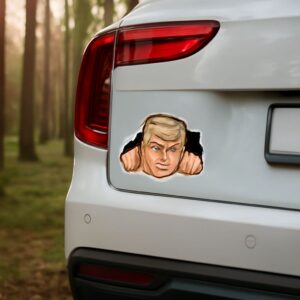
What separates a quality car decals custom order from a cheap sticker that peels within a season? Material specification, print technology, and application technique determine whether vinyl car stickers last 2 years or 8. Whether the goal is personal expression, business branding, or competitive race car identification, understanding vinyl for car decals, selecting the best car decals for the application, and applying a vinyl car decal correctly are all essential steps.
This guide covers the full process from design to installation, helping drivers and businesses achieve professional results with their car decals custom projects.
Types of Vinyl Car Stickers and Their Applications
Vinyl car stickers divide into three primary categories: cast vinyl, calendered vinyl, and printable vinyl. Cast vinyl — the premium standard for vinyl car stickers — is produced by pouring liquid vinyl onto a casting sheet, resulting in a thin, conformable material that wraps around curves and rivets without wrinkling. Calendered vinyl is produced by rolling softened vinyl through calendering rollers, creating a thicker, stiffer product suitable for flat panel graphics. Printable vinyl allows inkjet or UV printing directly onto the material, enabling photographic-quality graphics for car decals custom projects requiring complex imagery or gradients.
Choosing Vinyl for Car Decals: Material Specs That Matter
Selecting the right vinyl for car decals depends on the surface, exposure conditions, and intended lifespan. Outdoor-rated cast vinyl with UV-inhibiting overlaminates (clear protective film applied after printing) delivers the best durability for exterior applications — typically 5–8 years of color stability before fading. Vinyl for car decals applied to curved surfaces like bumpers, mirrors, and door handles must use conformable cast material; calendered vinyl will lift at the edges within weeks on curved substrates. Thickness ratings (2–3 mil for cast, 3–4 mil for calendered) indicate how the material handles heat, cold, and pressure washing.
Designing Car Decals Custom: Key Principles
Effective car decals custom design prioritizes legibility at vehicle speed, color contrast against the paint color, and scalability across different panel sizes. Vector file formats (AI, EPS, SVG) are required for cutting plotters and maintain crisp edges at any size — raster images lose clarity when enlarged. Car decals custom for business use should incorporate the company color palette, contact information, and logo at proportions that remain readable at 30–50 feet. Personal car decals custom designs benefit from clean silhouettes and limited color counts, which reduce production cost and improve cutting precision.
Best Car Decals: What Differentiates Quality Suppliers
Best car decals come from suppliers using outdoor-grade inks, properly calibrated cutting plotters, and quality cast vinyl from established manufacturers. The best car decals are pre-masked — a transfer tape application layer that lifts the finished graphic from its backing and maintains alignment during installation. Without pre-masking, multi-element designs shift out of alignment during application, particularly on large graphics. Best car decals also include edge sealing on all cut edges to prevent moisture intrusion that accelerates peeling from underneath the film.
How to Apply a Vinyl Car Decal Correctly
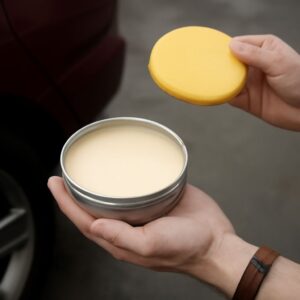
Applying a vinyl car decal correctly starts with thorough surface preparation: washing the panel with automotive soap, wiping with isopropyl alcohol, and allowing complete drying. Temperature matters — vinyl car decal application below 50°F or above 90°F reduces adhesive performance. The wet application method, using a diluted soapy water mist on the adhesive face, allows repositioning before the adhesive bonds permanently. A squeegee with a felt edge applies pressure evenly from center to edges without scratching paint. After the vinyl car decal bonds, heat application with a heat gun activates the pressure-sensitive adhesive into permanent bond and allows conforming around curved edges.
Pro tips recap: Use cast vinyl for exterior car decals custom on curved surfaces, ensure design files are in vector format, and apply vinyl car stickers only in moderate temperature conditions with proper surface preparation for maximum adhesion life.