When a car wont start with jump cables attached and correctly connected, the problem almost certainly goes beyond a discharged battery. A car won’t start with jump in most cases because a deeper electrical fault — a failed starter motor, a seized engine, or a defective alternator — prevents the vehicle from drawing the energy needed to crank. Understanding why a car wont jump start saves time and prevents replacing the wrong component.
This guide covers the most common reasons a car will not jump start, how to verify jump start technique, and what diagnosis to pursue when a car wont start with a jump after multiple attempts.
Why Won’t My Car Start With Jump Cables?
Dead Battery vs. Failed Alternator
When a car wont start with jump cables connected, the first distinction to make is between a battery that is simply discharged and one that has failed internally. A discharged battery accepts charge from a donor vehicle and cranks the engine within 2–5 minutes of connection. A battery with dead cells cannot hold voltage even when a charge is applied — the jump starter delivers current but the battery absorbs none of it, leaving the starter without sufficient power. Verifying this requires a battery load test, available free at most auto parts retailers.
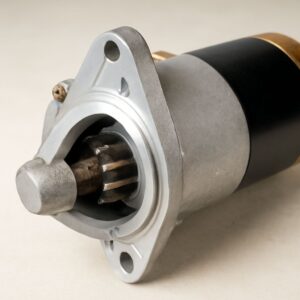
Starter Motor Failure
A failed starter motor produces a distinct click or silence when the ignition is turned — the battery has voltage, but the solenoid or motor itself cannot spin the engine over. In this scenario, a car won’t start with jump regardless of how long the donor vehicle charges it, because the problem is mechanical rather than electrical energy storage. A clicking noise from the solenoid typically indicates a seized starter; silence with good voltage suggests an open circuit in the starter circuit.
How to Jump Start a Car Correctly
Incorrect jump start technique frequently causes a car wont jump start outcome even when the battery is merely discharged. The correct sequence: connect the positive (red) cable to the dead battery’s positive terminal first, then to the donor vehicle’s positive terminal. Connect the negative (black) cable to the donor battery’s negative terminal, then to an unpainted metal ground on the disabled vehicle — not the dead battery’s negative terminal, which prevents spark near the battery. Run the donor vehicle for 3–5 minutes before attempting to start the disabled car. Rushing this step is the most common reason a car will not jump start on the first attempt.
Car Wont Jump Start: Beyond the Battery
If correct technique still results in a car wont jump start outcome, the fault lies in one of several deeper systems. A completely failed alternator means the battery was drained to depletion during normal driving and cannot recover — even a successful jump will leave the car dead again within minutes once the donor is disconnected. Corrosion on battery terminals creates resistance that prevents current transfer; cleaning terminals with a wire brush before connecting cables resolves this issue quickly. Blown fusible links in the main fuse box also prevent power from reaching the starter circuit, mimicking a dead battery entirely.
Car Will Not Jump Start: Diagnosing Deeper Electrical Faults
When a car will not jump start after addressing battery and connection quality, systematic electrical diagnosis is required. A multimeter test of battery voltage under load (below 9.6V during cranking indicates cell failure), followed by alternator output testing (should read 13.8–14.8V at idle), identifies which component has failed. A car will not jump start due to a failed ignition switch — which disrupts the start circuit upstream of the starter — less commonly but with similar symptoms to starter failure. Professional diagnostics with a scan tool checks for immobilizer or anti-theft codes that could prevent engine cranking despite sufficient electrical power.
Next Steps After Jump Start Failure
When a car wont start with a jump after systematic diagnosis, towing to a qualified repair facility is the safest next step. Continuing jump start attempts on a vehicle with an underlying electrical fault risks overheating wiring harnesses and damaging sensitive control modules. A car wont start with a jump situation that includes burning smells, smoke from under the hood, or sparking at the terminals requires immediate disconnection of all cables and professional assessment before any further attempts.
Next steps: Test battery load and alternator output, clean terminal connections, and verify jump start technique sequence. If the car will not jump start after these checks, arrange professional diagnosis before pursuing further component replacement.