A fuel odor inside or around a vehicle is never something to ignore. When a car smells like gas after filling up, the cause might be something minor like a loose gas cap or a small fuel spill on the exterior, but it can also point to a fuel system leak that requires immediate attention. Gas smell when starting car is a related symptom that often shares the same root causes, from a saturated charcoal canister to a cracked fuel injector O-ring.
Car smells like gas when starting is a complaint that mechanics hear frequently, and pinpointing the source matters because fuel vapors are flammable. Car smells like gas when I start it sometimes corresponds to a fuel pressure regulator that bleeds pressure back into the intake manifold overnight. Car smells like gas after driving can indicate a leak in the return line or the fuel tank area, which is worth diagnosing promptly regardless of how faint the smell seems.
Common Causes of Gas Smell After Filling Up
Loose or Damaged Gas Cap
The gas cap seals the fuel tank and prevents vapor from escaping. If it is not tightened fully after fueling, fuel vapors vent into the wheel well and surrounding air. A worn or cracked gas cap seal produces the same effect. This is the first thing to check when a car smells like gas after filling up, and it is the least expensive fix.
Overfilling the Tank
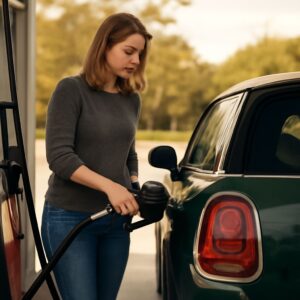
Fuel pumps have a shut-off mechanism that stops flow when the tank is full. Continuing to pump after the nozzle clicks forces excess fuel into the evaporative emissions system, saturating the charcoal canister. A saturated canister cannot absorb fuel vapors properly and vents them into the air. Car smells like gas after driving in these cases typically clears up once the canister works through the excess, but repeated overfilling causes lasting damage to the evaporative system.
Faulty Charcoal Canister
The evaporative emission control (EVAP) system uses a charcoal canister to store fuel vapors when the engine is off, then purges them into the intake when the engine runs. A cracked or saturated canister leaks vapors rather than containing them, producing gas smell when starting car and lingering odor after engine shutdown.
Causes Related to Starting and Driving
Fuel Injector Leaks
Fuel injector O-rings and seals deteriorate over time. A leaking injector drips raw fuel onto the intake manifold or surrounding components. This creates conditions where car smells like gas when starting because fuel pools during overnight engine-off periods and vaporizes when the engine warms. A mechanic can perform a fuel pressure hold test to confirm injector leaks without disassembly.
Fuel Line or Return Line Issues
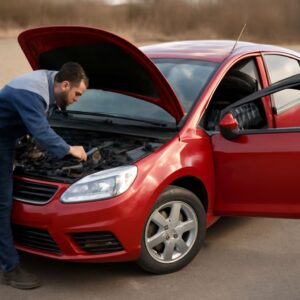
Cracked rubber fuel lines or loose clamps allow fuel to seep out, particularly under pressure when the engine runs. Car smells like gas when I start it in this scenario because residual fuel in a leaking line drips onto hot exhaust components and vaporizes immediately. Any visible fuel residue on lines or fittings under the hood confirms this as the source.
Fuel Pressure Regulator Failure
A failing fuel pressure regulator can allow excess fuel to enter the vacuum line leading to the intake. This floods the intake with raw fuel that then burns incompletely, and car smells like gas after driving when the catalytic converter is working to process the unburned vapors.
Safety Steps When Fuel Odor Appears
- Do not start the vehicle if the odor is strong and persistent, especially after parking
- Check the gas cap first and tighten or replace it
- Look under the vehicle for puddles or wet spots on fuel lines and connections
- Avoid parking in enclosed spaces until the source is identified
- Have the vehicle inspected by a mechanic if the smell does not clear within one or two drives
Key Takeaways
A car smells like gas after filling up most often due to a loose gas cap, overfilling, or a compromised EVAP canister. Gas smell when starting car that persists across multiple starts points to injector seals, fuel line leaks, or a failing pressure regulator. Any fuel odor that is strong, consistent, or accompanied by visible leaks warrants prompt professional inspection rather than a wait-and-see approach.