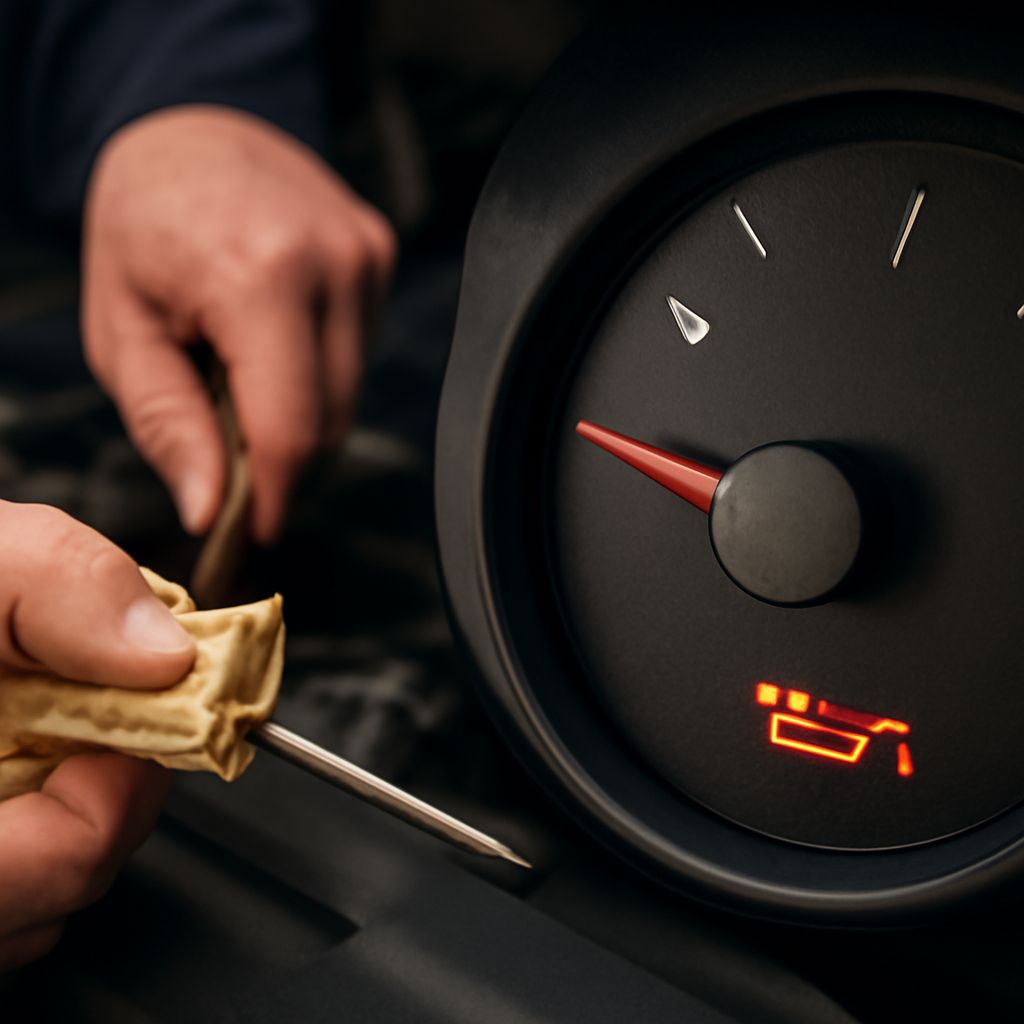
Too much oil in car symptoms can be subtle at first but become serious quickly if the condition goes unaddressed. When an owner is putting too much oil in car, the excess volume creates pressure inside the crankcase that the system is not designed to handle. Can you put too much oil in a car without causing damage? Yes, even a half quart over the full mark can generate problems. What happens when you put too much oil in a car is a chain reaction: the crankshaft whips through the excess fluid, aerating it into foam, which then fails to lubricate properly. The result of too much oil in a car ranges from fouled spark plugs to blown engine seals, depending on how much excess was added and how long the engine ran.
Physical Symptoms to Watch For
The most immediate sign is a dipstick reading above the maximum mark — sometimes the oil appears milky or frothy rather than clear amber when there is too much oil in a car and the crankshaft has already aerated it. Blue or gray exhaust smoke on startup points to oil being burned in the combustion chamber, often the result of overfilled crankcase pressure pushing oil past valve seals. A rough idle, misfires, or a check-engine light may follow if oil contacts spark plug electrodes. Too much oil in car symptoms can also include unusual engine noise because foamed oil lacks the load-bearing film strength of properly conditioned lubricant.
What Happens Internally When Oil Overfills
Understanding what happens when you put too much oil in a car internally helps explain why the problem escalates. The crankshaft rotates at thousands of RPM just inches above the oil sump. At normal fill levels, the crankshaft does not contact the oil surface. Putting too much oil in car raises that surface until the rotating assembly strikes it on every revolution, churning the oil into aerated foam. Foamed oil compresses, losing its ability to maintain a hydrodynamic film between bearing surfaces. Bearing wear accelerates, and if the foam reaches the oil pressure relief valve, the low-pressure warning may trigger even though the sump is overfull.
Can You Put Too Much Oil in a Car Without Knowing?
Can you put too much oil in a car without realizing it at a service interval? Absolutely. The most common scenario involves adding a full quart without checking the dipstick first when the engine was already at or near the full mark. Another scenario occurs when a shop fills to the wrong specification. Always checking the dipstick at least five minutes after an oil change — with the vehicle on level ground and the engine off — confirms the correct fill level before driving.
How to Correct an Overfill
Removing excess oil is straightforward but requires care. The cleanest professional method drains oil from the drain plug until the dipstick reads within the safe range, then reinstalls the plug and rechecks the level. An oil extractor pump inserted through the dipstick tube removes oil without needing the vehicle on a lift, which makes it a practical tool for home mechanics. If the engine has already been running with the overfill, changing the oil completely after correction is advisable, since the oil may have been aerated and degraded. Technicians treating too much oil in car symptoms after extended operation often also check for spark plug fouling and may scan for misfire codes.
Pro Tips Recap
Always check the dipstick before adding any oil, even at a scheduled change, to confirm the actual fill level. If there is uncertainty about whether putting too much oil in car has already occurred, the safest step is a fresh oil drain and refill to the correct mark. Keep a note of the vehicle’s exact oil capacity — found in the owner’s manual — so that any future service uses the right volume without guesswork.