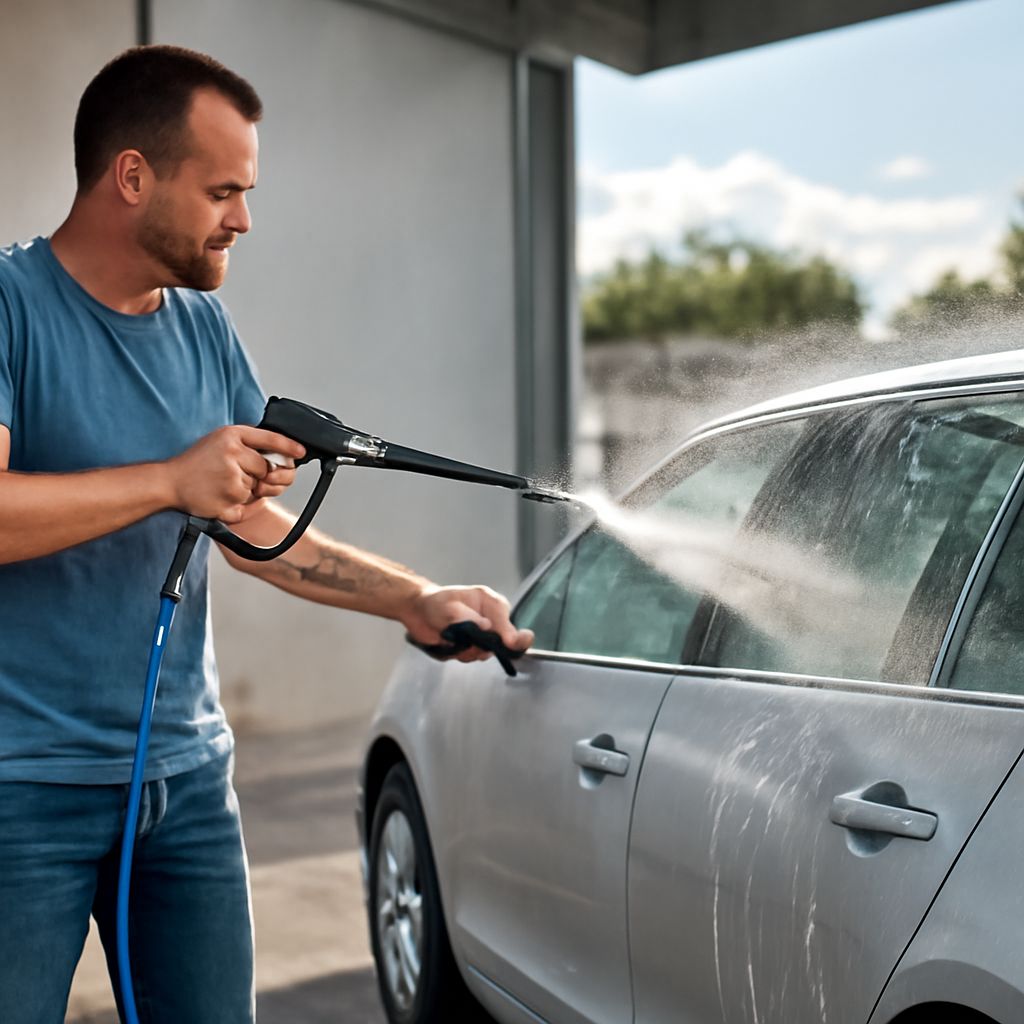
A self service car wash puts the cleaning process entirely in the hands of the vehicle owner, offering control over pressure, soap concentration, and dwell time that automated tunnels cannot match. Whether someone prefers a self car wash to save money or to clean specific problem areas, the bay format works for most passenger cars, trucks, and SUVs. A self serve car wash typically costs between $2 and $6 for a standard session, making it a practical option for regular maintenance washing.
Drivers who want a touchfree car wash experience without the risk of brushes touching the paint sometimes choose self service bays for their high-pressure rinse cycle. A self cleaning car wash option found at some modern facilities even automates chemical application while leaving the final rinse to the customer. Understanding how each feature works makes the visit faster and the results better.
Equipment and Settings in a Self Service Bay
Pressure Washer Settings
Most bays offer several dial or push-button settings: pre-soak, soap, rinse, spot-free rinse, and sometimes wax. Start with pre-soak to loosen road grime, then apply soap and work from the top of the vehicle downward. The high-pressure rinse removes loosened dirt without dragging particles across the surface.
Foam Brush Use
Foam brushes are available at many self car wash locations. Before using one, rinse it thoroughly with the pressure gun to clear residue from previous customers. Gentle circular strokes work better than scrubbing, and the brush should never be dragged dry across paint. Skipping the brush entirely and relying on pressure alone is a valid choice for lightly soiled vehicles.
Touchfree Options vs Manual Scrubbing
A touchfree car wash setting uses high-pressure water and chemical cleaners to remove dirt without physical contact. This approach suits vehicles with fresh paint, wraps, or aftermarket graphics that could be damaged by bristles. The trade-off is that touchfree methods sometimes leave behind stubborn road tar or bug residue that manual agitation would remove.
For most daily-driver vehicles, combining the pre-soak cycle with a foam brush and finishing with a spot-free rinse produces clean results. Spot-free rinse water is filtered to remove minerals that leave water spots as the surface dries.
Self Serve Car Wash Tips for Best Results
Working quickly matters at a self serve car wash because bay time costs money. Pre-plan the sequence before inserting coins or payment: pre-soak, soap, brush if needed, rinse, spot-free rinse. Avoid washing in direct sunlight when possible, as soap dries quickly on hot metal and leaves residue.
Wheel wells and lower body panels collect the most grime. Spend extra time on these areas during the pre-soak phase. Finishing with a manual wipe-down of door jambs and mirrors after the bay session prevents water spots in those areas.
Self Cleaning Car Wash Features at Modern Facilities
Some newer self cleaning car wash bays include automated chemical injection systems that dispense the correct soap concentration without manual dialing. Sensors in the bay may also adjust water pressure based on the selected cycle. These features reduce user error and improve consistency compared to older coin-operated bays.
Key takeaways: A self service car wash gives drivers direct control over the cleaning process at low cost. Using the correct sequence of pre-soak, soap, and spot-free rinse produces consistent results. Choosing a touchfree car wash setting protects sensitive paint finishes, while manual agitation handles heavier soiling more effectively.