Why Is My Car Smoking? Causes by Smoke Color and What to Do
Why is my car smoking is one of the more alarming questions a driver can face on the road. The answer depends heavily on the color of the smoke, where it’s coming from, and what was happening to the vehicle just before the smoking started. A car smoking on startup is not always an emergency, but it should never be ignored, because what begins as a minor seal failure can escalate to engine damage or fire risk if left unaddressed.
The color of smoke from a smoking car carries specific diagnostic information. White smoke, blue smoke, and black smoke each point to different problems. A car is smoking in ways that look similar to the eye but represent very different mechanical failures underneath. A car engine smoking from the hood, for instance, is a completely separate concern from exhaust smoke that appears only at startup. This article covers the most common causes organized by smoke color and location.
White Smoke
Thin White Vapor on Startup
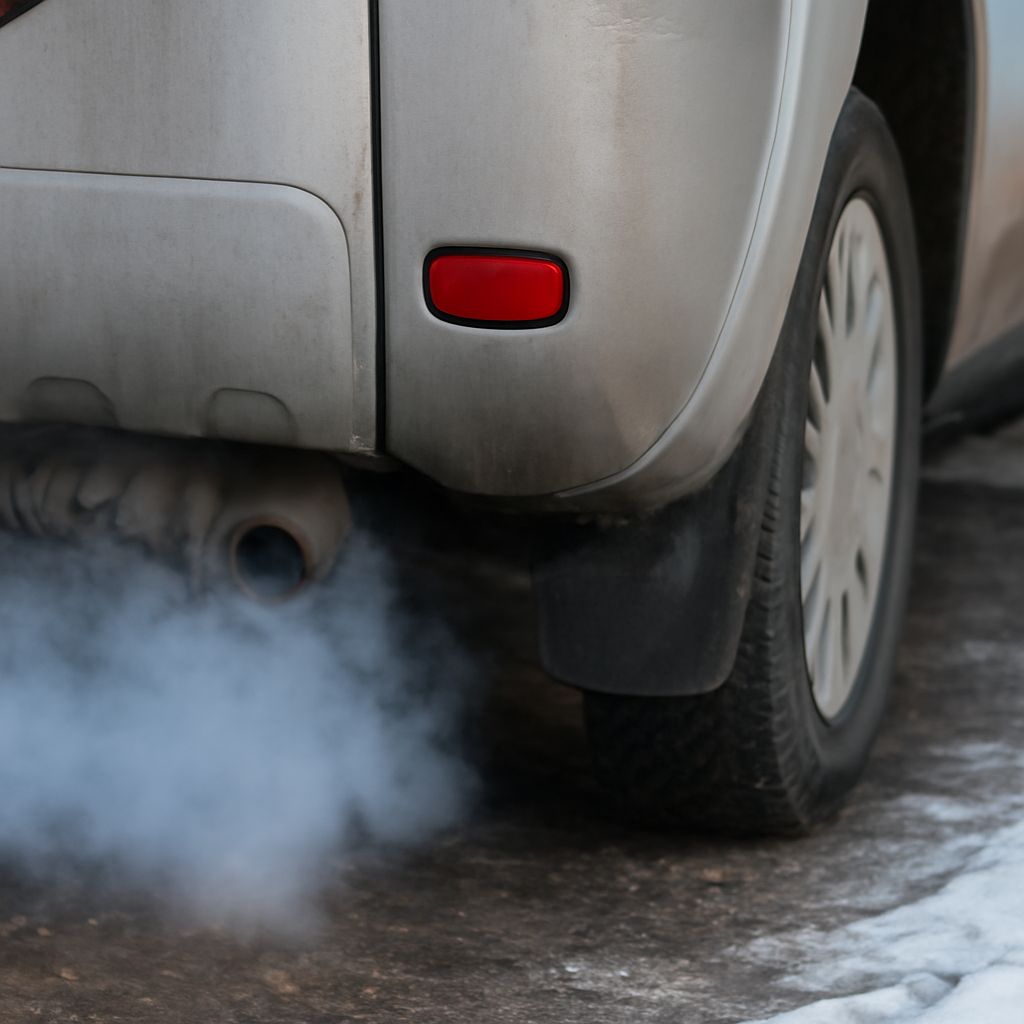
Thin white vapor from the exhaust on a cold morning is condensation burning off from the exhaust system. This is normal and typically disappears within the first two minutes of operation. It does not mean a car is smoking in any mechanical sense and requires no action.
Thick White Exhaust Smoke
Thick white smoke from the exhaust that persists after the engine warms up is a different matter. This pattern points to coolant entering the combustion chamber, most often through a failed head gasket. A car smoking in this way also tends to show a sweet smell from the exhaust, bubbling in the coolant reservoir, and often an unexplained drop in coolant level. Left unrepaired, this leads to engine overheating and eventual failure.
Blue Smoke
Blue or blue-gray smoke from the exhaust indicates oil burning in the combustion chamber. On a car engine smoking with this pattern, the likely causes include worn piston rings, valve stem seals, or a failing PCV system. The oil level drops faster than expected between changes, and the exhaust smell has a distinct burning-oil character rather than the sweet smell associated with coolant. Why is my car smoking with a blue tint is a question that generally points to a higher-mileage engine with worn seals, though it can also appear after infrequent oil changes that leave degraded oil in the system.
Black Smoke
Black smoke from the exhaust points to a rich fuel mixture — more fuel entering the cylinders than the engine can combust cleanly. This can result from a stuck injector, a faulty mass airflow sensor, a malfunctioning fuel pressure regulator, or a saturated air filter. A smoking car producing black exhaust typically also shows reduced fuel economy and may trigger a check engine light. The fix depends on which component is causing the excess fuel delivery.
Smoke from the Hood
A car engine smoking from the engine bay rather than the exhaust is a distinct situation. Common causes include oil dripping onto the exhaust manifold from a leaking valve cover gasket, coolant leaking onto hot engine surfaces, or in rare cases, an electrical fault. Smoke from under the hood should prompt the driver to pull over immediately, turn off the engine, and not open the hood until the vehicle has cooled. If the smoke is accompanied by flames, emergency services should be contacted.
Diagnosing and Addressing a Smoking Car
A car smoking from any location warrants attention before continuing to drive. Checking fluid levels immediately after the engine cools helps determine whether oil or coolant is being consumed. An OBD-II scan for fault codes gives additional direction, particularly when the check engine light is active alongside the visible smoke. Persistent smoking in any color means a professional inspection is the appropriate next step.
Pro Tips Recap
Identify smoke color and location first before drawing conclusions. Thin white vapor on a cold start is normal; thick white, blue, or black exhaust smoke is not. Engine bay smoke always requires stopping and cooling before investigation. A car engine smoking from multiple locations simultaneously points to a more complex problem that warrants a thorough workshop assessment rather than roadside diagnosis.