Testing a Car Battery: Methods, Tools, and What the Results Mean
A battery that fails unexpectedly leaves a driver stranded with no warning. Testing a car battery before that happens takes less than five minutes and requires tools that most auto parts stores loan for free. Knowing whether the battery can still hold a charge prevents both unnecessary replacement and the frustration of a no-start situation at the worst time.
The question of testing car battery health comes up most often in autumn, when temperatures drop and battery capacity shrinks, and in spring, after months of cold-weather strain. Drivers who want to know how to check car battery life accurately need to understand that a surface voltage reading and a load test tell very different stories. Learning how to check your car battery with the right tool, at the right time, produces actionable results. The answer to how do you test a car battery properly depends on what equipment is available and what kind of result the driver needs.
What Voltage Readings Actually Tell You
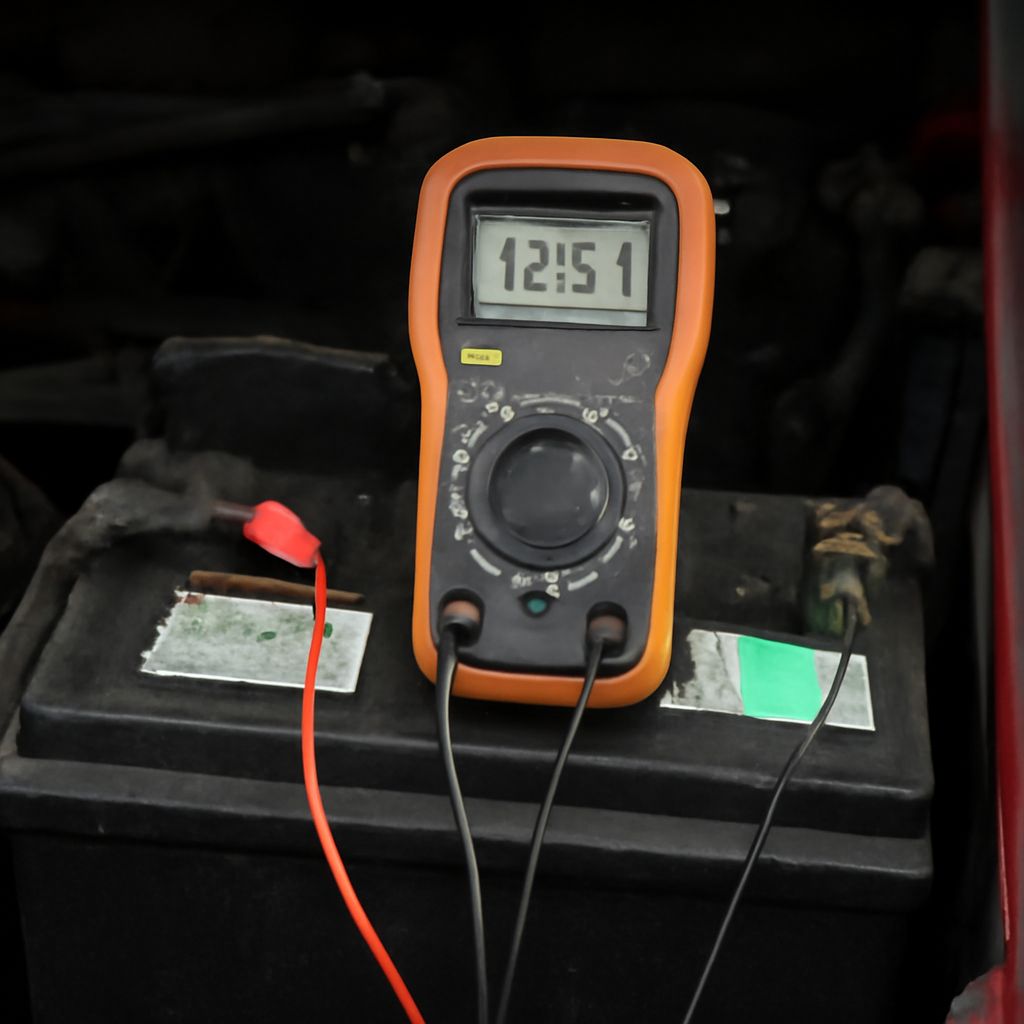
A fully charged 12-volt battery at rest, after sitting for at least two hours, should read between 12.6 and 12.8 volts with a digital multimeter. A reading of 12.4 volts indicates roughly 75% charge. Anything below 12.0 volts suggests significant discharge or a battery that has lost capacity.
Measuring Surface Charge
A recently driven battery carries surface charge, a temporary voltage spike that disappears within minutes. This can make a weak battery appear healthy. Always test after the vehicle has sat for at least two hours to get a resting voltage that reflects actual battery state.
Load Testing: The More Reliable Method
A load test applies a controlled current draw to the battery while monitoring voltage drop. A healthy battery holds above 9.6 volts under load for 15 seconds at half its cold cranking amp (CCA) rating. A battery that drops below this threshold during the test cannot reliably start the engine in cold conditions.
Carbon pile load testers are the shop-grade tool for this. Many auto parts retailers offer free testing car battery with a professional load tester while the customer waits. The result is more reliable than a multimeter reading alone because it stresses the battery the same way engine cranking does.
Conductance Testing for a Fast Answer
Electronic conductance testers measure the battery’s internal resistance without applying a full load. They provide a result in seconds and can even test a discharged battery without first charging it. The readout typically shows the battery’s measured CCA compared to its rated CCA, along with a pass, marginal, or replace recommendation.
This method is standard at most dealerships and repair shops. For a driver wanting to know how to check car battery life quickly at home, a consumer-grade conductance tester is available for $30 to $80 and works on any 12-volt lead-acid, AGM, or gel battery.
Testing the Charging System Alongside the Battery
A battery that repeatedly discharges or fails to hold charge may not be the root problem. The alternator charges the battery while the engine runs, and a failing alternator produces voltage readings outside the normal 13.7 to 14.7 volt range. Testing the battery without checking alternator output misses half the diagnostic picture.
Signs the Alternator Is the Real Problem
- Battery warning light on the dashboard
- Headlights that dim at idle and brighten when revving
- New battery that loses charge within days
Alternator output is measurable with the same digital multimeter used for battery voltage. Readings above 14.8 volts indicate overcharging; readings below 13.5 volts suggest undercharging.
When to Replace Rather Than Test Again
Batteries older than four years that fail a load test should be replaced rather than recharged and tested again. Recharging a failed battery may restore enough capacity to pass a surface voltage test, but the underlying plate degradation does not reverse. How do you test a car battery that has already failed a load test? The answer is: you replace it.
Key takeaways: Use a load test or conductance tester rather than voltage alone for a meaningful result. Test the charging system alongside the battery whenever a replacement fails within a year. Batteries more than four years old that show marginal results are worth replacing proactively rather than waiting for a no-start event.