Car Holster Options: Mounts, Types, and Safe Use
A car holster keeps a legally carried firearm within reach while driving without leaving it loose in a compartment or tucked under a seat. For drivers who carry for personal protection, the right car holster mount makes the difference between quick, controlled access and fumbling under pressure. Car holsters designed for vehicle use differ from waistband or shoulder options in retention strength, mounting hardware, and angle of draw.
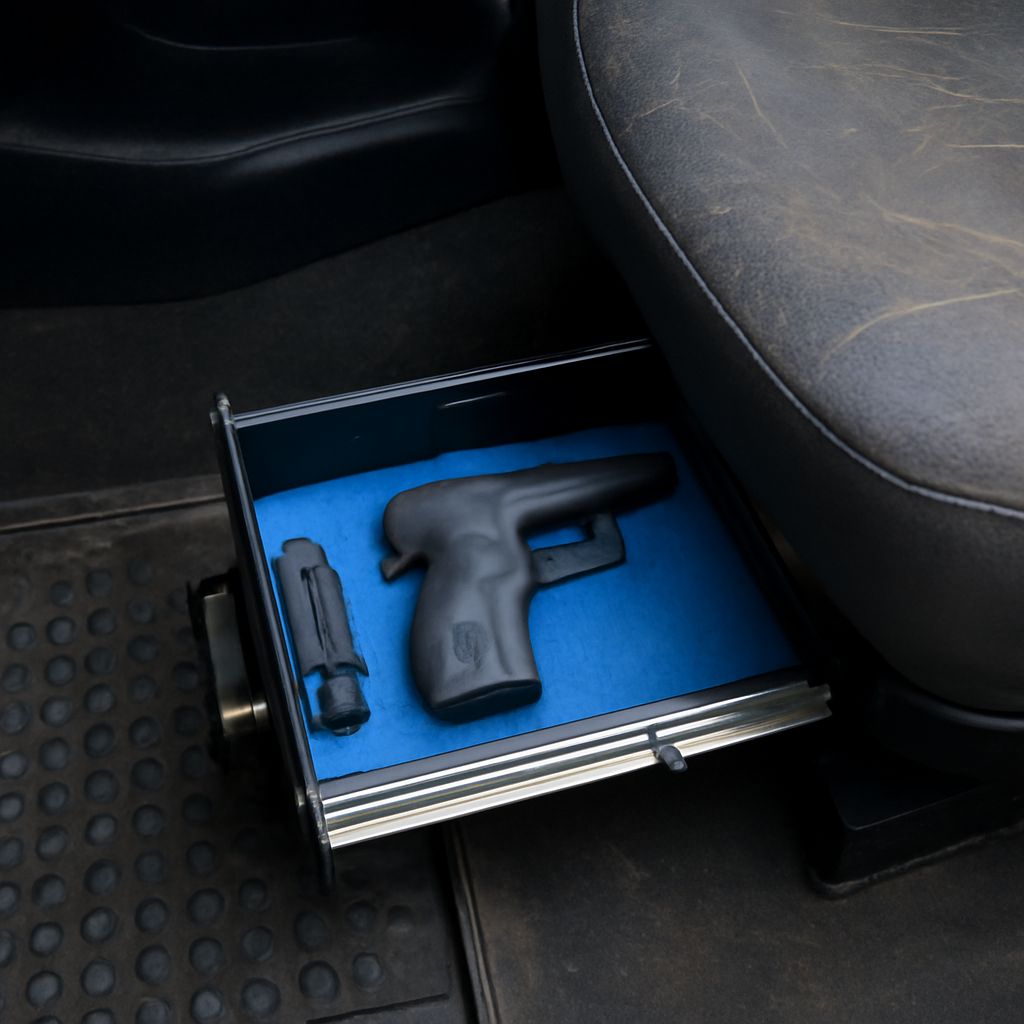
The variety of car holsters available today covers everything from simple adhesive-backed pouches to precision-machined aluminum systems. A car mount holster typically attaches to the seat rail, center console, or steering column, keeping the firearm stable even over rough roads. Car gun holsters that fit specific firearm models provide better retention and a more consistent draw than universal designs.
What a Car Holster Is and Who Uses It
Law Enforcement and Civilian Applications
Law enforcement officers often use car holster systems designed for quick transitions between vehicle and foot pursuit, with break-open retention mechanisms that release under deliberate thumb pressure. Civilian concealed carry drivers favor more discreet car holsters that sit below dashboard level and do not print through windows. Both groups prioritize trigger guard coverage and positive retention that prevents the firearm from shifting during hard braking.
Key Differences From Standard Holsters
A vehicle-mounted holster must withstand repeated vibration, temperature swings, and the lateral forces of cornering. Standard hip holsters are not designed for these conditions and can loosen or crack in sustained heat. A purpose-built car holster mount uses locking clamps or custom brackets that stay tight across the full range of driving conditions.
Types of Car Holster Mount Systems
Under-Dash and Seat-Side Mounts
Under-dash car holsters mount above the driver’s knees on the dash frame or kick panel, keeping the firearm out of view from outside the vehicle. Seat-side mounts clamp to the seat rail or cushion frame and position the grip at hand level with the arm dropped naturally. Both configurations place the draw at a natural arm angle with minimal body movement required.
Center Console and Steering Column Designs
Center console car mount holster designs fit between the front seats and work well for drivers who spend long hours in the vehicle. The firearm stays central and accessible to either hand. Steering column mounts are less common but offer a close-proximity option for those who prioritize speed of access over concealment depth.
Choosing Car Gun Holsters That Fit Your Firearm
Firearm fit is not optional. Car gun holsters built for a specific model provide passive retention through friction contact with the trigger guard and slide, making it harder for the weapon to shift or be grabbed without activating the release. Universal car holsters may accommodate more models, but the tradeoff is reduced retention and a less consistent draw angle. Compact and subcompact pistols often fit better in the more discreet profiles available for vehicle use.
Installation and Safety Best Practices
Verify the mount is fully secured before carrying a loaded firearm in it. Test by pressing and pulling the holster from multiple directions. Check that the trigger guard is completely covered with no gap at the muzzle or grip. Never mount a car holster in a position that directs the muzzle toward a seat occupant. Unload the firearm before adjusting the mount or cleaning the vehicle interior. Review state and local laws on vehicle carry before installation, as restrictions on placement and concealment vary by jurisdiction.
Bottom line: The best car holster is one that fits the specific firearm, stays firmly mounted, covers the trigger guard completely, and places the grip at a natural draw angle for the driver. Prioritizing retention and legal compliance over convenience produces a setup that is both safe and functional.