Surfboard Rack for Car: Choosing and Using the Right Carrier
Getting a surfboard or stand-up paddleboard to the water requires a secure, vehicle-appropriate carrying system. A surfboard rack for car transport needs to protect the board’s fins and rails, prevent movement at highway speeds, and avoid damaging the vehicle’s roof. Drivers who haul boards regularly know that the wrong setup leads to scratches, strap marks, and boards that shift dangerously on the highway.
Whether the priority is a surfboard car rack for shortboards and longboards, a paddle board rack for car transport of wide SUPs, or a multi-sport setup, matching the rack to both the vehicle and the board type matters. A sup car rack designed for 10- to 14-foot paddleboards differs from systems meant for 6-foot shortboards, and a paddleboard car rack must handle the extra width and weight of inflatable and hard SUPs.
Types of Surfboard Car Rack Systems
Foam Block Carriers
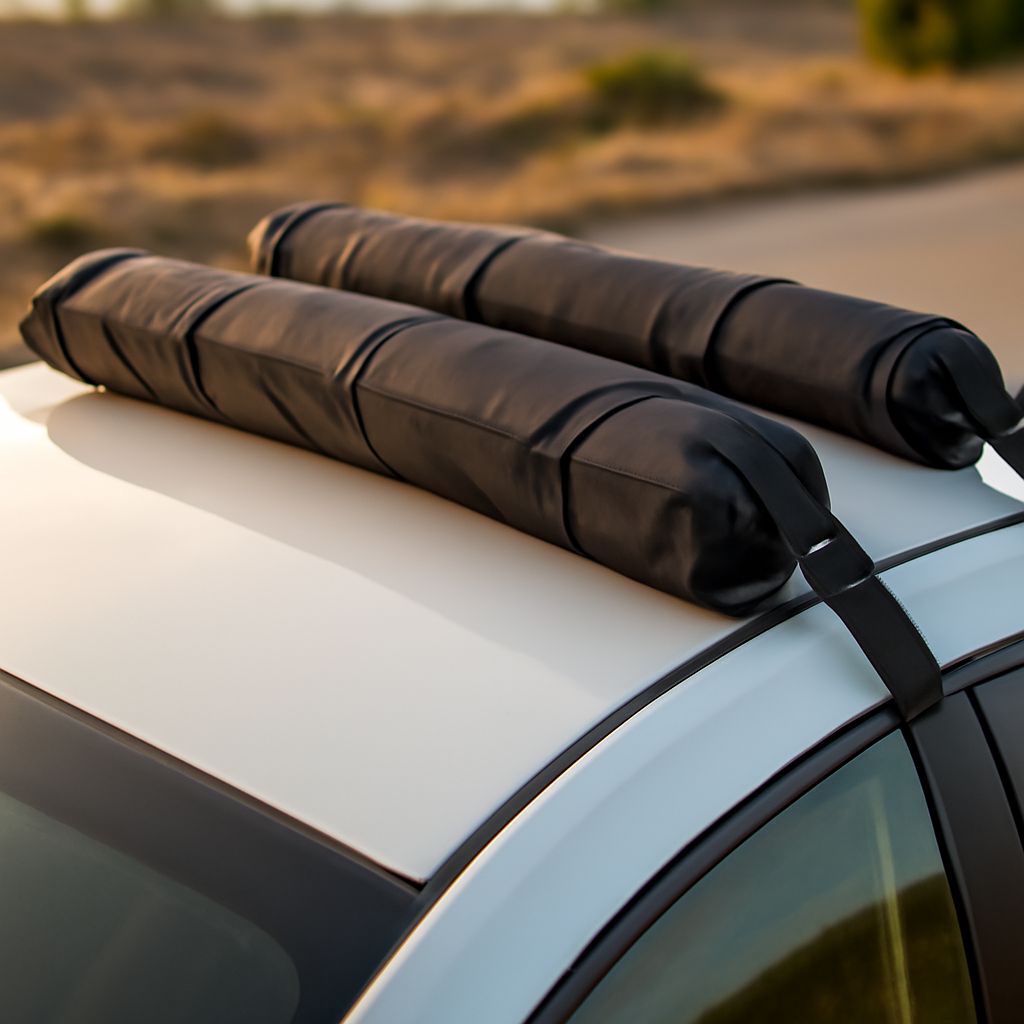
Foam block carriers are the most affordable entry into surfboard car rack transport. They consist of two foam blocks that sit on the roof, with cam buckle straps running through the car’s interior to secure the boards. Foam blocks work on almost any vehicle with no permanent installation, making them popular among occasional surfers. The limitation is load capacity: foam blocks handle one or two boards reliably but can compress and shift under heavier or wider loads like full-size SUPs.
Roof Rack Bar Systems
A dedicated surfboard rack for car use built around crossbar towers offers significantly more security and versatility. Crossbars mount to the factory roof rails or to door-frame clamps on vehicles without rails. Surfboard-specific pads or saddles then attach to the bars to protect the board’s hull. These systems support multiple boards, heavier loads, and add-on accessories like board locks and fin protectors. The upfront cost is higher but the long-term usability justifies it for regular surfers.
Choosing a Paddle Board Rack for Car
A paddle board rack for car transport must accommodate boards that are typically 28 to 36 inches wide and weigh 20 to 30 pounds or more. Cradle-style padding that wraps around the board’s rails prevents the board from rocking on crossbars. A paddle board rack for car with J-cradles is a common solution: the J-shape holds the board on its side rather than flat, reducing wind resistance and allowing two boards to fit side by side on standard 48-inch bars. Always check the vehicle roof’s load rating before mounting heavy boards.
SUP Car Rack vs. Surfboard Rack: Key Differences
A sup car rack and a surfboard car rack differ primarily in the pad width and support span. Surfboards are narrow enough to rest flat on standard soft pads, but SUPs often need wider cradles or J-style mounts to prevent the board from pivoting. A sup car rack with wider rubber padding also protects the deck finish on inflatable boards, which can crease if the straps cross painted or graphics-heavy areas. Some systems combine both functions, but dedicated setups perform better for either board type used exclusively.
Paddleboard Car Rack: Securing Long Boards
A paddleboard car rack must handle boards that extend well past the front and rear of most vehicle roofs. Boards extending more than three feet past the rear of the vehicle typically require a red warning flag attached to the tail. Secure the board with at least two cam buckle straps across the body and a bow line from the nose to the front tow hook to prevent the nose from lifting at speed. The paddleboard car rack should also include a secondary fin protector or nose pad to prevent damage at contact points.
Tips for Long-Distance Transport
Check strap tension after the first 10 to 15 miles of any long drive, as straps tend to loosen slightly as boards settle onto the pads. Avoid overtightening, which can dent foam boards or crack fiberglass. Parking in shade reduces the risk of wax melting onto the vehicle’s roof. A surfboard car rack with locking strap loops adds security during rest stops. On road trips, inspect the mounting hardware at each fuel stop to confirm nothing has shifted or loosened.
Bottom line: Match the rack system to the board type and vehicle, use proper strapping technique, and inspect the load before and during every transport. A well-secured surfboard rack for car use protects the board, the vehicle, and other drivers on the road.