Is My Car Battery Dead? How to Tell and What to Do Next
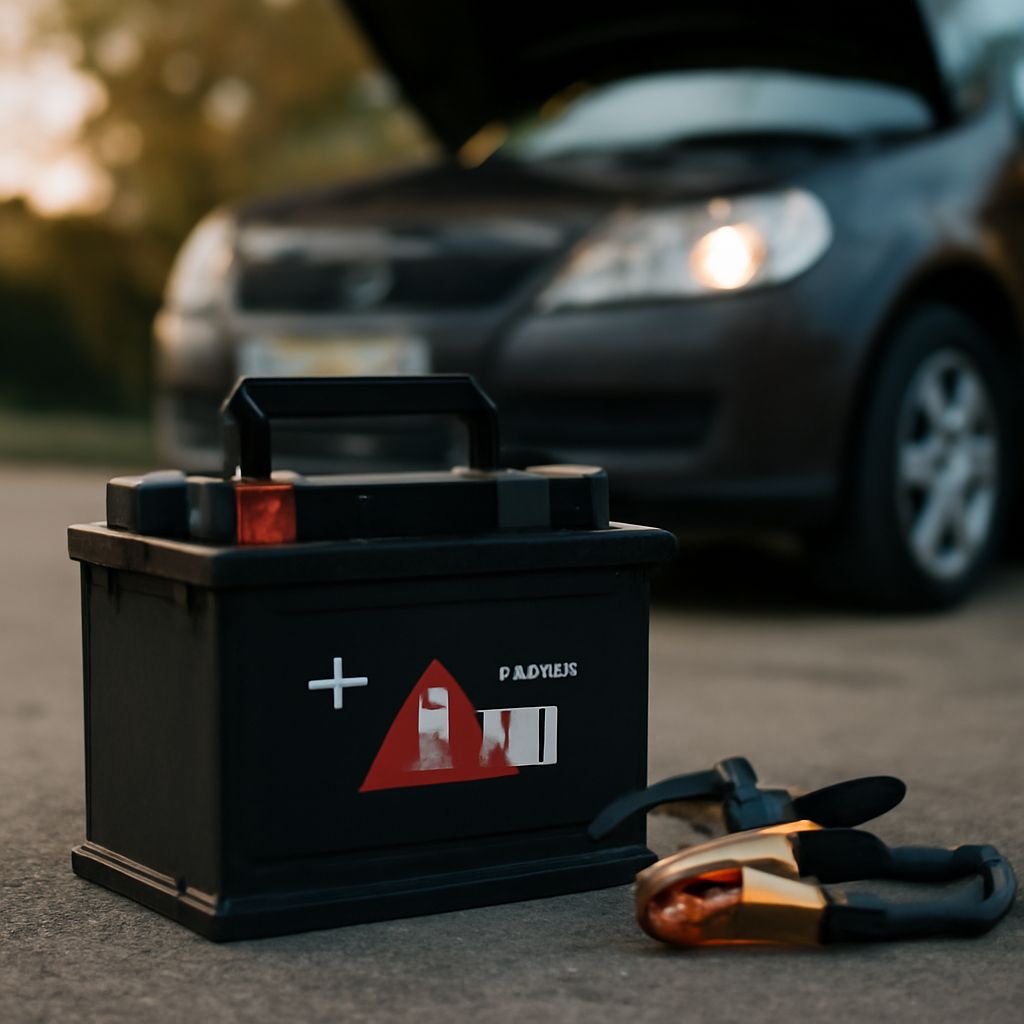
When a vehicle refuses to start or the electrical system behaves erratically, many drivers ask the same question: is my car battery dead, or is something else going on? The answer matters because a car battery died scenario looks different from an alternator failure or a blown fuse. Understanding the signs of a dead battery in car situations — and knowing how to confirm the diagnosis — saves time and prevents unnecessary parts replacement.
My car battery died once during a cold morning commute, and the symptoms were unmistakable: slow cranking, dim dashboard lights, and a clicking sound instead of ignition. That pattern points directly to battery dead in car conditions. Whether the battery is fully discharged or simply weak, the fix starts with accurate identification.
Common Signs Your Battery Is Dead
A car battery that has failed usually announces itself through several consistent clues. The engine turns over very slowly, or the starter motor produces a rapid clicking sound instead of cranking. Interior lights may appear dim, and electronics such as the radio or power windows respond sluggishly or not at all. In some cases, nothing happens when the key is turned — no sound, no lights, complete silence.
Temperature plays a role. Cold weather reduces battery capacity, so a battery that tests at the edge of acceptable range in summer may fail outright in winter. If the vehicle starts fine on warm days but struggles when temperatures drop, the battery is likely near the end of its service life.
How to Test a Car Battery at Home
A basic multimeter confirms whether the battery is the problem. With the engine off, set the meter to DC voltage and touch the probes to the battery terminals. A healthy battery reads between 12.4 and 12.7 volts. A reading below 12.0 volts indicates a significantly discharged or failing cell.
For a more thorough check, many auto parts retailers offer free battery load testing. The load test draws current from the battery while measuring voltage drop — this reveals whether the battery can deliver power under real starting conditions. A battery that passes the voltage test but fails under load needs replacement regardless of its age.
Jumpstarting a Dead Battery in Car
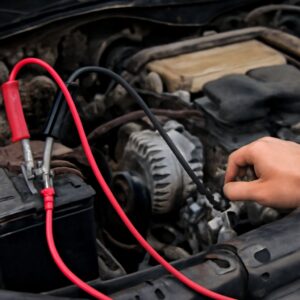
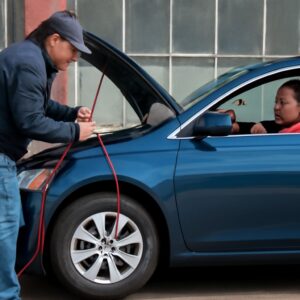
When the battery is confirmed dead or severely discharged, a jump start gets the vehicle running again temporarily. Connect the positive jumper cable to the dead battery’s positive terminal first, then to the good battery. Connect the negative cable to the good battery’s negative terminal, then to an unpainted metal surface on the dead vehicle — not the battery itself. Start the working vehicle, wait two minutes, then attempt to start the disabled one.
After a successful jump, drive the vehicle for at least 20 to 30 minutes at highway speed to allow the alternator to recharge the battery. Short city trips will not restore a fully discharged battery to an adequate state.
When to Replace the Battery
Most automotive batteries last between three and five years under normal conditions. If the battery is within that age range and has failed a load test, replacement is the practical path. Repeated jump starts mask the underlying problem and put unnecessary strain on the alternator and starter motor.
When choosing a replacement, match the group size, cold cranking amps, and reserve capacity to the original equipment specification. Installing an undersized battery in a vehicle with high electrical demand — multiple accessories, start-stop technology, or a large engine — leads to premature failure.
Next Steps
After confirming and addressing a dead battery, test the charging system to rule out alternator problems that may have caused the discharge. Have the battery terminals cleaned and inspected for corrosion at the same time. Going forward, a quick voltage check every six months — particularly before winter — catches a weakening battery before it leaves anyone stranded.