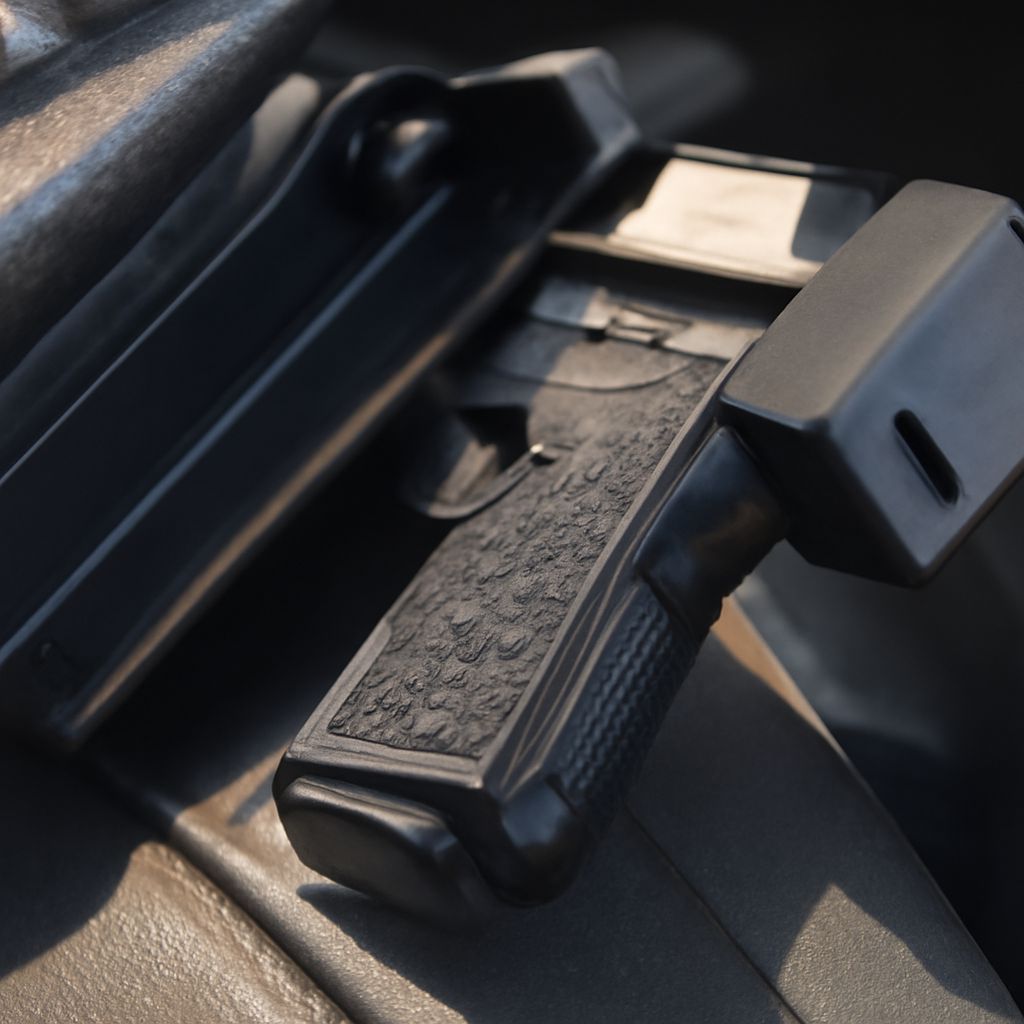
Gun Holder for Car: Choosing the Right Mount for Safe Access
Drivers who carry legally often face a practical challenge: how to keep a firearm accessible yet secure while operating a vehicle. A quality gun holder for car use must balance reach, retention, and legal compliance. The options available today range from under-dash brackets to console-mounted units, each suited to different carry habits and vehicle layouts. Whether a driver is considering a car pistol mount or looking at full enclosure options, the choice affects both safety and convenience on every trip.
Not every mounting system fits every vehicle or carry style. A pistol holster for car use needs to hold the firearm firmly through hard braking and cornering while allowing a clean draw without removing the seatbelt. Many drivers also weigh the benefit of a car gun holster mount that locks, adding a layer of theft deterrence beyond simple retention. For those prioritizing discretion, a concealed car holster positioned below the sight line of other drivers offers an additional layer of privacy during everyday travel.
Types of Car Pistol Mounts
The most common car pistol mount designs fall into three broad categories. Under-dash mounts attach directly to the steering column or firewall, keeping the firearm out of the center console and away from passengers in rear seats. Console mounts sit between the front seats, offering fast access without requiring the driver to reach far off center. Seat-back mounts position the holster on the back of the front seat, which suits some vehicles but generally slows the draw compared to under-dash or console options.
Magnetic mounts have grown in popularity for their minimal footprint and tool-free repositioning. A strong neodymium magnet holds most steel-framed pistols securely, though polymer-framed firearms with minimal metal content may not retain well on magnet-only designs. Drivers with those handguns should confirm retention before relying on a magnetic gun holder for car use.
What to Look for in a Pistol Holster for Car
A pistol holster for car applications should be evaluated on four points: retention strength, draw angle, mounting security, and material durability. Retention that requires two hands to defeat defeats the purpose of in-vehicle carry. Draw angle matters because a seated position changes the natural hand path compared to standing, and a holster that works well on a belt may point the muzzle awkwardly when mounted in a vehicle.
Mounting hardware should anchor to structural parts of the vehicle rather than relying solely on adhesive. Vibration, temperature swings, and repeated draws stress adhesive bonds over time. Metal brackets with machine screws into existing bolt holes or threaded inserts provide far more reliable attachment than peel-and-stick pads alone.
Car Gun Holster Mount Options with Locking Features
A car gun holster mount with a keyed or combination lock addresses two concerns: unauthorized access by children or passengers, and theft when the vehicle is unattended. Console vaults and under-seat lockboxes incorporate a holster-style interior and a lid or door that locks. These units are heavier and slower to access than open mounts but provide meaningful security. Some designs use a cable anchor to the seat rail, preventing removal of the entire unit if someone tries to take it.
For drivers who want a concealed car holster with light security, passive retention holsters with a thumb-break or trigger-guard button add a step to the draw without a keyed mechanism. This approach is faster than a lockbox but offers no protection against theft when the vehicle is empty.
Legal Considerations for In-Vehicle Carry
Laws governing in-vehicle firearm carry vary significantly by state and municipality. Some jurisdictions require the firearm to be unloaded, cased, or stored in a locked container. Others permit loaded, accessible carry with a valid permit. Drivers should verify current law for every state they travel through, not just their home state, before selecting a concealed car holster or any open-access mount.
Installation Tips
Before permanently mounting any bracket, spend time seated in the driver position with the unloaded firearm to confirm the draw path clears the steering wheel, seat belt, and center console without awkward movement. Route any cables or mounting straps away from pedal areas. Test the mount under braking before relying on it, as forward inertia can shift a gun holder for car use if mounting hardware is loose.
Bottom line: The right car pistol mount depends on vehicle layout, handgun type, and legal requirements. Prioritizing mechanical retention over convenience features and verifying local carry laws before installation reduces both safety and legal risk significantly.