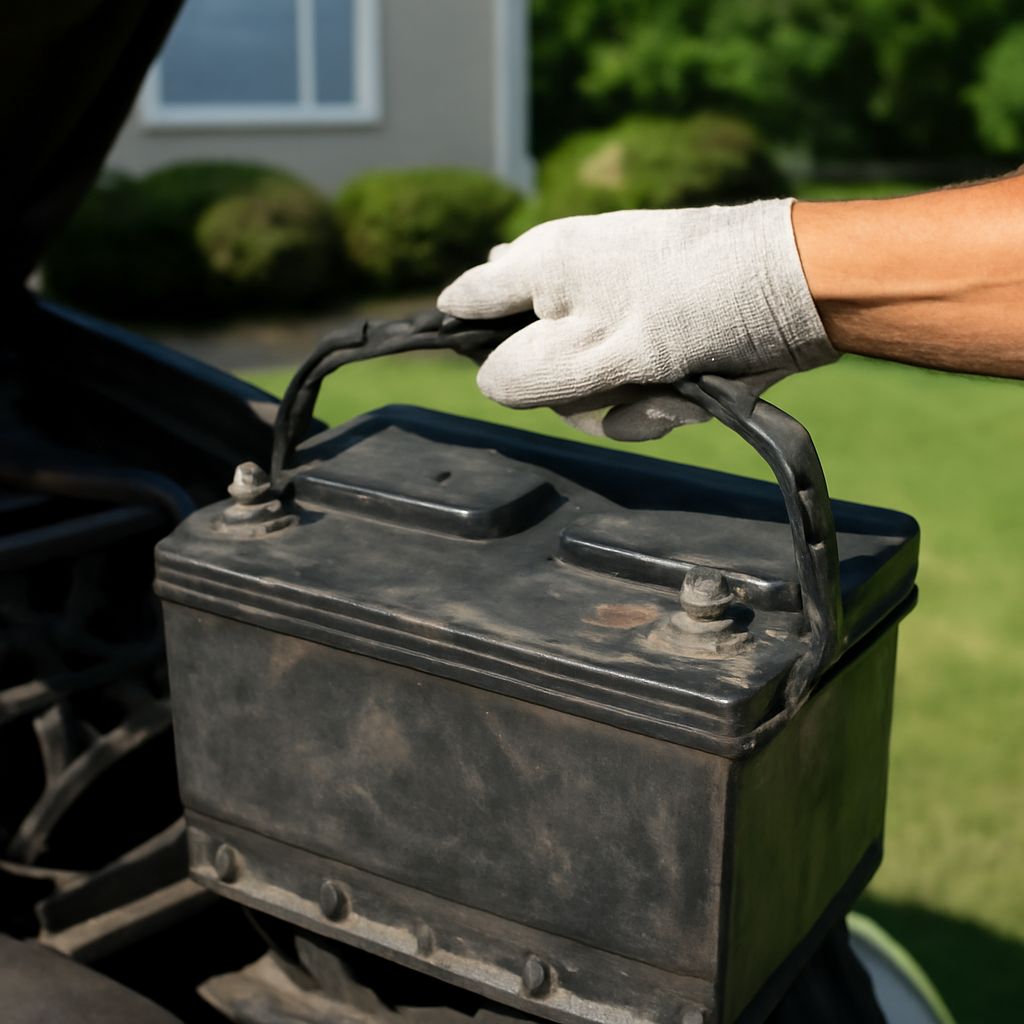
Dead Car Battery Tricks: Jump-Starts, Terminal Types, and Battery Life
Dead car battery tricks come in handy at the worst moments: a cold morning, an empty parking lot, or the middle of a road trip. Knowing what to do when the engine refuses to crank, and how to do it safely, is practical knowledge for any driver. Beyond emergency fixes, understanding car battery terminal types and using a car battery life calculator to track health prevents many dead-battery situations before they happen.
Car tips and tricks ella hughes and other automotive content creators have brought battery maintenance advice to wider audiences, and the core message is consistent: a battery that is understood and monitored lasts longer than one that is ignored until it fails. This guide covers both the emergency fixes and the preventive habits that reduce how often they are needed.
Dead Car Battery Tricks That Actually Work
When the battery is dead and no jumper cables are available, a few dead car battery tricks can sometimes get the engine started. For vehicles with manual transmissions, push-starting requires a slope or willing helpers. The transmission is put into second gear, the clutch depressed, and the vehicle pushed to walking speed before the clutch is released sharply. This spins the engine mechanically and may start it if the battery has enough residual charge to fire the fuel injectors and ignition.
Another approach for marginal batteries is the key-cycling trick: turn the key to the on position for 10 to 15 seconds without cranking, then attempt a start. This allows fuel pressure to build and may help a weak battery deliver enough current for one crank attempt. Neither trick works with a fully discharged battery, but both are worth knowing when the battery reads low rather than completely dead.
Car Battery Terminal Types: Positive, Negative, and Side-Post Connections
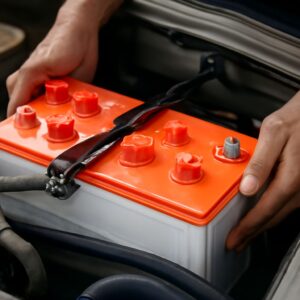
Car battery terminal types affect how jumper cables and chargers connect. The most common design is the top-post terminal, where positive and negative posts rise vertically from the top of the battery. Top-post batteries use SAE-style terminals, with the positive post typically larger in diameter than the negative. Always connect the positive (red) clamp to the positive terminal and the negative (black) clamp to a ground point on the dead vehicle’s engine block, not to the battery negative post, to reduce spark risk near the battery.
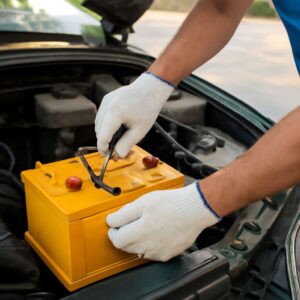
Side-post terminals are used on many GM vehicles and some others. These require a specific bolt-style clamp rather than standard jaw clamps. Using incompatible clamps on side-post car battery terminal types damages the soft lead threads and may not provide a secure connection. Adapters that convert side-post to top-post are available at auto parts retailers and are worth keeping in a roadside kit.
How to Use a Car Battery Life Calculator
A car battery life calculator estimates remaining battery capacity based on age, temperature history, charging patterns, and load. Most modern diagnostic tools and some consumer-grade battery testers include this function. Input the battery’s rated cold cranking amps (CCA), and the tool measures actual CCA output and calculates a health percentage and estimated remaining service life.
Using a car battery life calculator once or twice per year, especially before winter, gives advance warning of batteries that are approaching end of life. Replacing a battery at 70% health on a scheduled visit costs far less, in time and inconvenience, than replacing one that fails in a remote location.
Jump-Starting Safely: Tools and Techniques
Jumper cables should be at least 12 feet long and 6-gauge wire for reliable current transfer. Connect positive to positive on the dead battery, then positive to positive on the good battery. Connect negative to the good battery’s negative post, then to an unpainted metal ground on the dead vehicle. Start the good vehicle, let it run for two minutes, then attempt to start the dead vehicle. Disconnect in reverse order: ground first, then negative, then positive on the good vehicle, then positive on the revived vehicle.
Portable jump starters have become compact and affordable. A quality lithium-ion jump starter in the 500-amp range handles most passenger cars and light trucks without requiring another vehicle.
Ella Hughes Car Tips and Tricks for Battery Maintenance
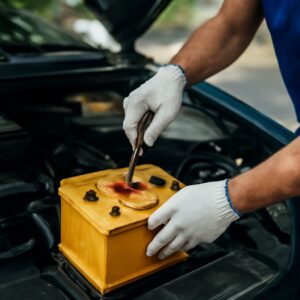
Car tips and tricks ella hughes content frequently covers the basics that prevent battery failure: keeping terminals clean and corrosion-free with a wire brush and baking soda solution, ensuring the battery hold-down bracket is secure to prevent vibration damage, and avoiding extended periods with accessories running while the engine is off. These habits extend battery service life noticeably.
Ella hughes car tips and tricks also address seasonal preparation. Cold temperatures reduce a battery’s CCA output significantly. A battery at 0°F delivers roughly 40% less starting power than at 77°F. Parking in a garage, using a battery maintainer during cold-weather storage, and testing battery health before winter are standard recommendations from experienced mechanics and automotive educators alike.
Key takeaways: Knowing dead car battery tricks for emergencies and using a car battery life calculator regularly are the two most practical steps any driver can take. Understanding car battery terminal types ensures safe jump-starting without hardware damage.