Car AC Pressure Chart: Understanding R134a Pressures in Car Air Conditioning
When a vehicle’s air conditioning stops blowing cold, the first diagnostic step is checking refrigerant pressure against a car ac pressure chart. Pressure readings tell a technician whether the system is overcharged, undercharged, or dealing with a mechanical fault. The car ac temperature chart adds another layer, correlating ambient temperature with expected high-side and low-side values so comparisons stay meaningful.
Car ac pressure varies by ambient temperature, refrigerant type, and system design, so a single target number rarely applies across all vehicles. Understanding car ac pressures in context, alongside r134a pressures in car air conditioning, turns raw gauge readings into actionable diagnoses.
How AC Pressure Works in a Vehicle
A standard automotive AC system has two pressure sides. The low-pressure side, between the evaporator and compressor inlet, typically reads 25 to 45 psi at idle in moderate temperatures. The high-pressure side, from the compressor outlet to the expansion valve, commonly runs 150 to 250 psi under the same conditions. Deviations outside these bands point to specific problems rather than vague “AC trouble.”
Reading a Car AC Pressure Chart by Ambient Temperature
A reliable car ac pressure chart organizes readings by outside air temperature. At 70°F ambient, a properly charged R134a system typically shows low-side pressure near 30 psi and high-side near 200 psi. At 90°F ambient, normal high-side car ac pressure climbs to roughly 225 to 250 psi while low-side stays near 35 to 45 psi. Any car ac temperature chart should be used with the engine running, AC set to maximum, and the blower at high speed for consistent results.
R134a Pressure Reference Values
R134a pressures in car air conditioning follow predictable curves. The table below summarizes common reference points technicians use when diagnosing systems that still run R134a refrigerant.
- 60°F ambient: Low side 20–30 psi, high side 150–175 psi
- 70°F ambient: Low side 25–35 psi, high side 175–210 psi
- 80°F ambient: Low side 30–40 psi, high side 200–230 psi
- 90°F ambient: Low side 35–45 psi, high side 225–255 psi
- 100°F ambient: Low side 40–50 psi, high side 250–275 psi
These r134a pressures in car air conditioning are reference ranges. Always compare against the vehicle-specific service data when available, as condenser size, compressor type, and expansion device design shift the normal window.
Common Faults Revealed by Abnormal Car AC Pressures
Abnormal car ac pressures are a map to the fault. Low readings on both sides suggest refrigerant loss from a leak. High readings on both sides usually indicate an overcharge or a condenser blocked by debris. A low high-side with a normal or elevated low-side points to a failing compressor that cannot build adequate discharge pressure. An unusually high low-side reading combined with a low high-side often means the expansion valve is stuck open, flooding the evaporator with liquid refrigerant.
When to Use a Professional Manifold Gauge Set
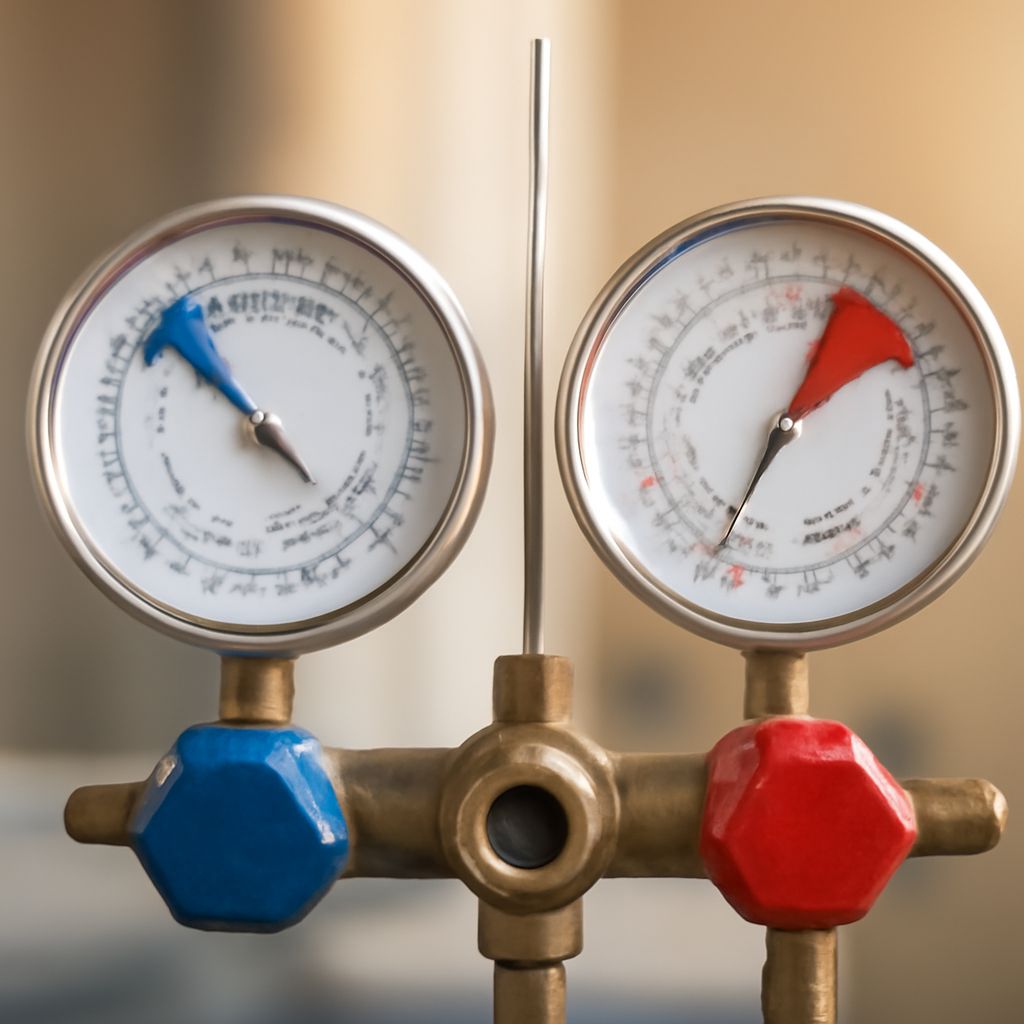
Consumer-grade single-hose gauges only read low-side car ac pressure, which limits diagnosis. A professional manifold gauge set reads both sides simultaneously, making it far easier to cross-reference a car ac temperature chart and confirm whether the system is within spec. Technicians connect the gauges with the engine off, then start the system and let pressures stabilize for two to three minutes before recording values.
Pro tips recap: Always match gauge readings to the correct ambient temperature column on a car ac pressure chart. Use a manifold gauge set for both sides rather than a single-port tester. Cross-reference r134a pressures in car air conditioning against manufacturer service data before adding refrigerant, since overcharging causes as many problems as undercharging.